Viewpoint: Is drinking water harmful? Activist paper demonstrates how science can be twisted to open the door to tort claims

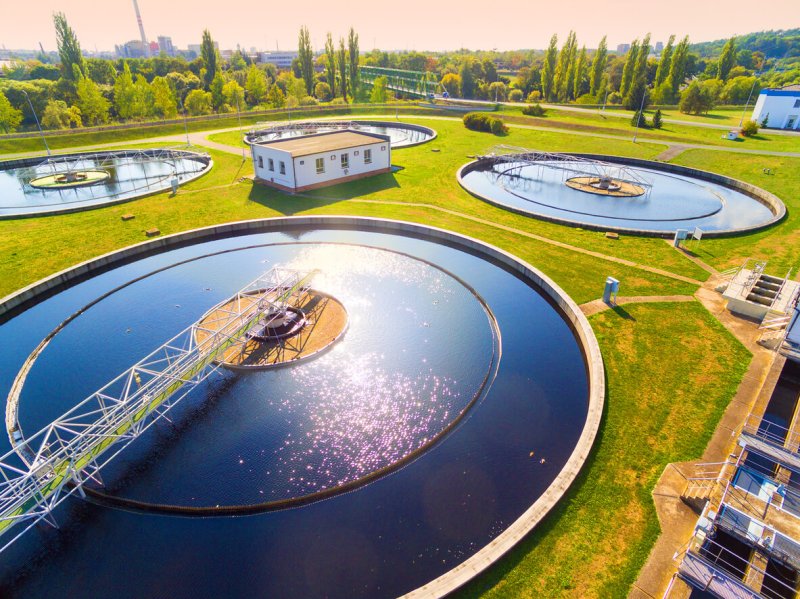
Aerial view to sewage treatment plant. Grey water recycling. Waste management in European Union.
The drinking water treatment process is designed to remove harmful pathogens that are prevalent in nature, but a new study suggests that it may be harmful also.

Scientists know that inert ingredients are not harmful you but the authors of the new paper invoke the environmental “chemical cocktail” MacGuffin. Since every harmless product has not been tested in every possible combination with other inactive ingredients, they suggest agricultural, pharmaceutical and other common products could be hazardous to our health in ways that scientists don’t know about.

Follow the latest news and policy debates on sustainable agriculture, biomedicine, and other ‘disruptive’ innovations. Subscribe to our newsletter.

The paper is only EXPLORATORY, not science, because there are no more deaths or illnesses since water treatment began, there are far fewer, and they didn’t do any work to show the effect they believe might happen has happened. It is just correlation, the same ‘organic food linked to autism’ lines that can be created in data. To-date no safe products have harmed anyone in combination with other safe products. Scientists know plants are not little people and therefore a weedkiller like glyphosate that only acts on a biological pathway found in plants has never harmed humans. That is where unknown effects and chemical cocktails come into play for trial lawyers and the epidemiologists they pay to act as “expert” witnesses. Gather enough survey data and you are certain to be able to link anything to anything.
Academics have been so successful at finding 9,000 new harmful chemicals per year that there can’t be a single healthy human left on earth.

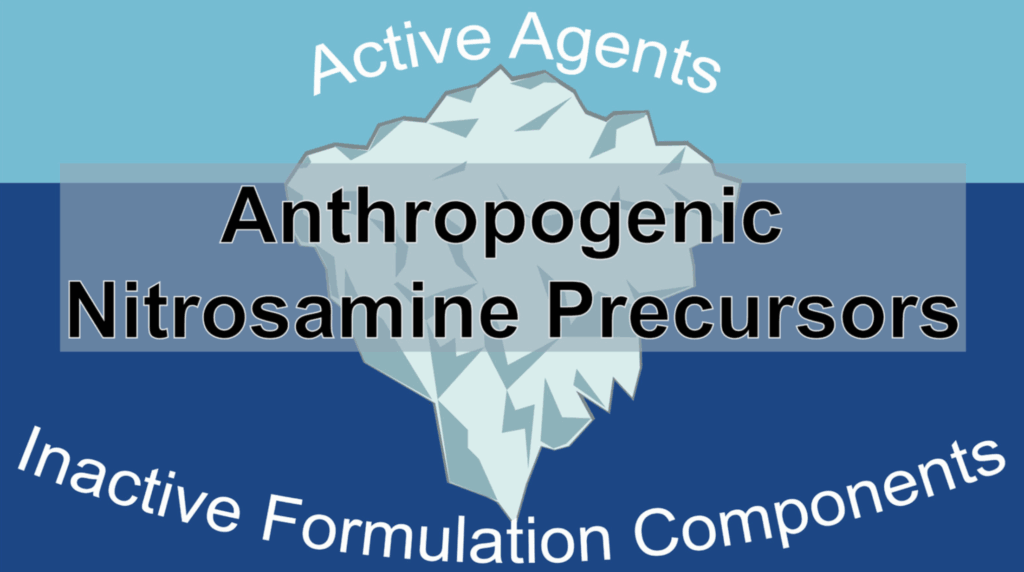
That is how the authors suggest that amines in herbicides might be precursors to nitrosamines, byproducts formed during water disinfection. As if the entire science community never considered that in the last 50 years. Inert amines are used in weedkillers to increase solubility which reduces drift. That has been overwhelmingly positive for the environment and keeping food affordable. Farmers don’t want to use any more chemicals than necessary and their land is their greatest asset, they don’t want it at risk from off-target effects so they use only as much chemistry as needed.

The authors didn’t look at agricultural science, they looked at a spreadsheet and then looked at inert amines in herbicides and lumped those in with nitrosamine precursors in ranitidine and metformin. They noted that amines in herbicide formulations have increased and declared that because the quantity has increased, so has “implications for water treatment processes.”

It reads like homeopathy. Magic in water at one part per billion doesn’t become real at 1.2 ppb. That is not how science works. It is how environmental lawyers like Robert F. Kennedy, Jr. work, though. This was the same claim he made while at Natural Resources Defense Council, when he was also claiming there were hidden effect from food coloring, cell phones, vaccines, and pasteurized milk.

Hank Campbell is the founder of Science 2.0 and the author of Science Left Behind. Follow Hank on X @HankCampbell

A version of this article was originally posted at Science 2.0 and is reposted here with permission. Any reposting should credit both the GLP and the original article. Find Science 2.0 on X @science2_0

{{ reviewsTotal }}{{ options.labels.singularReviewCountLabel }}
{{ reviewsTotal }}{{ options.labels.pluralReviewCountLabel }}
{{ options.labels.newReviewButton }}
{{ userData.canReview.message }}

Related Articles

Infographic: Global regulatory and health research agencies on whether glyphosate causes cancer

Infographic: Global regulatory and health research agencies on whether glyphosate causes cancer

Does glyphosate—the world's most heavily-used herbicide—pose serious harm to humans? Is it carcinogenic? Those issues are of both legal and ...

Most Popular

ChatGPT-Image-Mar-10-2026-01_39_01-PM
Viewpoint—“Miracle molecule” debunked: Why acemannan supplements don’t work
ChatGPT-Image-Jun-25-2026-12_23_17-PM
No, Bill Gates did not secretly engineer ticks to promote veganism
ChatGPT-Image-Jun-30-2026-01_09_47-PM
Viewpoint: As MAHA blows up over Supreme Court ruling limiting glyphosate litigation, Trump offers toothless plan to reduce pesticides in food
ChatGPT-Image-Jun-25-2026-01_14_50-PM
Viewpoint: Disinformation grift: The wellness industry is a lucrative and mostly worthless marketplace of ‘balms, brews, and baloney’
ChatGPT-Image-Jun-23-2026-12_19_35-PM
Ideological red flag: Led by anti-vax doctor, Tennessee is now the U.S. epicenter selling potent ivermectin shown worthless to prevent or treat Covid
Screenshot-2026-06-30-at-3.08.03-PM
From infrared sauna blankets to collagen gummies, here’s the top 10 social-media-promoted wellness shams
ChatGPT-Image-Mar-4-2026-09_39_03-AM
Transgender female athletes and Title IX: Separating ‘policy’ from ‘legality’
Screenshot-2026-06-30-at-10.43.50-AM
Viewpoint: Why are there no approved bioengineered insect-protected (Bt) apples?
photodune farming tractor s
Viewpoint: Glyphosate may be hazardous, but it is not dangerous as used by farmers. Critics of the Supreme Court’s Roundup ruling garble hazard with risk
Screenshot-2026-06-30-at-2.06.25-PM
PEW study: The sick state of American health information
marijuana-pot-in-hand-nveri-st-xpm-t-abq-fkifeos-s-rws-cmpx-
Facts & Fallacies podcast: Legalized weed drives drug addiction, psychosis?
Screenshot-2026-06-17-at-12.31.01-PM
Viewpoint: The dangerous influence of ‘woke’ post-modernism in science

Sorry. No data so far.

glp menu logo outlined

Get news on human & agricultural genetics and biotechnology delivered to your inbox.