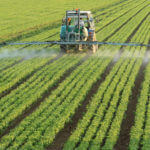
Such arguments were put forth by environmental non-governmental organizations (ENGOs) and over time, have proven to be fallacies, not grounded in empirical evidence. Previous research based on 2006 herbicide use, found the adoption of GM canola contributed to reduced herbicide use. In a recent survey of Saskatchewan farmers, we found evidence quantifying that the longer GM crops are included in crop rotations, less herbicide is applied to fields to control weeds during crop production.
Benefits of GM crop production after 10 years (2006)
A decade after GM canola was first produced across the Canadian prairies, I led a research project that surveyed farmers about their herbicide practices. From our results we were able to compare herbicide practices regarding the production of conventional canola. This was some of the first research to quantify reductions in summerfallow and tillage practices due to improved weed control efficiency. Farmers reported benefits that included reduced soil erosion (86%) and increased moisture conservation (83%) following reduced tillage.
For those non-farming readers, what you might not be aware of, is before the commercialization of GM canola, conventional canola needed to be grown on ‘clean’ fields. This meant that there were limited in-crop herbicides capable of providing efficient weed control, so farmers tended to plant canola on fields that had minimal weed populations, such as following a year of summerfallow. The farm survey found that the adoption of glyphosate and glufosinate tolerant GM canola varieties allowed farmers to plant canola on fields that had substantial weed infestations and gain significantly improved weed control. The improved weed control resulted in less herbicide being applied overall and the herbicides that were applied, had a reduced impact on the environment.
Assessing chemicals’ environmental impact
Environmental impact (EI) assessments include three components: impacts on farmers and farm workers, impacts on consumers, and impacts on the environment or ecology. Impacts on farmers and farm workers assesses their exposure to herbicides. Consumer impacts are measured through the change in herbicide residues on harvested crops and the reduction in herbicide presence in groundwater systems. The environmental impact measures the impact the herbicide has on the ecology once it is applied.
From the collected data, we were able to indicate the most widely used herbicides based on acres and crop kind. Table 1 accounts for the top five herbicides applied to canola production, in which these five herbicides accounted for all canola acres in 1995 and 70% of total canola acres in 2006, and the cumulative EI dropped by 53%. Farmers, farm workers and the environment benefited slightly more than this, while consumer benefits represented the lowest level of benefit.
Table 1: Environmental impact (EI) differences of the top five canola herbicides, 1995 and 2006
|
Comparison
|
1995
|
2006
|
Percent decrease
|
|---|---|---|---|
Benefits of GM crop production after 20 years (2016-2019)
Anecdotal evidence from farmers indicated that the benefits from GM crop adoption were increasing. To further study the anecdotal reports, as part of a project I was leading, we launched a new survey to examine herbicide use. This time, the survey gathered field level data from Saskatchewan farmers about chemical use across their entire crop rotation from 1991-1994 and then again from 2016-2019. This allowed us to make a more robust assessment of changes in herbicide use throughout current crop rotation practices that are continuously involving rotations of cereals, pulses, and oilseeds. From this we compared the application of herbicides across all crops, not just canola, our baseline EI change from those reported in Table 1. The impact of herbicides applied following 20 years of GM crop adoption into crop rotations is presented in Table 2.
Table 2: Environmental impact (EI) of the top five herbicides, 1991-94 and 2016-19
|
Comparison
|
1991-1994
|
2016-2019
|
Percent decrease
|
|---|---|---|---|
The evidence confirms the environmental benefits of GM crop adoption have increased after 20 years of production, over those reported after 10 years of adoption. The overall environmental impact has decreased by 65%. Farmers and farm workers experience the highest level of benefits with a 74% decline in the impact of herbicides. In terms of increase in beneficial impacts, consumers gain significantly as after 20 years of GM crop production, the impact from reduced herbicide residues results in a reduced consumer impact of 68%. The ecology benefits from reduced applications and provides a 63% reduction. As summerfallow acres were removed, crop production acres have risen, meaning that in total volume, more herbicides are used, when properly assessed on a per acre basis, current crop production uses 45% less herbicide per acre. This is a further decrease than was quantified following a decade of GM crop adoption. This confirms that farmers are increasingly more efficient when it comes to herbicide applications.
GM crops driving improved sustainability
Globally, agricultural producers are facing a triple challenge, producing more food, and using fewer inputs while lessening the impact on the environment. Our research findings demonstrate the vital role that GM crops play in contributing to these objectives. While our research does not examine yield changes, we can confirm reduced chemical inputs and further reductions in the environmental impacts of crop production agriculture. These benefits are widely experienced, as not only are there fewer environmental impacts from crop production, but farmers and consumers share in the benefits of reduced herbicide use.
The article this blog is based on is available at: QUANTIFYING CHANGES IN THE ENVIRONMENTAL IMPACT OF IN-CROP HERBICIDE USE IN SASKATCHEWAN, CANADA (Lika et al. 2024)
A version of this article was originally posted at Sustainable Agricultural Innovations and has been reposted here with permission. Any reposting should credit the original author and provide links to both the GLP and the original article. Find Sustainable Agricultural Innovations on Twitter @SAIFood_blog