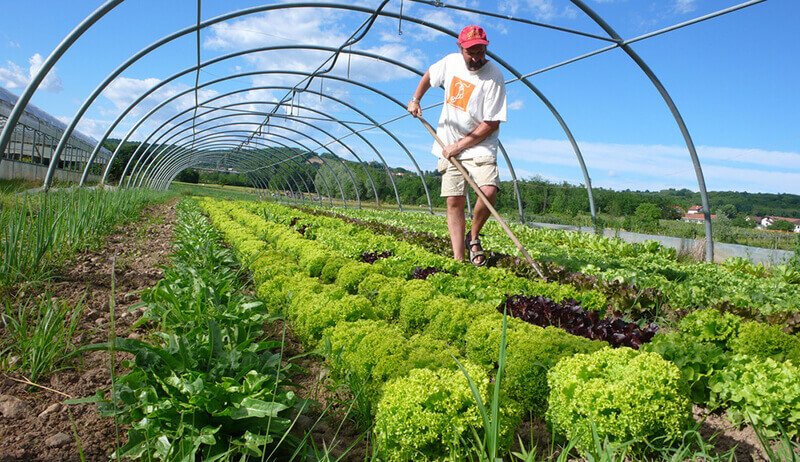
At the supermarket, you’re often met with a choice: organic or not? Organic foods — largely free of synthetic pesticides, hormones and antibiotics — are synonymous with sustainability in the minds of many shoppers. But sustainability is a fraught and complex measure — does it mean better for you or for the planet? And how do farm animals, farmers and workers fare? About the only measure that’s simple here is the nutrition, which remains the same whether you buy organic or conventional foods. After that, however, the tradeoffs quickly become complicated.
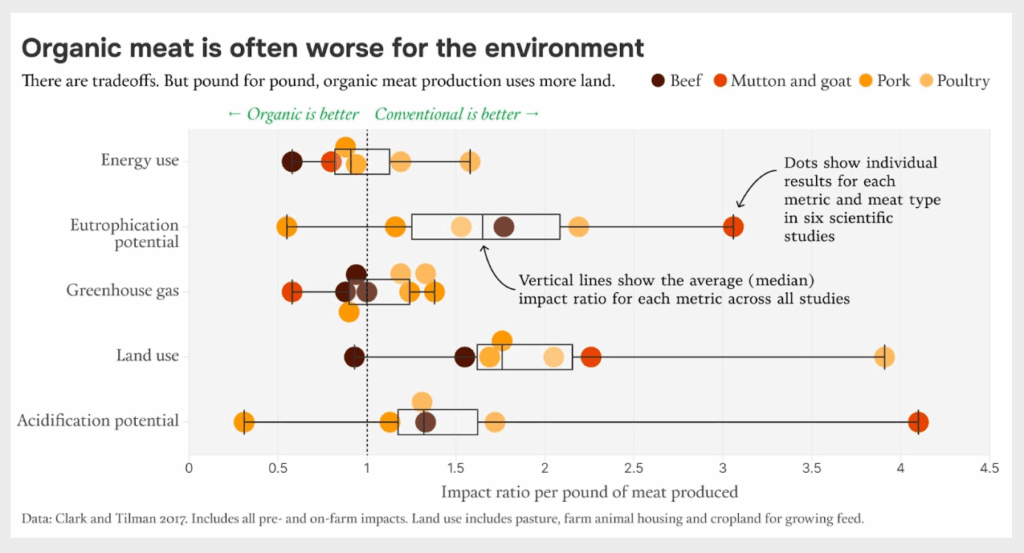
When it comes to the environment, organic food isn’t necessarily better and can even be worse, in part because it requires more land to raise animals and grow their feed. In other words, that additional land means farm animals get a little more living space under U.S. organic rules. But unfortunately, unless we cut back on how much meat we eat, farming with even more land comes at a steep climate cost (and we’re already way over budget).