AI and terrorism: How bioterrorists could easily fake an attack

skynews-ai-artificial-intelligence_6246406

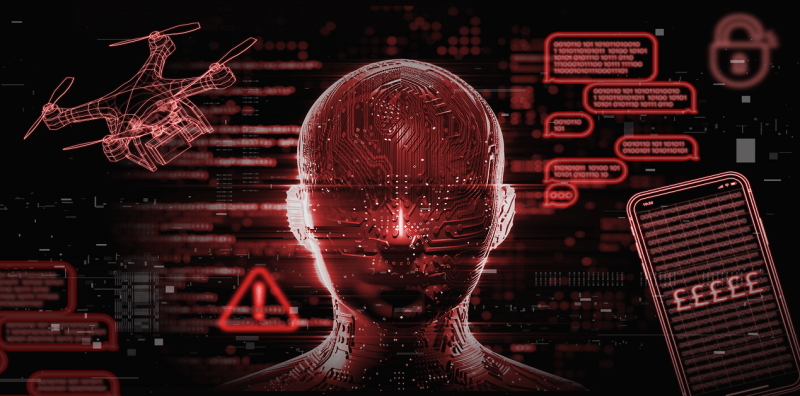
While I am deeply concerned about the long-term existential threat of AI and synthetic biology to create new or modified pathogens, my extensive experience detecting and controlling outbreaks around the world makes me fear a more immediate threat: a rogue actor using existing AI tools to simulate a bioterrorism attack that would destabilize a region or the world.

Follow the latest news and policy debates on sustainable agriculture, biomedicine, and other ‘disruptive’ innovations. Subscribe to our newsletter.

There is an urgent need for health and security agencies to raise awareness about this risk. Health and security agencies need to run exercises — as they often do already for suspected bioterrorism attacks — about how they will, in fact, verify whether audio and video reports are real and what standard of evidence they will use to make this determination.

Public health officials need training and access to technology solutions that can authenticate media, and governments at all levels must consider laws that hold creators and distributors of deepfakes liable.


This is an excerpt. Read the original post here
{{ reviewsTotal }}{{ options.labels.singularReviewCountLabel }}
{{ reviewsTotal }}{{ options.labels.pluralReviewCountLabel }}
{{ options.labels.newReviewButton }}
{{ userData.canReview.message }}

Related Articles

Infographic: Global regulatory and health research agencies on whether glyphosate causes cancer

Infographic: Global regulatory and health research agencies on whether glyphosate causes cancer

Does glyphosate—the world's most heavily-used herbicide—pose serious harm to humans? Is it carcinogenic? Those issues are of both legal and ...

Most Popular

Screenshot 2025-07-30 at 10.48
Can gene editing eliminate Down syndrome? Scientists have done it in lab-grown cells
ChatGPT-Image-Mar-10-2026-01_39_01-PM
Viewpoint—“Miracle molecule” debunked: Why acemannan supplements don’t work
ChatGPT-Image-May-26-2026-07_51_21-AM-2
Viewpoint: There are more than 1,000 chemicals in a cup of coffee—including many substances that can cause cancer. Why isn’t it banned?
Screenshot-2026-06-04-at-12.05.08-PM
Cases of brain inflammation surge as U.S. measles pandemic approaches 2000
Screenshot 2026-05-26 at 10.15
Viewpoint: Double standard—Why does the wellness industry get a free pass while Big Healthcare is treated as morally suspect?
Screenshot-2026-05-28-at-1.36.28-PM
Viewpoint: Can mRNA research survive the Trump administration?
Picture1
Sounds we can’t hear — the hidden planetary signals behind science, fear, and misinformation
ChatGPT Image May 26, 2026, 08_42_17 AM (1)
Viewpoint: Greenpeace and poison: How environmental advocacy groups rely on compliant (and often ignorant) journalists to spread disinformation and spark litigation
downsyndrome_compilation_MID_1
CRISPR breakthrough that can remove the chromosome responsible for Down syndrome raises ethical questions
glp menu logo outlined

Get news on human & agricultural genetics and biotechnology delivered to your inbox.