Researchers at the University of Bayreuth have recently successfully bred the world’s first CRISPR-Cas9-modified spider to produce red fluorescent silk. For this work, they used a species of common house spider (Parasteatoda tepidariorum).

“We have demonstrated, for the first time worldwide, that CRISPR-Cas9 can be used to incorporate a desired sequence into spider silk proteins, thereby enabling the functionalisation of these silk fibres,” says Professor Dr. Thomas Scheibel, senior author on the study.

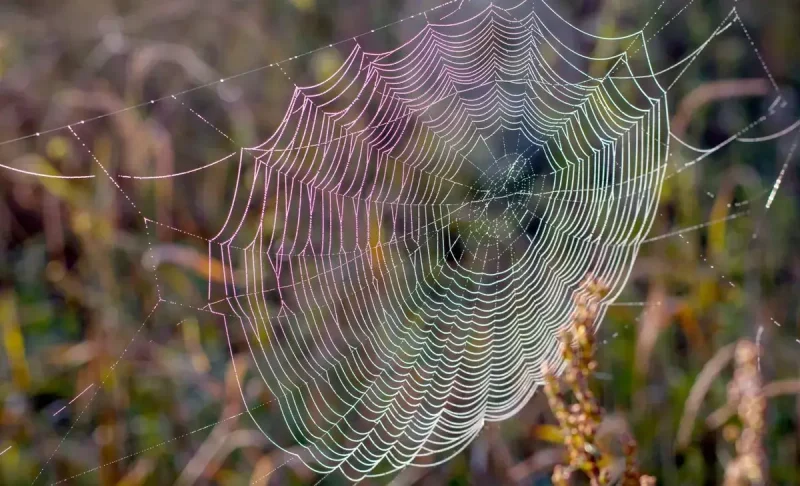
Spider silk is a fascinating natural fiber, known for its extreme tear resistance, elasticity, light weight, and biodegradability. This successful experiment could open the door to enhanced silk functionalities, expanding its potential in materials science and biotechnology.
“The ability to apply CRISPR gene-editing to spider silk is very promising for materials science research – for example, it could be used to further increase the already high tensile strength of spider silk,” says Scheibel.