There’s a growing panic over per- and polyfluoroalkyl substances (PFAS), most recently targeting fluoropolymers used in medical devices. The issue is presented to the public as a grave health threat: “forever chemicals” lurking in medical devices and other seemingly innocuous products that could cause terrible harm. In reality, it’s another campaign by the “activist-tort-lawyer-media complex” that threatens lifesaving technology through fear-driven narratives rather than scientific evidence, says GLP founder Jon Entine. Rather than a danger to public health, fluoropolymers, a subset of PFAS, are critical tools that have saved millions of lives due to their unique properties such as chemical stability and durability.
These materials have proved their safety and efficacy in spades. Yet, activists and tort lawyers, often backed by ideological and gullible media outlets, have demonized all PFAS, leading to calls for blanket bans, as seen in the EU where countries like Germany and Sweden push for restrictions.
Like so many chemical risks, PFAS harms are wildly exaggerated, with recent research showing that low-level exposure primarily comes from water, not consumer products like medical devices. Entine chastises the Environmental Working Group (EWG) for needlessly scaring the public, a tactic echoed by the EPA’s 2019 action plan labeling all PFAS as hazardous despite the fact that this class of chemicals includes over 4,000 compounds varying widely in toxicity. This one-size-fits-all approach ignores toxicology’s bedrock principle of “the dose makes the poison.” In fact, fluoropolymers are not bioavailable due to their high molecular weight, making them perfectly safe when used as intended.
Bottom line: banning fluoropolymers could disrupt medical supply chains and hinder innovation, putting millions of lives in harm’s way. The smarter approach? Perform individual chemical risk assessments to balance safety and utility and reject simplistic activist-driven narratives that disregard sound science.
Podcast:
Podcast: Play in new window | Download
 Viewpoint: PFAS—Fluoropolymer panic shows how the activist-tort lawyer-media complex threatens a lifesaving medical technology
 Viewpoint: Before we ban all PFAS ‘forever chemicals’ — found in products from non-stick frying pans to medical equipment — let’s require ideologically-neutral cost-benefit analysis



Subscribe: RSS
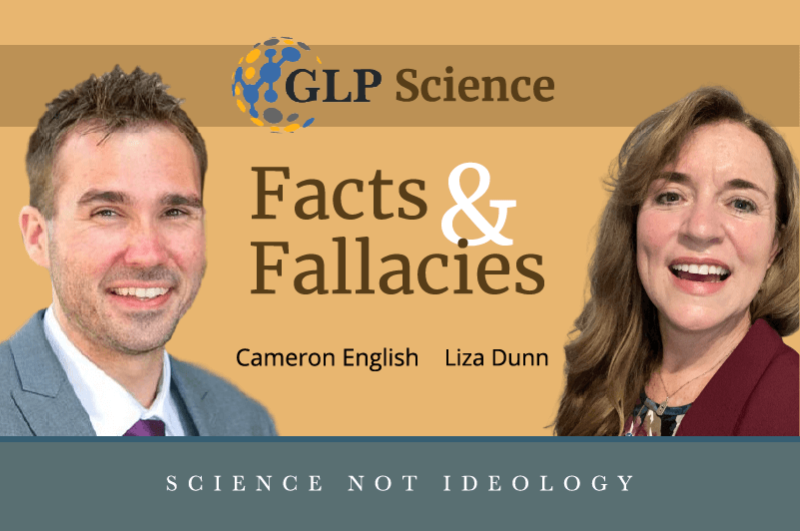
Join hosts Dr. Liza Dunn Cameron English and Jon Entine on episode 318 of Science Facts and Fallacies as they discuss:
Jon Entine is the founder and executive director of the Genetic Literacy Project. Follow him on X @jonentine.
Dr. Liza Dunn is a medical toxicologist and the medical affairs lead at Bayer Crop Science. Follow her on X @DrLizaMD
Cameron J. English is the director of bio-sciences at the American Council on Science and Health. Visit his website and follow him on X @camjenglish