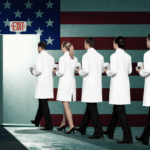
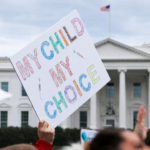
The connection isn’t scientific—vaccines work differently than masks or social distancing. But the connection is institutional. The same public health establishment recommending vaccines once recommended lockdowns and masks. For people who came to see those policies as overreaching or ineffective, that institutional link has poisoned the well. Their distrust isn’t really about the vaccines themselves; it’s about the messengers. Let’s discuss…
Think back to March 2020. The world was experiencing something genuinely apocalyptic. By March 26, the United States had surpassed China and Italy as the country with the world’s highest number of confirmed cases. In early April 2020, more than 800 coronavirus deaths were reported in a single day in New York City. Refrigerated trucks parked outside hospitals served as makeshift morgues because the crush of coronavirus fatalities overwhelmed city hospitals, mortuaries and funeral homes. The U.S. death toll would eventually reach 1 million—the largest recorded death toll in any single country.
In those terrifying early weeks, the response was remarkable. By April 2020, more than 3.9 billion people in more than 90 countries or territories had been asked or ordered to stay at home by their governments. Remember all those signs? The yards full of red placards reading “Thank You Healthcare Workers,” the windows displaying “We’re all in this together” messages? Celebrities and public figures encouraged nightly shows of support for those on the front lines. The solidarity was real, and it was everywhere.
And here’s a critical point: those early measures made complete sense. We were facing a novel respiratory virus with no treatments, no vaccines, and limited understanding of transmission. Distance and masking were literally our only tools. The recommendations weren’t arbitrary—they were evidence-based responses to an unprecedented crisis. Masks worked then and work now (I still mask in healthcare settings and other high-risk environments, as do many people based on their individual risk tolerance and family situations).


But then the emergency stretched on. And on. What started as “15 days to slow the spread” became months of restrictions. To many Americans, it felt like schools stayed closed even as we gathered better data on transmission patterns and risk stratification. Businesses remained shuttered even when outdoor transmission was known to be rare. For some Americans, the messaging seemed to evolve from acknowledging uncertainty to something that felt more rigid and defensive, even as public health officials were navigating unprecedented challenges. Some people began to perceive that public health voices were defending policies beyond their original justification, even as officials worked to adapt recommendations based on evolving evidence.
Public health authorities did eventually modify these policies as evidence evolved—mask mandates were lifted, businesses reopened, and travel restrictions eased. But for some Americans, these changes came too slowly and felt reactive rather than proactive, contributing to perceptions that authorities were reluctant to acknowledge when circumstances had changed.
Crucially, some countries demonstrated that there were alternatives. Sweden, Taiwan, Iceland, and others never implemented strict lockdowns, instead relying on targeted measures like testing, contact tracing, and voluntary behavioral changes. The outcomes varied, but research suggests that while lockdowns were effective in the initial surge, the long-term benefits were more questionable. Studies comparing Nordic countries found that Sweden experienced higher initial excess deaths but similar cumulative mortality over the pandemic period compared to neighbors who locked down.
Meanwhile, the costs of prolonged lockdowns mounted: learning losses equivalent to half a school year in high-poverty schools, increases in domestic violence, delayed cancer screenings and treatments, and a mental health crisis among children and adolescents. The question wasn’t whether lockdowns could slow transmission—they could—but whether the tradeoffs justified their continuation once the initial emergency had passed.
The very communities that had embraced COVID measures with genuine solidarity—that had hung the thank-you signs and applauded healthcare workers—began to feel manipulated. And when those same authorities pivoted to recommending vaccines, the well of trust had run dry.
Fast forward to June 2025, measles is back in places that had eliminated it decades ago. Parents who never questioned childhood vaccines are researching aluminum adjuvants and demanding religious exemptions.
How did we get here? How did emergency measures that initially made sense become the source of such lasting distrust? The answer isn’t simple misinformation or ignorance. It’s a story about what happens when public health policy collides with deeply held American values about autonomy and skepticism of authority—and how even well-intentioned overreach can have consequences that last far longer than the crisis that justified it.
The Moment Trust Broke
The early pandemic response, however well-intentioned, created conditions ripe for backlash. Stay-at-home orders, business closures, school shutdowns, and mask mandates represented an unprecedented peacetime assertion of government authority over daily life. For many Americans, these measures felt less like temporary health precautions and more like a fundamental violation of the social contract.
The messaging around these policies often lacked nuance or acknowledgment of their costs. Public health officials, trained to focus on population-level outcomes, sometimes seemed dismissive of individual concerns about economic hardship, social isolation, or educational disruption. When guidelines changed—masks weren’t necessary, then they were essential; two weeks to flatten the curve became months of restrictions—it made people feel that authorities either didn’t know what they were doing or weren’t being honest about their intentions.
Research on institutional trust shows that Americans’ confidence in government institutions was already declining before the pandemic. The COVID response accelerated this trend, particularly among communities that experienced the economic and social costs of restrictions most acutely while feeling that their concerns were ignored or dismissed.
The Cultural Fault Lines
What made the pandemic response particularly combustible in America was how it intersected with core cultural values around individual liberty and parental autonomy. Unlike societies with stronger collectivist orientations or higher baseline trust in expert authority, American political culture has always been skeptical of being told what to do, especially by distant institutions. Countries with stronger collectivist orientations, like Sweden, also tend to be more compliant with public health recommendations than the US, even when they’re voluntary and not mandatory.
This skepticism has deep historical roots. Robert Bellah’s seminal work on American individualism traces how personal autonomy became central to American identity, creating both the dynamism of American society and its resistance to collective action. The frontier mentality, religious pluralism, and founding principles of limited government all contributed to a culture that prizes individual choice over expert guidance.
For many parents, vaccine mandates for school attendance had been an accepted part of the social contract—a reasonable trade-off for the benefits of public education and community immunity. But when COVID policies made government authority feel intrusive and overreaching, it prompted some to question not just COVID vaccines, but all vaccine requirements. If authorities had overstepped on lockdowns and masks, the reasoning went, perhaps they couldn’t be trusted on vaccines either.
The Appeal of “Medical Freedom”
Into this environment of eroded trust stepped the Make America Healthy Again (MAHA) movement and similar groups, offering a compelling alternative narrative. Rather than framing vaccine hesitancy as ignorance or selfishness, they recast it as an expression of fundamental American values: individual liberty, parental rights, and trust in natural processes over institutional interventions.
The messaging was sophisticated in its appeal to cultural archetypes. “Parental instincts” tapped into the profound responsibility parents feel for their children’s wellbeing. “Natural immunity” evoked connections to nature and skepticism of artificial interventions. “Medical freedom” positioned resistance as patriotic rather than antisocial.
This framing offered something that traditional public health messaging often lacks: agency and empowerment. Instead of being told to “trust the science” or “follow the guidelines,” parents were encouraged to “do your own research” and “trust your instincts.” For people who felt powerless during lockdowns, this message of empowerment was deeply appealing.
Research on cultural cognition by Dan Kahan and others helps explain why this messaging was so effective. People don’t evaluate risks based purely on scientific evidence; they filter information through cultural worldviews that signal group membership and values. For communities that value individual autonomy and distrust authority, questioning vaccines became a way of expressing those values.
The Unintended Consequences
The result has been a broader rejection of public health interventions that extends far beyond COVID vaccines. Routine childhood immunization rates have begun to decline in many communities. Parents who never questioned vaccines before are now asking pointed questions about necessity and safety. Some are opting out of fluoride treatments, vitamin K shots for newborns, and other standard preventive measures.
This shift has real consequences. Measles outbreaks have returned to communities that had eliminated the disease. Whooping cough, nearly eradicated by vaccines, is resurging in some areas. Public health officials find themselves defending interventions that were widely accepted just a few years ago.
The irony is that many of these consequences affect the very communities that were most vocal about government overreach during COVID. Rural and conservative areas that opposed lockdowns and mandates are now seeing higher rates of vaccine-preventable diseases. The assertion of individual choice has collective consequences that can’t be prayed away.

Personal Reflections: The Challenge of Rebuilding Trust
As someone who believes deeply in the power of public health interventions to prevent suffering and save lives, watching this unfold has been both frustrating and instructive. The frustration is obvious—seeing children suffer from diseases we know how to prevent, watching parents make decisions based on fear rather than evidence, witnessing the erosion of herd immunity that protects the most vulnerable.
But the experience has also been instructive about the limits of expertise and the importance of trust in public health. Good science isn’t enough if people don’t trust the institutions delivering it. Effective interventions fail if they’re implemented in ways that violate deeply held values about autonomy and choice.
The COVID response, however necessary from an epidemiological standpoint, failed to adequately account for the social and cultural context in which it was being implemented. By treating resistance as ignorance rather than legitimate concern about institutional overreach, public health authorities missed opportunities to maintain trust even while implementing necessary measures.
Moving Forward: Lessons for Public Health
Rebuilding trust will require acknowledging what went wrong and committing to do better. This doesn’t mean abandoning evidence-based interventions, but it does mean implementing them in ways that respect individual autonomy and cultural values.
Some potential paths forward:
Transparency and humility: Acknowledging uncertainty rather than projecting false confidence. Admitting that policies have costs as well as benefits. Being honest about what we know and don’t know.
Community engagement: Working with local leaders and trusted messengers rather than imposing top-down mandates. Recognizing that different communities may require different approaches.
Respect for autonomy: Finding ways to encourage beneficial behaviors while preserving individual choice. Using incentives rather than mandates where possible.
Addressing root causes: Tackling the underlying factors that make people susceptible to anti-public health messaging—economic insecurity, social isolation, distrust in institutions.
Building bridges through shared humanity: Rebuilding trust also requires reconnecting with why public health measures exist—to protect those who cannot protect themselves. Reframing conversations around vulnerable community members—newborns too young for vaccines, immunocompromised patients, elderly relatives—can help make public health feel less like an institutional mandate and more like collective care. While this won’t solve deep political divisions, it may create space for more productive conversations.
The path back to broad acceptance of public health interventions will be long and difficult. It will require not just better science, but better communication, more humility, and deeper respect for the values and concerns of skeptical communities.
Final Thoughts
The pandemic revealed both the power and the fragility of public health institutions. In months, we developed vaccines that saved millions of lives—a triumph of science. But we also saw how quickly trust erodes when policies feel overreaching.
The current resistance to vaccines isn’t simply misinformation or ignorance. At least some of it is a response to perceived overreach that resonated with deeply held American values about autonomy and skepticism of authority. Understanding this cultural context is essential for rebuilding the trust that makes effective public health possible.
Ultimately, there may be no objective ‘right’ or ‘wrong’ in pandemic policy—it depends on your lens. During the acute crisis, a strong public health response was essential. As a public health scientist watching the board game Pandemic play out in real life, we didn’t have the luxury of weighing every cost against health benefits. Lives hung in the balance.
But as the acute crisis faded, Americans naturally applied other lenses—economic, educational, social—to evaluate the same policies. What made sense through a public health lens felt different to a small business owner facing bankruptcy or a parent watching their child struggle with remote learning.
I don’t envy the officials who made these decisions, nor suggest they were wrong. We can’t know how many lives would have been lost without these interventions. But people formed strong reactions based on their lived experiences, and those reactions now shape how future policies will be perceived. My goal isn’t to judge whether public health ‘got it wrong,’ but to understand how others see our decisions—because that understanding is essential for rebuilding trust.
The stakes are too high to dismiss vaccine-hesitant parents or double down on counterproductive approaches. We need to honor both scientific evidence and cultural values, to be epidemiologically sound and democratically legitimate.
The children suffering from preventable diseases deserve nothing less.
Stay Curious,
Unbiased Science
Jess Steier is a public health scientist dedicated to bridging the gap between complex scientific evidence and public understanding. Jess is the Founder of Unbiased Science, CEO of Vital Statistics Consulting, and Executive Director of The Science Literacy Lab (a 501c3 non-profit organization), she has built her career on translating complex scientific concepts into accessible language while maintaining unwavering commitment to scientific integrity.
A version of this article was originally posted at Unbiased Science and has been reposted here with permission. Any reposting should credit the original author and provide links to both the GLP and the original article. Find Unbiased Science on X @unbiasedscipod