GLP spaces on X: Climate change and meat. Separating fact from hype

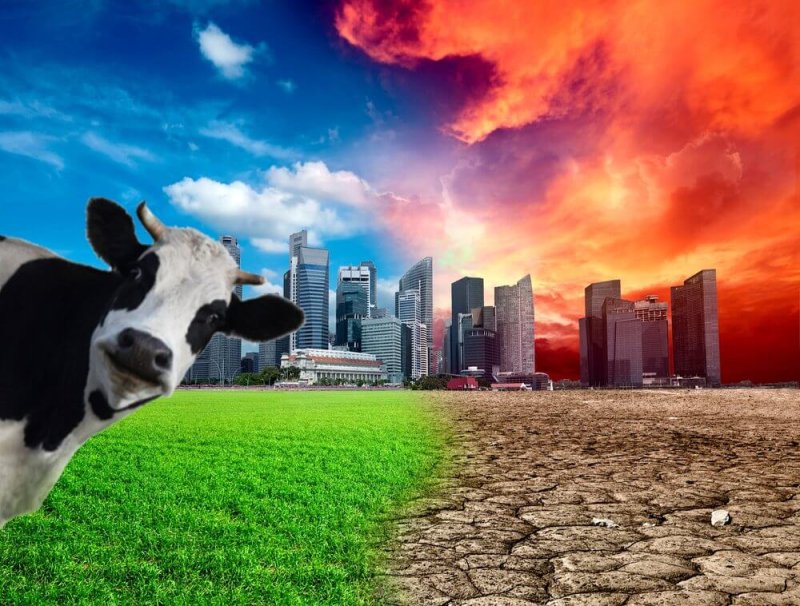
cow global warming
Credit: Science ABC
Red meat is often scapegoated as a major villain in the popular story about our global efforts to prevent a runaway climate crisis. Uncritically amplifying this narrative, the media treats animal agriculture as an irredeemable bad guy, a greenhouse criminal that caters to the decadent preferences of beef-addicted Westerners who refuse to cut their intake of animal products even as the climate warms and our planet suffers. It’s the kind of conspiratorial tale reporters live to tell—and it’s mostly fabricated.

In truth, animal agriculture’s environmental footprint is shrinking thanks to major advancements in sustainable farming practices. Improved feed additives, breeding practices and other technological innovations have significantly reduced the amount of land dedicated to raising livestock while driving increases in the production of milk, meat and eggs.

Moreover, greenhouse gas emissions of animal agriculture are often exaggerated. Critics frequently cite inflated figures, like the 14.5% of global emissions attributed to livestock in a 2006 FAO report, which included indirect factors like land use change. More recent analyses suggest livestock’s direct contribution is closer to 5-6% globally. These figures are dwarfed by sectors like energy (35%) and transportation (14%).

Follow the latest news and policy debates on sustainable agriculture, biomedicine, and other ‘disruptive’ innovations. Subscribe to our newsletter.

Beyond emissions, animal products provide essential nutrients that plant-based alternatives struggle to match. Red meat is a dense source of bioavailable protein, iron, zinc, and vitamin B12—nutrients critical for muscle health, cognitive function, and immune support. While plant-based diets can meet nutritional needs with careful planning, they often require supplementation or fortification to avoid deficiencies, particularly in B12 and heme iron. For many, especially in developing regions, red meat remains a practical, nutrient-rich staple. Dismissing it ignores both its declining environmental footprint and its irreplaceable role in human diets.

Join GLP founder Jon Entine, Liza Lockwood and Cameron English as they discuss the facts about climate and meat with Dan Rejto, Director of the Food and Agriculture program at the Breakthrough Institute. Follow this link or listen to the conversation below:


Dr. Liza Dunn is a medical toxicologist and the medical affairs lead at Bayer Crop Science. Follow her on X @DrLizaMD

Dan Blaustein-Rejto is the Director of the Food and Agriculture program at Breakthrough. Follow Dan on X @danrejto

Jon Entine, founder and executive director of the Genetic Literacy Project, is an Emmy-winning investigative TV News producer and author of seven books, including three on genetics. Please follow him on X at @JonEntine

Cameron J. English is the director of bio-sciences at the American Council on Science and Health. Visit his website and follow him on X @camjenglish


{{ reviewsTotal }}{{ options.labels.singularReviewCountLabel }}
{{ reviewsTotal }}{{ options.labels.pluralReviewCountLabel }}
{{ options.labels.newReviewButton }}
{{ userData.canReview.message }}

Related Articles

Infographic: Global regulatory and health research agencies on whether glyphosate causes cancer

Infographic: Global regulatory and health research agencies on whether glyphosate causes cancer

Does glyphosate—the world's most heavily-used herbicide—pose serious harm to humans? Is it carcinogenic? Those issues are of both legal and ...

Most Popular

Screenshot-PM-24
Viewpoint: The herbicide glyphosate isn’t perfect. Banning it would be far worse.
79d03212-2508-45d0-b427-8e9743ff6432
Viewpoint: The Casey Means hustle—Wellness woo opportunism dressed up as medical wisdom
ChatGPT-Image-Mar-27-2026-11_27_05-AM
The myths of “process”: What science says about the “dangers’ of synthetic products and ultra-processed foods
d-b
Blocked arteries, kidney stones, nausea, constipation, fatigue: Long list of health problems caused by too much vitamin D 
ChatGPT-Image-Mar-10-2026-01_39_01-PM
Viewpoint—“Miracle molecule” debunked: Why acemannan supplements don’t work
Screenshot-2026-05-01-at-11.56.24-AM
‘Science moves forward when people are willing to think differently’: Memories of DNA maverick Craig Venter
ChatGPT-Image-Mar-3-2026-01_17_14-PM
MAHA wellness influencers deride proven anxiety medications, tout lifestyle fixes
Screenshot-2026-04-03-at-11.15.51-AM
Paraben panic: How a flawed study, media hype, and chemophobia convinced the public of the danger of one of the safest classes of preservatives
ChatGPT-Image-Apr-30-2026-12_21_05-PM-2
The tech billionaires behind the immortality movement
glp menu logo outlined

Get news on human & agricultural genetics and biotechnology delivered to your inbox.