From tubers to tree seeds: Solynta’s tech to overcome centuries of potato breeding challenges

Credit: Solynta
Credit: Solynta

Breeding potatoes is notoriously difficult. First, commercial potato cultivars don’t self-pollinate, which has historically prevented breeders from creating stable, genetically pure inbred lines needed for hybrid breeding.

Second, most commercial varieties are tetraploids, with four sets of chromosomes that make inheritance unpredictable. Third, they are highly heterozygous, with extensive genetic variation, such that desired traits can be lost or diluted in crosses. 

Finally, … growers typically propagate potatoes clonally by planting tubers (small pieces of potato) because the seeds produce highly variable offspring with mixed traits.

Mis- and disinformation are distorting science and public policy. Subscribe to our Daily and Weekly Digests for incisive coverage of ‘disruptive’ innovations in AI, agricultural biotechnology, food, chemicals, nuclear energy, vaccines, and other disruptive innovations.

Clonal propagation ensures genetic consistency but in turn preserves disease … , says Charles Miller, director of strategic alliances and development at Dutch biotech firm Solynta.

“Think of it like a photocopy,” he says. “Each time you make a copy, the quality gets less.”
Put simply, observes Miller, all this makes potato breeding a crapshoot.

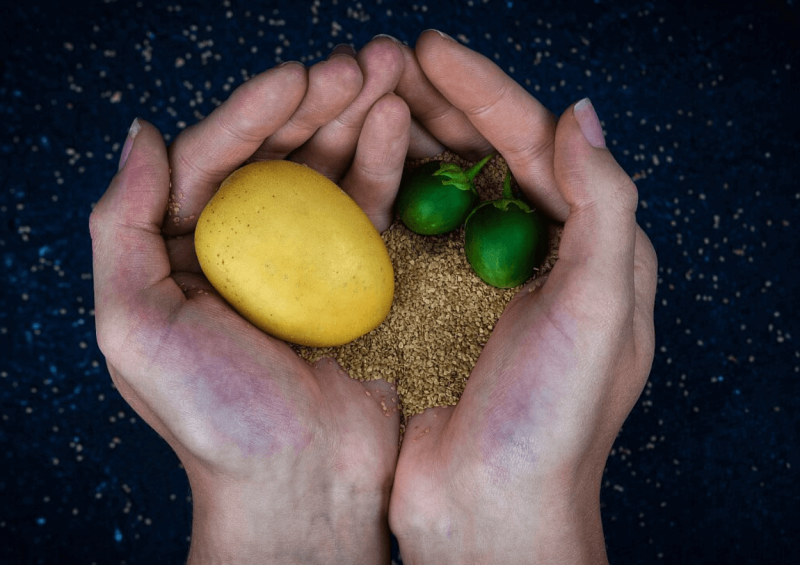
Solynta, however, has pioneered tech allowing potatoes to self-pollinate and produce non-GMO true seeds in a controlled way, turning a game of chance into something far more predictable, he says. It also means growers can kiss goodbye to saving, storing, and planting tubers for next season’s crop.


This is an excerpt. Read the original post here

Related Articles

Infographic: Global regulatory and health research agencies on whether glyphosate causes cancer

Infographic: Global regulatory and health research agencies on whether glyphosate causes cancer

Does glyphosate—the world's most heavily-used herbicide—pose serious harm to humans? Is it carcinogenic? Those issues are of both legal and ...

Most Popular

ChatGPT-Image-Sep-23-2026-02_36_39-PM
Viewpoint: After firing the entire National Science Board, Trump reshapes funding initiatives. Here’s the good and the bad.
ChatGPT-Image-Mar-10-2026-01_39_01-PM
Viewpoint—“Miracle molecule” debunked: Why acemannan supplements don’t work
ChatGPT-Image-Sep-10-2026-10_36_07-AM
Viewpoint: Even lousy scientific articles can shield authors when they hype dubious health claims and products
sorghum farmers in kenya FARMERS TREND
Here are all the ways CRISPR gene editing is transforming Africa’s staple crops—and there’s a lot more innovation to come
Screenshot-2026-10-01-at-11.21.27-AM
Vaccine hesitancy, like malaria, surges globally, topping 35% in some countries
ChatGPT-Image-Sep-30-2026-01_25_34-PM
Blood tests for Alzheimer’s? The latest grifter, social media scam.
ChatGPT-Image-Sep-30-2026-01_38_36-PM
Viewpoint: Died “with measles” vs. died “from measles”: RFK, Jr.’s dangerously subversive word games
ChatGPT-Image-Sep-21-2026-03_15_09-PM
Viewpoint: Chipotle-inspired lesson: 10,000 sick customers suggest that processed foods can be safer than fresh ones
ChatGPT-Image-Sep-30-2026-01_11_07-PM
How U.S. teamed with Russia to block global human AI weapons oversight
Screenshot-2026-09-28-at-1.16.38-PM
Defying public perceptions, U.S. cancer deaths plunged 35% since 1991
glp menu logo outlined

Get news on human & agricultural genetics and biotechnology delivered to your inbox.