The scientific evidence increasingly refutes the alarmist narrative that our farmland bird and insect populations are disappearing due to intensive agriculture. In fact, total bird and insect numbers in Britain have been stable for the past 30 years. Freshwater insects are thriving. Many of the NGOs behind these misleading claims of ecological collapse have built their campaigns, and their fundraising strategies, on such fear-mongering. In doing so they risk undermining the very causes they claim to represent, argue Peter Button, Daniel Pearsall and Matt Ridley.
[Science] for Sustainable Agriculture reiterated its call for an urgent review of the ‘limited and highly selective’ list of indicator species used by the UK Government to determine and report the status of bird life on British farmland.
It followed the publication of a new report from the UK environment department, Defra, entitled Wild bird populations in the UK and England, 1970 to 2024, which suggests that Britain’s farmland bird numbers declined sharply during the 1970s and 1980s, and that while the rate of decline has since slowed, “populations have continued to decline at a fast rate, declining by 11% in the five years since 2019.”
Predictably, the Defra report was greeted by media headlines claiming that Britain’s farmland bird populations have plummeted by more than 60% since 1970, and reinforcing a popular narrative that modern intensive agriculture is driving an ecological crisis in our wildlife.
It also prompted calls from RSPB, one of the principal authors of the Defra report, for more taxpayers’ money to be channelled into ‘nature-friendly farming’.
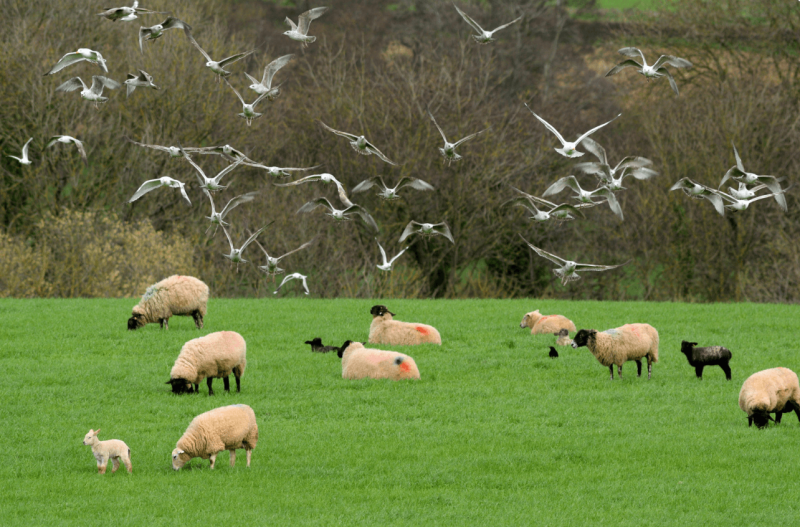
Yet a closer look at the evidence reveals a very different picture. The government’s biodiversity assessments are based on a narrow and outdated list of just 19 bird species – a snapshot frozen in time over half a century ago.
The farmland bird index no longer reflects the species diversity found on Britain’s farmland, and excludes important species such as the carrion crow and chaffinch, increasingly important farmland birds such as the herring and lesser black-backed gulls, as well as thriving birds of prey like the red kite and buzzard.
By contrast, more comprehensive datasets, covering dozens of farmland-associated species, reveal that overall bird populations have largely remained stable, even showing modest increases over recent decades.
This discrepancy matters. Not only does it call into question the reliability of official biodiversity indicators, but it also exposes the undue influence of environmental NGOs in shaping how such data are presented.
Many of these organisations have built their campaigns, and indeed their fundraising strategies, on alarmist claims that biodiversity is collapsing under the weight of intensive farming. While such rhetoric may generate headlines and donations, it risks distorting genuine conservation priorities.
Biodiversity is not static; species rise and fall in response to multiple factors including predation, disease, climate change, and competition. Focusing narrowly on productive agriculture as the main culprit ignores these complexities — and potentially diverts attention from more pressing challenges where conservation efforts could make a real difference.
Exactly the same scenario is playing out in relation to Britain’s insect populations, which we are frequently warned are in freefall and at risk of an insect ‘apocalypse’.
[A] grouping of UK environmental NGOs issued ‘The Bristol Declaration’, warning of an ‘insect declines crisis’, and calling for action in response to the ‘alarming and ongoing decline of the United Kingdom’s insect populations.’
According to the declaration, the causes of these declines are ‘well-evidenced’, and include ‘pesticide and chemical use’ and ‘intensive agriculture’ alongside other factors such as habitat loss and climate change.
Very timely, then, that this should follow the publication in the journal Nature Communications of peer-reviewed research into the status of Britain’s insect populations which, virtually mirroring the more comprehensive wild bird data, concludes that while there have been changes in insect species diversity and distribution over the past three decades, there has been ‘no Great Britain-wide decline since 1990.’
The paper, led by scientists at Rothamsted Research but also involving representatives of some of the NGOs behind The Bristol Declaration, reveals a complex picture. While overall insect numbers have been stable since 1990, localised shifts and community restructuring are widespread, driven largely by urbanisation, landscape simplification, and climate change.
The paper suggests that this more nuanced understanding of the changes taking place in Britain’s insect populations is at odds with the pervasive narrative of general insect collapse. The authors emphasise the importance of local context and species-specific responses.
Using machine-learning models to examine more than 1200 insect species across nine major groups – ranging from butterflies and moths to bees and hoverflies – the scientists tracked the changes in distribution and identified the traits that mediate these responses.
Notably, two traits emerged as particularly influential: habitat breadth, which determines how species respond to changing landscape diversity; and voltinism – or the number of generations produced in a year – which influences how insects adapt to rising temperatures and altered seasonal cycles.

The study’s findings challenge the simplistic notion that all insects are uniformly declining. One of its most critical insights is the interplay between species traits and environmental drivers. By understanding how traits like voltinism and habitat breadth mediate responses to environmental changes, conservationist scientists can better predict which species are likely to thrive and which are vulnerable, with significant implications for the development of more evidence-based conservation and land use policies.
Above all, the study directly contradicts and confronts the NGO-led narrative that our insect populations are disappearing at an alarming rate, or that a move away from high-yield agriculture would be beneficial to insect numbers.
In fact, by requiring more land to meet our food needs, a greater emphasis on lower-yielding, so-called ‘nature-friendly’ farming may actually make things worse.
Nor is this Nature Communications paper alone in challenging claims of an ‘insect decline crisis’ in the UK.
Another comprehensive study led by researchers at the UK Centre for Ecology and Hydrology (CEH) and published in December 2023, found that freshwater invertebrate biodiversity in England has improved significantly since 1989.
In one of the largest and most wide-ranging analyses of long-term monitoring data in the world – spanning over 30 years – the researchers analysed more than 223,000 freshwater records collected by the Environment Agency between 1989 and 2018, examining species such as dragonflies, snails, mayflies, shrimp and worms. On average, the number of invertebrate families at each site showed a 66% increase. Pollution-sensitive species like mayflies, stoneflies and caddisflies saw particularly strong recoveries, with diversity increasing by 300%.
The improvements in the study were observed across all river types and regions, from urban lowlands to rural uplands, and the researchers concluded that water quality improvements have been the key driver in reversing biodiversity decline.
So, the scientific evidence indicates that prospects for our freshwater insects, singled out for concern by NGOs in The Bristol Declaration, are getting better, not worse.
Policymakers and the mainstream media must take heed.
If policy decisions and public opinion are guided by selective evidence and fear-driven NGO narratives, the danger is not just misinformation but the misallocation of scarce resources needed for nature protection.
The competing demands on our finite land resources are ever-intensifying. By promoting a lower-yielding, land-sharing approach to farm policy, while at the same time demonising intensive agriculture and campaigning against new technologies such as genome editing which hold such promise to reduce farming’s environmental footprint, these NGOs are working against the conservation and biodiversity causes they claim to represent.
Of course, an arable field contains fewer insects than an equivalent area of scrubland or forest because it contains fewer plant species by definition. But that’s not the comparison that matters. What counts is whether ten acres of lower yielding farmland has more or fewer insects and birds than eight acres of high yielding land plus two of “spared land” if they produce the same tonnage of harvested crop.
The scientific evidence increasingly points to land-sparing – focusing high-yield agriculture on our most fertile land and leaving more land for intact nature and biodiversity conservation – as the most efficient, cost-effective and sustainable way to meet our food needs, achieve conservation goals and mitigate climate change. Releasing more land for nature is also likely to make it more accessible for public enjoyment of the countryside – a win-win-win for food security, biodiversity and the public good!
Peter Button recently retired as Vice Secretary-General at the International Union for the Protection of New Varieties of Plants (UPOV), based in Geneva, an intergovernmental organisation whose mission is to provide and promote an effective system of plant variety protection, with the aim of encouraging the development of new varieties of plants for the benefit of society. Find Peter on X @PeterJohnButton
Daniel Pearsall is an independent consultant specialising in communication and policy development in the farming, food chain and agri-science sectors. He runs a small livestock farm in Scotland. He co-ordinates the Science for Sustainable Agriculture initiative. Find Daniel on X @PearsallDaniel
Matt Ridley is a science writer and co-author of Viral: The Search for the Origin of Covid-19, with Alina Chan. He has been a journalist and a businessman and served for nine years in the House of Lords. Find Matt on X @mattwridley
A version of this article was originally posted at Science for Sustainable Agriculture and is reposted here with permission. Any reposting should credit both the GLP and original article. Find them on X @SciSustAg