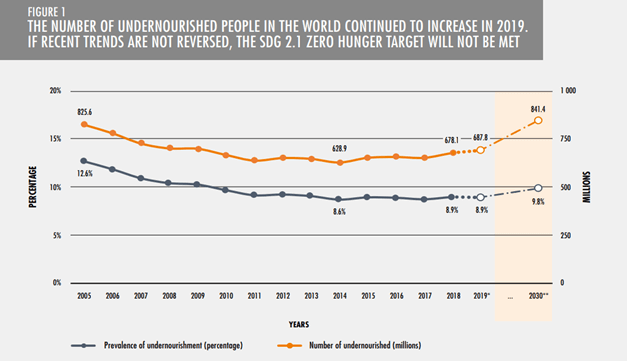
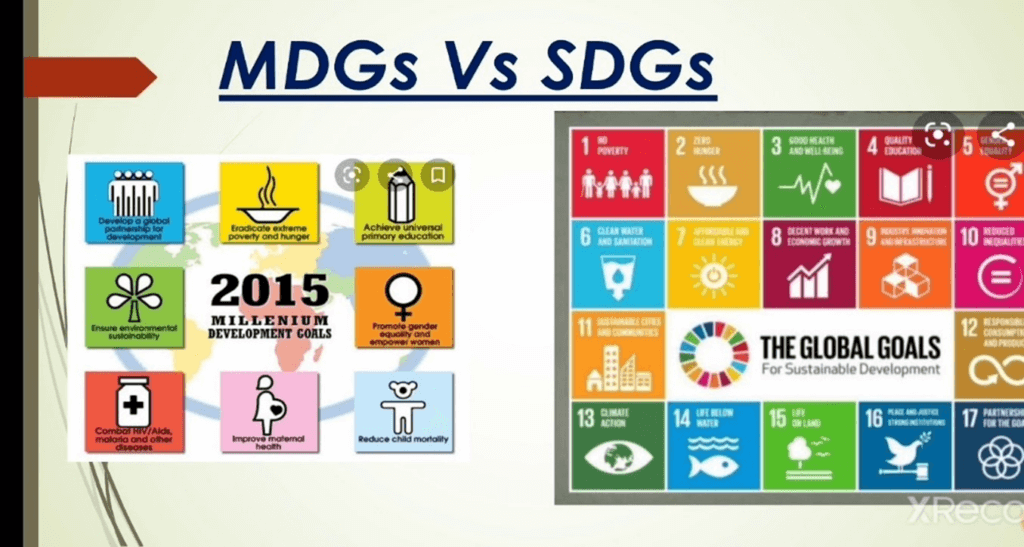
Following the MDGs, in 2015, the UN launched its next set of goals to be achieved by 2030, known as the 17 Sustainable Development Goals (SDGs). The SDGs split the first MDG goal of poverty and hunger eradication, into SDGs Goal #1 to eradicate poverty and Goal #2 to achieve zero hunger. As indicated in the FAO figure above, between 2015 and 2019, the number of food insecure increased by about 60 million and is predicted to rise by potentially as much as another 150 million by 2030, a level higher than at any previous point in time in the 21st century. In 2023, the World Health Organization estimated there were 733 million individuals who were food insecure, which is 1 in 11 people worldwide.
Looking for solutions to pressing goals
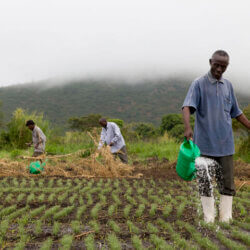
When it comes to SDG #2 to achieve zero hunger, there will be no one solution. This means an open mind is needed, as well as the willingness to navigate all options, if we want to end hunger. However, environmental non-governmental organizations (ENGOs) have been highly critical of a set of innovative technologies that could help to further reduce hunger. These innovations have robust evidence of improving crop yields, which contributes to food security and reducing extreme poverty. Yet, many ENGOs advocate for returning to subsistence agriculture, involving no modern inputs such as synthetic fertilizers and chemicals as well as higher-yielding genetically modified (GM) crop varieties.
These ENGOs believe that organic crops, agroecology, and regenerative agriculture will somehow overcome the significant challenges to increased food production that exist such as drought and increases in plant diseases and insects. In an ideal world, these crop production options might work, as they are cheaper and easier to teach, but they have consistently failed for centuries to produce the amount of food and protein needed. Examinations of these production processes confirm substantial yield lags compared to modern crop production practices, with many directly consumable products such as produce and fruit yields lagging by 30% or more. Yield lags of this level have been confirmed in industrial countries, where organic producers have access to dozens of natural chemical compounds designed to protect their crops from weed, insect, and disease infestations. Yield losses of well over 30% should be expected in countries that lack access to these organic crop protection products. Left uncontrolled, weeds, insects, and plant diseases are capable of destroying a crop, reducing yield to zero.
In a perfect world, farmers wouldn’t need to use pesticides to control weeds, insects, and diseases that reduce crop yields, nor would they have to apply fertilizer to ensure peak yields. If farmers only had to plant seeds and then reap bumper yields, it would reduce farmer stress and benefit improved food security. However, this mythical utopia only exists in ENGO fairytales. The solution to feed the millions of undernourished (1 in 5 in Africa), is to invest in and adopt proven technologies. Such a utopic system is also not the way to be profitable for all producers in the developed world.


At the 2004 Agricultural Biotechnology International Conference in Cologne, Germany, Florence Wambugu, a Kenyan plant pathologist and virologist, said that Africans know what organic production is capable of as they’ve been using it for 10,000 years and that now they want something different. Organic and agroecological production practices haven’t been able to adequately feed societies for thousands of years and nothing is going to change these facts.
Achieving SDGs by 2030
To me, it is increasingly evident that ENGOs lack the commitment to achieving the SDGs as, despite over 20 years of robust evidence of increased yields and reduced input use from modern crop technologies, these organizations persist in their opposition. Scientific and academic evidence is not part of the operational practices of these ENGOs. It defies logic that ENGOs continue to advocate for yield-reducing technologies when millions of farmers using innovative technologies are receiving higher yields and profits. If it were not profitable, they would not still be using these technologies. There is conclusive evidence that agricultural innovations strongly contribute to both SDG #1 and #2, reducing poverty and hunger.
One would certainly hope that no ENGO activist is deliberately opposing modern agricultural innovations with the intent of perpetuating poverty and starvation. However, the actions of ENGOs are needlessly perpetuating both. Technologies are globally available that can make meaningful reductions in poverty and hunger. Yields could be increased in many crop kinds within the next few years if barriers to technology innovations were removed. The potential exists to reverse the upward trend in food insecurity, but it’s going to require ENGOs to set aside their political agendas.