Would humans re-evolve if we went extinct?

Screenshot 2025-11-03 at 1.49.47 PM

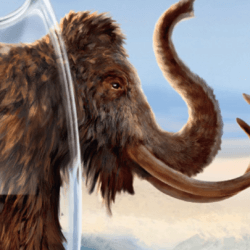
To recreate an extinct species exactly, evolution would have to reproduce not just its traits but its entire genetic code — an impossibly specific combination. Each species’ genome contains billions of base pairs, and even small mutations (a few hundred or thousand changes) create new biological identities.

With millions of mutations occurring across countless generations, the odds of nature reassembling the same blueprint are effectively zero.

So, it’s not looking hopeful for Homo sapiens. If every single human were to die tomorrow, the chance of the Homo sapiens genome evolving identically is negligible. The question then becomes, could human-like traits reemerge over billions of years?

Mis- and disinformation are distorting science and public policy. Subscribe to our Daily and Weekly Digests for incisive coverage of ‘disruptive’ innovations in AI, agricultural biotechnology, food, chemicals, nuclear energy, vaccines, and other disruptive innovations.

The paleontologist Simon Conway Morris points out that there are common and widespread patterns of convergent evolution in life’s history, where similar adaptations, like eyes, wings, and streamlined bodies, evolved independently in unrelated lineages.

For Conway Morris, human-level intelligence is a convergent trait that might well appear again given the right conditions. Evolution, he argues, is not purely random; it’s shaped by deep structural patterns that lead to recurring outcomes — even complex ones like minds capable of self-awareness.

This is an excerpt. Read the original post here


Related Articles

Infographic: Global regulatory and health research agencies on whether glyphosate causes cancer

Infographic: Global regulatory and health research agencies on whether glyphosate causes cancer

Does glyphosate—the world's most heavily-used herbicide—pose serious harm to humans? Is it carcinogenic? Those issues are of both legal and ...

Most Popular

ChatGPT-Image-Sep-17-2026-12_28_43-PM
Vitamin D, omega-3 fish oil and glucosamine supplements could cause brain damage 
ChatGPT-Image-Mar-10-2026-01_39_01-PM
Viewpoint—“Miracle molecule” debunked: Why acemannan supplements don’t work
ChatGPT-Image-Sep-17-2026-10_17_15-AM
Viewpoint: Why are the less intelligent more likely to be conservative—and smarter people more socially liberal?
Screenshot-2026-09-10-at-12.20.19-PM
'Jet fuel didn't melt the steel': 9/11 conspiracy theories debunked
Screenshot-2026-09-16-at-12.07.47-PM
The heated debate over trans athletes in the WNBA
Screenshot-2026-08-12-at-11.31.46-AM
AI is helping develop new vaccines
ChatGPT-Image-Sep-9-2026-02_48_24-PM
Viewpoint: Trump-RFK Jr. report on “Gender Ideology & Left-wing Ideology’ targets LGBTQ community—and science
ChatGPT-Image-Sep-15-2026-12_15_00-PM
Viewpoint: Women, depression and empathy: Explaining the gender gap in views about child-murderer Lindsay Clancy
Screenshot-2026-09-11-at-2.26.23-PM
Newly approved GMO chestnut trees planted across from the White House are stirring debate
Screenshot-2026-09-17-at-10.24.54-AM
Viewpoint: Dubious environmental fears: Why the AI buildout is critical to America’s ecological future
Screenshot 2026-09-11 at 12.39
Child-monitoring apps: When the cure is worse than the harm—and how the technology could be tweaked
ChatGPT-Image-Sep-15-2026-11_36_23-AM
Doomsday cult? Why we should be suspicious of end-of-the-world claims
glp menu logo outlined

Get news on human & agricultural genetics and biotechnology delivered to your inbox.