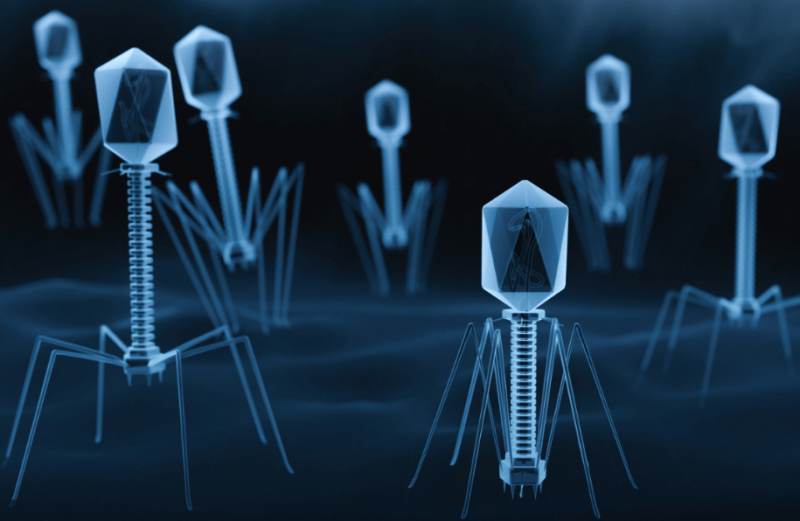

A group of Stanford University scientists posted a paper online in mid-September, describing a feat that could have been plucked from the pages of science fiction: They used artificial intelligence to design new viruses capable of killing bacteria.
Depending on your belief system, AI was doing what evolution, or God, or scientists working with genome-engineering tools aim to do.
“Machines are rethinking what it is to be human, what it is to be alive,” said Michael Hecht, a chemistry professor at Princeton University focused on designing novel proteins and artificial genomes. “I find this very unsettling and staggering. They are devising, coming up with novel life forms. Darwin 2.0.”
Reactions span the gamut, from “this changes everything” to a scientific shrug. Are machines about to generate novel forms of life, including one that could kill us all? Or is this a powerful new tool — with capabilities that build on what people have been doing for years with more traditional techniques?




Depends who you ask.