


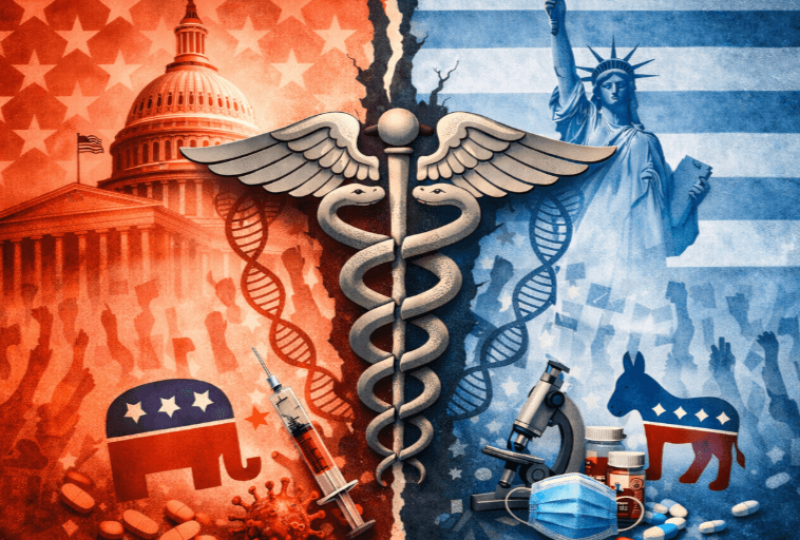
Ideology-driven misinformation is a grave and growing threat to science and society. False claims spread faster than facts; confusion has displaced trust, and fear too often substitutes for evidence.
Science is not infallible, but it corrects itself. Misinformation does not. Our collective well-being increasingly depends on media literacy, accountability, and the willingness to prioritize evidence over ideology.
Health policies shaped by politically motivated misinformation have already weakened confidence in science and evidence-based medicine. The consequences will extend far beyond the current news cycle, affecting individuals and communities for years to come.
That reality is why the Genetic Literacy Project is resharpening its focus heading into 2026. Over the coming weeks, we will complete a transformation of our name to the Science Literacy Project, reflecting a broader scope and tighter mission.
This evolution is not a departure but a recommitment — paired with a more explicit mandate to confront misinformation across the constructively disruptive technologies reshaping modern society.
As GLP becomes SLP, we will continue rigorous reporting on agricultural innovation, crop protection, and advances in gene editing and gene-based medicine. We will sharpen coverage into other science controversies where misinformation proliferates, including vaccines and public health, chemicals and risk assessment, energy technologies such as nuclear, fracking and geothermal, and the rapid spread of artificial intelligence, which influences nearly every scientific frontier.
We launch this transition with a retrospective look at the major features from the past year that exemplify this expanded focus. These articles are grouped into six thematic areas, reflecting both the breadth of modern science and the recurring ways ideology undermines evidence and policy.
- Politicization of Health & Science
- Vaccines Under Fire
- Deadly Rise of Wellness Grift
- Disinformation Attacks on Food and Farming
- Chemophobia and Monetized Activism
- AI’s Open Questions
The articles we’ve chosen to highlight from 2025 on these topics reflect the clearer, more focused mission that will define the Science Literacy Project going forward.
In Part 1, we focus on threats to public health with Health and Human Services Secretary Robert F. Kennedy, Jr., the literal incarnation of dangerous disinformation.
Politicization of Health & Science
The appointment of Health and Human Services Secretary Robert F. Kennedy, Jr. and other evidence-based skeptics has elevated science denialism to the highest levels of government, threatening public health.
Viewpoint: New Health and Human Services Secretary RFK, Jr. — America’s health, food and farming nightmare begins by Jon Entine and Kevin Folta
The MAHA movement has accelerated vaccine disinformation and legitimized junk science pushed by wellness grifters, some of whom now hold influential roles within the current administration.



Vaccines, politics, and the fragile future of public health by Henry Miller
We also examine the unintended consequences of the well-intentioned identity and inclusivity efforts. The challenge ahead is not whether diversity and inclusion matter, but how they can be structured to strengthen rather than distort science.
Viewpoint: DEI is infecting America’s science and medical establishment by Henry Miller
Looking back better prepares us to address future challenges posed by the current surge in disinformation. These three articles from 2025 on the politicization of health policy and information illustrate our refined focus going forward.
Follow our six-part Year in Review series on Instagram
Jon Entine is the founding executive director of the Genetic Literacy Project and winner of 19 major journalism awards. He has written extensively in the popular and academic press on agricultural and population genetics. You can follow him on X @JonEntine
Henry I. Miller, a physician and molecular biologist, is the Glenn Swogger Distinguished Fellow at the Science Literacy Project. He was the founding director of the FDA’s Office of Biotechnology. Find him on his website: henrymillermd.org
Kevin M. Folta is a professor in the Horticultural Sciences Department at the University of Florida and host of the Talking Biotech podcast. Follow Kevin on X @kevinfolta
































