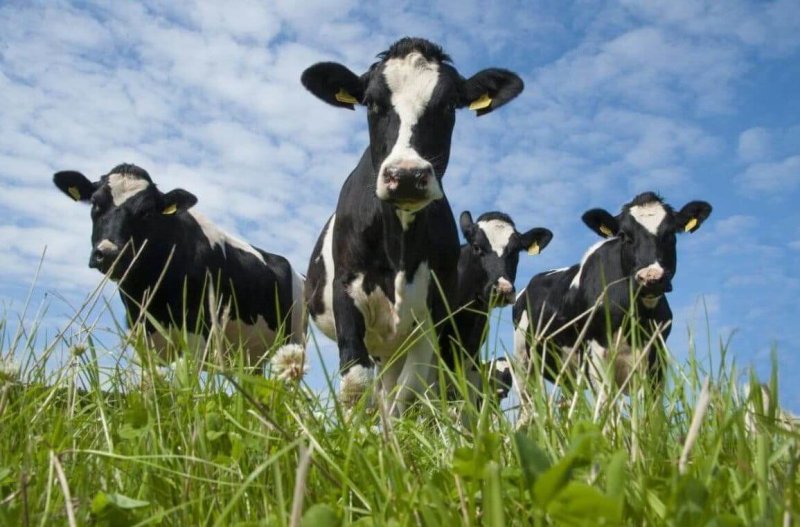

Roughly a quarter of all global greenhouse gases come from food production, and beef accounts for the single biggest share. …
A big reason is that cows, regardless of what they’re raised for, produce methane. In fact, they have it coming out of both ends day and night. And, while methane disappears faster than carbon dioxide, it’s about 80 times as potent as a greenhouse gas during its first 20 years in the atmosphere.
The big thing in climate terms is how long the cows are around belching and tooting methane.
In the United States, most cows begin life on a pasture. At six months, those headed for industrial production move to feedlots to be “finished” on high-calorie grain. By about 18 months, they reach market weight and are slaughtered.




Grass-fed cows, by contrast, can take up to three years to reach market weight. And all that extra time means more methane. “There’s a whole bunch of reasons you might prefer grass-fed beef,” Dr. Smith [a professor at the University of Aberdeen in Scotland who focuses on climate change and agriculture] said. But in terms of climate-warming emissions, “it actually comes out no better — in fact, a little worse.”