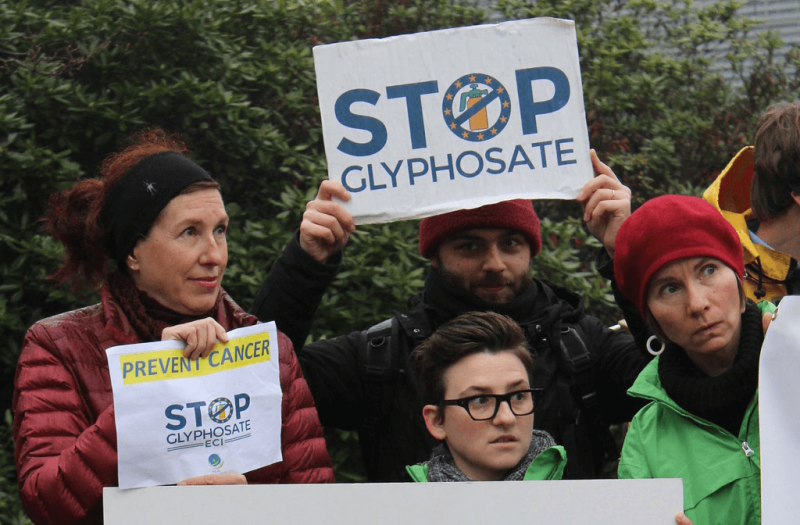

[W]e learned that an old narrative review published 25 years ago about glyphosate has been retracted. Of course, as soon as glyphosate is mentioned, even when it’s a trivial news item of no real interest to the general public, the parrot team (the activist class) seizes upon it. As usual, they distort reality to create, once again, a disproportionate controversy. Once a misleading narrative has been constructed, it’s essential to maintain this framework to avoid returning to the facts and primary sources.
I’ll … explain why this so-called scandal is, in reality, largely overinterpreted. We’re dealing here with a genuine journalistic disaster.
[T]he scientific community is not in shock. What we are seeing instead is the usual small circle of activists striving to express their outrage at all costs. It’s even difficult to know where to begin, as several passages contain factual errors or shifts in perspective that mislead the public.
Let’s start with the basics. This isn’t a study, but a narrative review . A narrative review is a synthesis article in which specialists summarize, interpret, and discuss the current state of scientific knowledge on a given topic. Unlike a systematic review, it doesn’t rely on a strict, predefined methodological protocol. Writing it can take months, draws on a vast body of properly cited and contextualized scientific literature, and doesn’t produce any original data. Therefore, it’s not a study.
Public health agencies are perfectly entitled to consult and cite narrative reviews. However, it is crucial to understand that scientists at Health Canada, the PMRA, or other regulatory bodies do not treat them as the final authority. Their role is to revisit the cited primary studies, examine the data, and assess the methodological quality of each cited study. If necessary, they can also verify certain calculations or repeat targeted analyses.
Furthermore, as Health Canada pointed out , this narrative review was only one source among approximately 1,300 studies used to support the decision to register glyphosate. This represents about 0.08% of the entire literature reviewed.
Zero point zero eight percent.
A “scandal” that isn’t one
Let’s now turn to the reason for this famous retraction that sent shivers through the activist class this week. Beyond the media frenzy and outraged posturing, it’s clear that this so-called SCANDAL is, once again, nothing more than a load of nonsense.
The retraction stems from a transparency issue: the journal’s list of authors was incomplete. Some Monsanto employees who contributed to the writing were not included. While this constitutes a breach of transparency and editorial ethics, it is by no means a serious case of scientific fraud, contrary to Catherine Mercier’s assertion.
Scientific fraud, strictly speaking, rests on three well-established criteria: plagiarism, fabrication, or falsification of data. However, none of these criteria are present here.
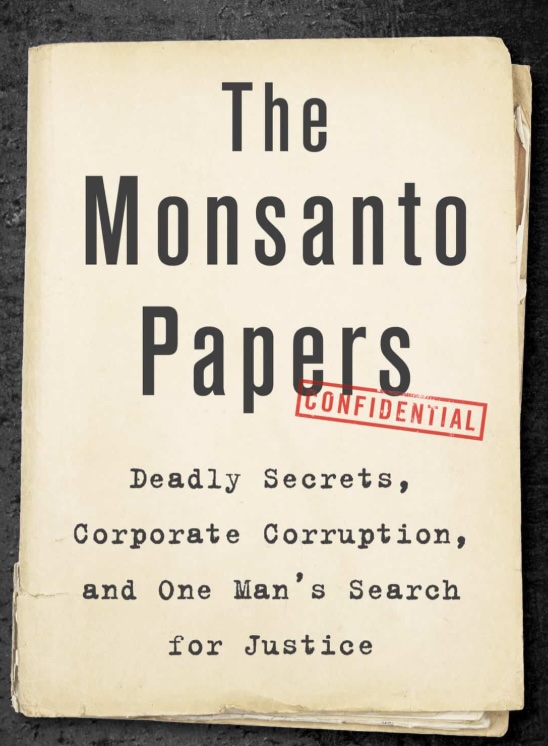
When discussing glyphosate with activists, the Monsanto Papers almost always end up being brandished as the ultimate argument meant to invalidate the conclusions of regulatory agencies. Thousands of pages of internal documents are then cited, presented as proof of systematic manipulation of science.
However, upon closer examination, these documents primarily paint a picture of a company seeking, sometimes clumsily and sometimes questionably, to influence public opinion. They reveal, in particular, public relations tactics akin to astroturfing: ethically questionable, certainly, but falling under the umbrella of communication and image, not a corruption of science or an attempt to deceive the risk assessment process.
But if there’s one specific point from the Monsanto Papers that consistently resurfaces in activist discourse, it’s that of ghostwriting. Presented as the ultimate proof of widespread scientific fraud, this term is often used without nuance, as if it alone were enough to invalidate the entire body of scientific knowledge and regulatory decisions. Yet, here again, there’s a huge gap between what the documents actually reveal and the narrative surrounding them in the public sphere.
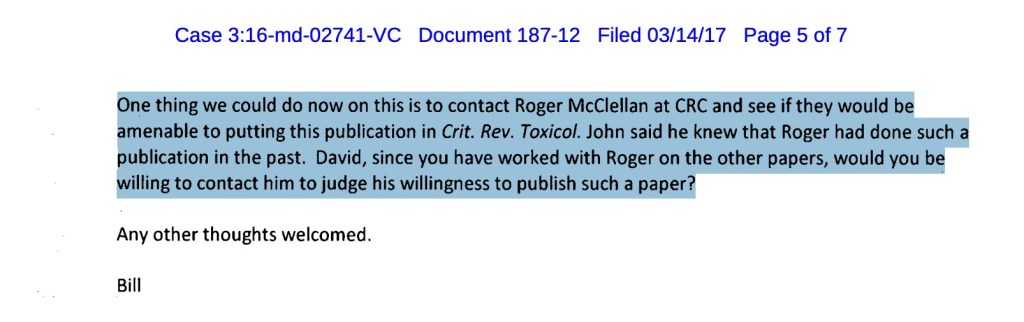
Here is the famous email exchange that delighted activist NGOs and, let’s be frank, law firms that were able to rake in billions of dollars from a few sentences taken out of context:
“Regarding the article assessing overall biological plausibility that we discussed with John, I’m still having some difficulty understanding how to proceed. If we were to go all out, involving experts from all the major fields (epidemiology, toxicology, genotoxicology, mechanisms of action, exposure), it could cost us around $250,000, or even more.”
A less costly and more acceptable approach would be to involve experts only in the areas of controversy, namely epidemiology and possibly mechanisms of action (depending on what emerges from the IARC meeting), and to write ourselves the sections on exposure, toxicology and genotoxicology .
One option would be to add Greim and Kier or Kirkland so that their names appear on the publication, while reducing costs by doing the writing ourselves (ghostwriting, with them essentially only revising the text and adding their names). Recall that this is how we proceeded for Williams, Kroes, and Munro (2000) .
What emerges from this email is primarily a Monsanto department tasked with preparing a narrative review that is seeking to reduce writing costs. This type of work organization is common in the pharmaceutical and agrochemical industries. Within this framework, company employees are well-positioned to compile and summarize more descriptive and standardized sections, such as exposure, toxicology, and genotoxicology. The more interpretive and potentially controversial sections, such as epidemiology and mechanisms of action, are typically entrusted to external or independent authors. In short, this is precisely what the two Monsanto employees are proposing in this exchange.
This is why these “revelations” alone are insufficient: public health agencies judge data, not editorial disputes. Regulatory agencies were, moreover, well aware of Monsanto’s involvement in this narrative review, because in the acknowledgments section, it is clearly stated that the authors thank the toxicologists and other scientists at Monsanto who made significant contributions to the development of the exposure assessments, as well as through numerous other discussions. In other words, if the objective was to maneuver behind the scenes, let’s just say it was a bold strategy: a conspiracy so well concealed that it only reveals itself… at the end of the paper, in the acknowledgments.
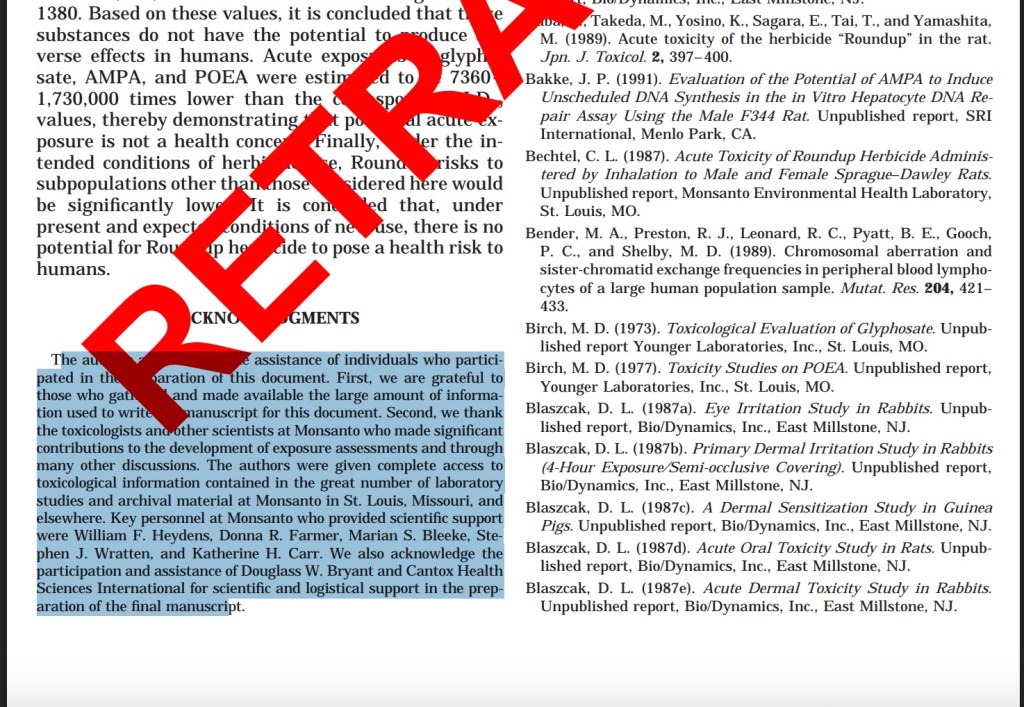
And no one was fooled, not even on the editorial side. Monsanto’s involvement wasn’t just evident in the acknowledgment (where the company is explicitly mentioned); it also appears later in the email exchange, where the Monsanto employee suggests contacting the magazine directly to see if it would be willing to publish this type of narrative journal. This is far from the scenario of a publication “slipped in on the sly” to unsuspecting publishers or deceived agencies.
This is confirmed , for example, by the European Food Safety Authority (EFSA), which clearly states that: the experts from the Member States and EFSA were under no illusions about the links between the authors of the study and the companies that funded or facilitated their work at the time they conducted the risk assessment. […] The review articles simply served to summarize or support the industry’s position on glyphosate as it had already been presented elsewhere. […] European legislation on pesticides gives applicants the opportunity to present their views in the dossier they must submit to the regulatory authorities, as well as at various stages of the peer review process. At no point did EU experts evaluate scientific studies produced, funded, or facilitated by industry without being aware of this link.
It can therefore be said, in a certain way, that Monsanto influenced the conclusions of the narrative review. But to be offended by this is to misunderstand the nature and purpose of this type of publication.
To write this review, Monsanto obviously starts from the premise that its product does not pose a risk at the permitted exposure levels. The narrative review then aims to explain how the company arrived at this conclusion, drawing on and citing the studies it deems relevant to support its position. If a company were not reasonably certain that the product it seeks approval for does not pose a significant risk, it would never embark on an approval process that costs it hundreds of millions of dollars. It would do so knowing that the slightest serious study reaching contrary conclusions would immediately jeopardize the marketing authorization of its product.
It is therefore clear that such a retraction cannot, on its own, call into question a regulatory decision. Even less so can it justify, as claimed by Louise Vandelac, director of the CREPPA at the University of Quebec at Montreal (UQAM), that Health Canada should ” assume its responsibilities in matters of health” and completely review its evaluation process . That said, given how often Ms. Vandelac makes these kinds of statements, one might wonder if it isn’t UQAM itself that needs a serious review of its standards of rigor.
Why a retraction?
If this is a fairly common writing method, why then retract this narrative review?



There is at least one relevant piece of information in the short video from La Semaine verte : this narrative magazine dates back 25 years. A quarter of a century ago, the standards governing editorial contributions, and especially the line between a simple acknowledgment and what justified a co-authorship, were far less clearly defined than they are today. Guidelines on author attribution, transparency of contributions, and even what constitutes a conflict of interest have gradually become more precise and broadened over the years.
Even today, the non-disclosure of an author does not necessarily constitute grounds for retraction. If the publisher believes that undisclosed authors are unlikely to have influenced the interpretations, recommendations, or conclusions of the article, a retraction is generally not justified.
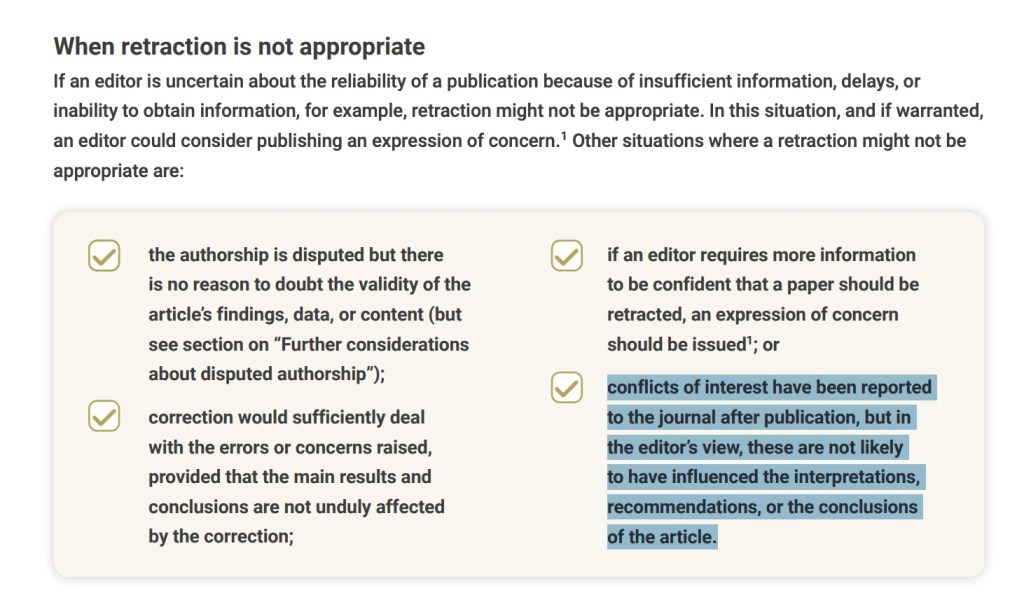
The deciding factor here was that the publisher considered it reasonable to believe that undisclosed co-authors may have played a role in the selection of cited studies, combined with the fact that the last surviving author did not respond to the publisher’s questions.

It is very clearly stated at the bottom of the editor’s note that the retraction of this review does not imply any position being taken in the ongoing debate on the carcinogenicity of glyphosate or Roundup, but that it stems strictly from the application of the COPE guidelines.
That’s it. That’s essentially all the Monsanto Papers contain and what this “scandalous retraction” brandished this week is all about. Does it warrant extensive media coverage? Clearly not. It’s a non-event.
I’m just saying…
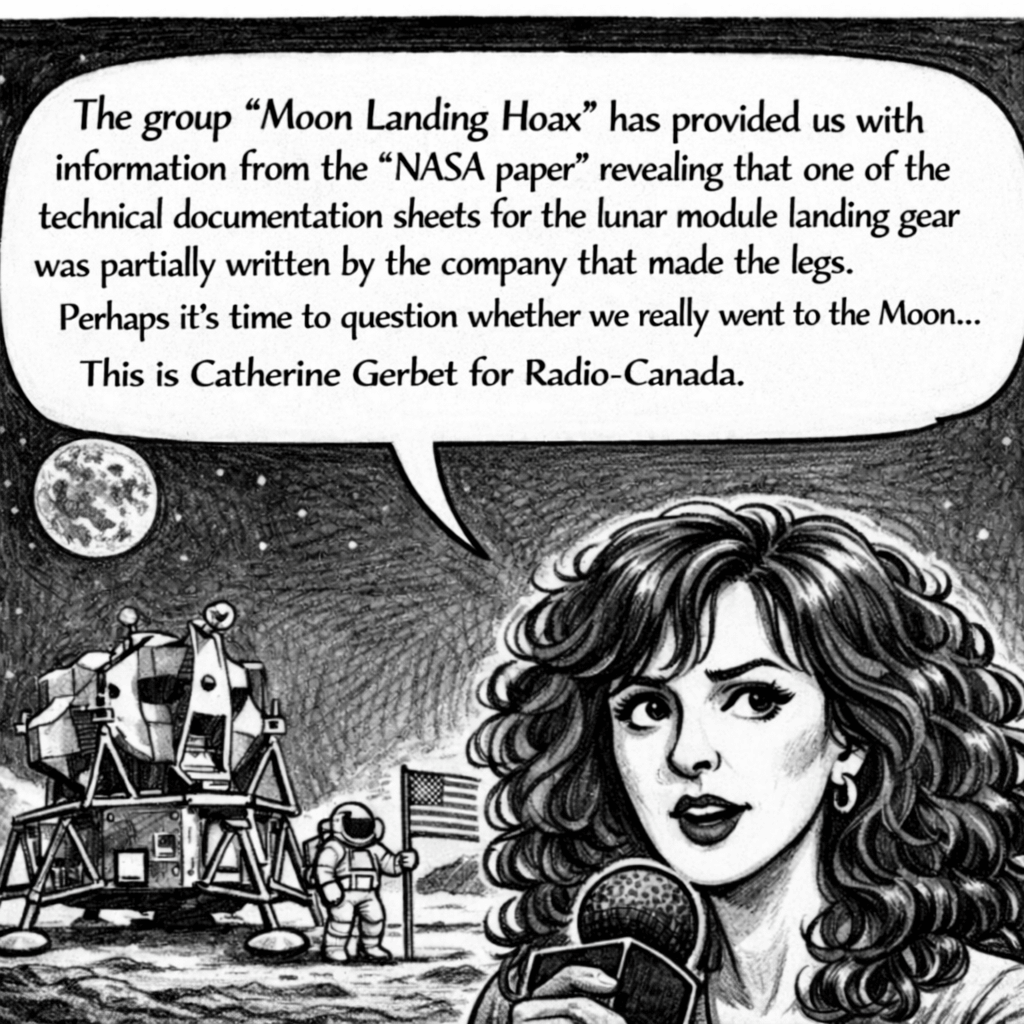
But let’s continue with the video from Green Week .
Catherine Mercier asks the question: should we be worried about glyphosate residues in our food? Her answer: it depends on who you ask .
Of course, if we ask random Robert Redpill or, even worse, Laure Waridel , we’re likely to hear talk of the Great Poisoning Theory. However, if we rely on the conclusions of all public health and regulatory agencies worldwide , the answer is no. At current exposure levels, glyphosate residues do not pose a health risk .
In her video, Catherine Mercier makes a classic error of interpretation regarding glyphosate. By saying that “it depends on who you ask,” she perpetuates a confusion between hazard and risk . First, the classification “probably carcinogenic” does not come from the WHO but from the IARC (International Agency for Research on Cancer). Second, it concerns hazard , that is, the theoretical capacity to cause cancer under certain conditions without taking into account actual exposure levels . Conversely, the assessments carried out by regulatory bodies focus on risk , that is, the actual probability of an effect occurring at the doses to which the population is actually exposed.
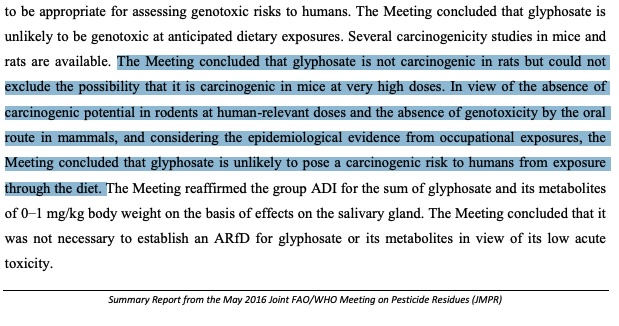
However, when discussing food safety and residues in food, it is precisely these risk assessments that are relevant. Mixing the IARC’s conclusion with those of regulatory agencies, as if they were addressing the same question, amounts to juxtaposing two distinct analytical frameworks and creating artificial anxiety. This is all the more true given that the IARC’s classification of glyphosate as a probable carcinogen is far from being unanimously accepted within the scientific community . 1 2 3
It is a simple distinction, and it is difficult to understand how, after all these years and while claiming to ” know the case well “, this essential point can still escape Catherine Mercier.
Finally (phew)
It’s almost inevitable that, in every debate about pesticides, activists or journalists, using the same talking points, will bring up the argument that regulatory agencies rely heavily on industry-provided data for their assessments. Put that way, and with only a very limited understanding of how our modern societies function, it can indeed seem problematic.
Except that this is precisely how all modern regulations in our complex societies work. Companies of all kinds that want to put a product on the market have a legal obligation to produce studies, data, and test results to demonstrate that their product does not pose a significant risk to the consumer. Obviously, the information required by governments varies from one industry to another, but whether it’s medicines, vaccines, toasters, automobiles, chemicals, or any other consumer goods, the principle remains the same: it’s up to industry to provide the data necessary for the assessment . It is completely unrealistic to think that the government could undertake the implementation of these tests for all the industries concerned.
In the case of plant protection products, a large portion of the studies required for registration are funded by industry and conducted in certified, often independent, laboratories, according to standardized protocols (GLP and recognized guidelines, notably those of the OECD) and accepted by the authorities. These testing programs involve extensive, complex, and costly batteries of toxicological and environmental studies, often costing tens or even hundreds of millions of dollars. The results are never taken at face value: they are critically examined by regulatory agencies, compared with independent literature, and can be rejected if they do not meet the required criteria. In other words, this data is not “better because it comes from the private sector,” but because it is designed for regulatory evaluation, highly standardized, traceable, and produced on a massive scale that academic research can rarely match. For comparable questions, a very large number of independent studies would often be needed to achieve a level of coverage and power similar to that of a complete regulatory dossier.
So, when, for example, Maryse Bouchard, professor of environmental health at the National Institute of Scientific Research (INRS), claims that more weight should be placed on independent studies than on those funded by industry , we understand above all that she has absolutely no grasp of the concrete functioning of regulatory assessments.
Or worse still, when Sébastien Sauvé, a professor of environmental chemistry at the University of Montreal, compares a normal, regulated regulatory approval process to the tobacco industry’s dubious tactics, what we read is no longer an analysis, but a convenient oversimplification. It’s the kind of conflation that sounds impressive in interviews but makes very little sense in substance. That such a questionable approach should come from academia, with the symbolic authority that implies, is frankly scandalous. Moreover, ironically, the obfuscation techniques documented by the Tobacco Papers now seem to have been better learned and more effectively adopted by certain anti-pesticide activist groups than by the industry itself.
So there you have it, that concludes my endless analysis of this week’s glyphosate SCANDAL. Below, as a bonus, I’ve added two more debunkings of pseudo-scandals related to glyphosate that have circulated in our media these past few weeks, for those who are interested. But if anyone has managed to read this far, you honestly deserve a break. As always, you can sleep soundly and eat your cherillos without worry. The health agencies are doing their jobs properly. Our journalists, on the other hand…
[Editor’s note: This article has been translated from French and has been edited for clarity.]
Colin Hélie-Harvey is a horticulturalist, agricultural writer and founder of Agricolincredule. Follow Colin on X @HelieHarvey
A version of this article was originally posted at Agricolincredule and is reposted here. Any reposting should credit both the GLP and original article.