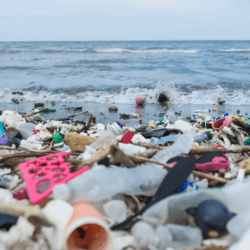
A wave of high-profile research over the past several years has taken microplastics from a story about pollution in oceans, drinking water, and food to a far more alarming claim: that these particles are “inside you” — in brains, blood, arteries, placentas and testes — and may be tied to serious disease, including cancer and cardiovascular harm. There have been thousands of stories echoing this narrative in the media and on advocacy networks, often framed as proof of corporate malfeasance. A slew of lawsuits is already in the works.
But, in a recent twist, those assumptions are in dispute. A growing swath of scientists says the most widely reported detections may be false positives that reflect contamination and methodological limitations, not proof of widespread internal plastic accumulation, and certainly not proof of harm.
Rather than facing a growing health crisis as so many previous headlines had argued, many experts say the studies claiming to find cancer-causing particles rely on measurement systems that are not robust enough to distinguish genuine plastic signals from ubiquitous lab background or from tissue that can mimic common polymers.
The scare narrative began to fracture publicly in January with a stunning article in The Guardian, a notable venue because it had helped to popularize the “microplastics are inside your body” storyline. The investigation reported that many analytical chemists and other scientists believe the widespread claims and alarmist academic papers are wrong or overstated. Vox republished it, and Fast Company, The Conversation, and The Washington Post followed up with their own analytical pieces. The New York Times, which had featured a range of credulous stories, videos, and even school guides on microplastics’ health threats, ignored the new evidence entirely.
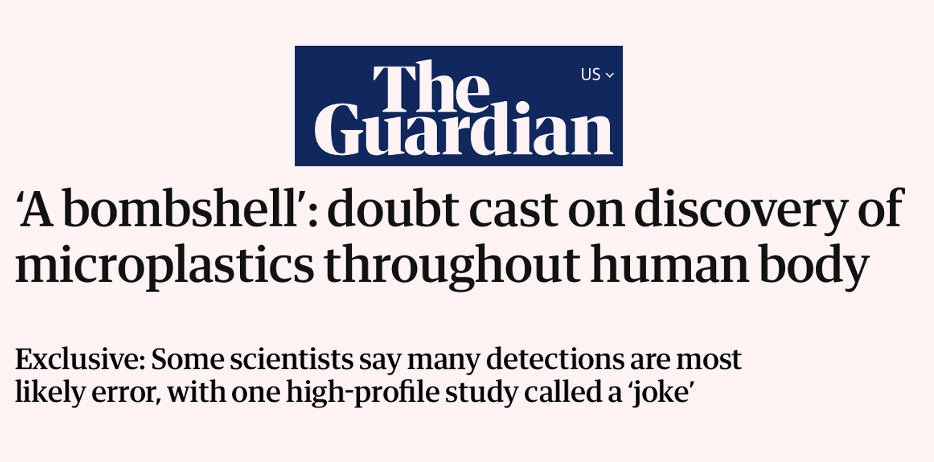
The Guardian called its investigation a “bombshell”, and it was, but not just for the medical community. If the critics are right, the revelations cut directly at the rhetorical heart of what has verged on alarmist: the leap from “we can detect something plastic-like” to “microplastics are driving disease,” the “settled medical verdict” that had acted as narrative accelerant. But it never was.
The turnaround has reverberated through the ecosystem that helped manufacture the former consensus — a familiar “panic pipeline” that has repeatedly elevated other contested health scares in recent years made up of overlapping networks of environmental advocacy groups, plaintiffs’ lawyers, activist academics, and a media ecosystem that reliably rewards the most alarming interpretations first.
Microplastic Fears Go Mainstream
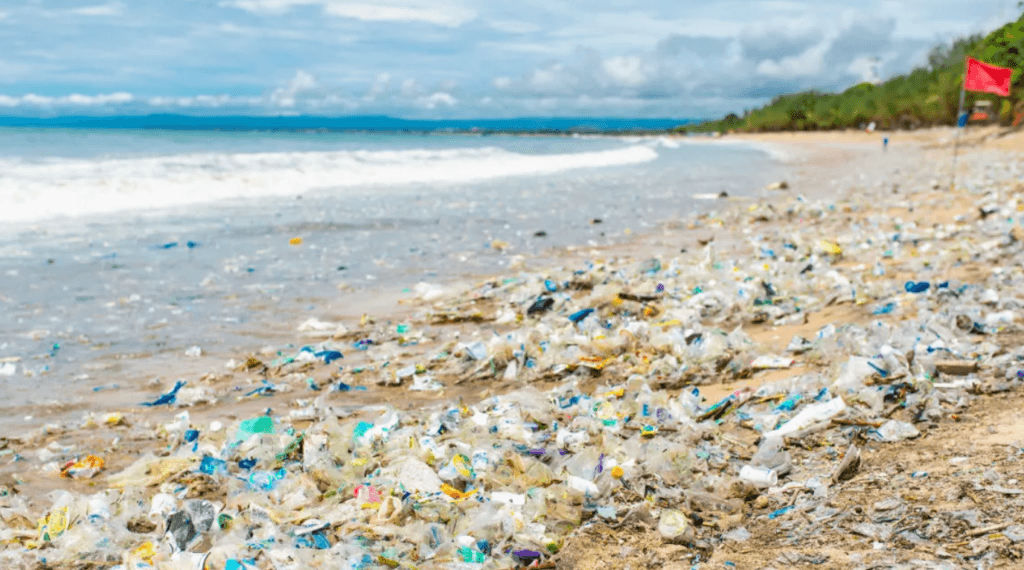
How did we get to the point where a tentative conclusion was widely reported as definitive? Concern over microplastics has been building for roughly two decades. For much of that time, it focused on floating trash, degraded bottles, and the unsettling idea that plastic doesn’t disappear so much as it fractures into tiny specks that show up on beaches, and in seafood and drinking water.
In reviews of the early evidence, the European Food Safety Authority in 2016, the World Health Organization in 2019, and the British Heart Foundation in 2024 underscored just how tentative the claims about direct health effects were — in part because most ingested particles were expected to pass through the gut with limited absorption. They urged caution and better methods and more rigorous research — but advocacy groups and the media rarely restrain their reporting.
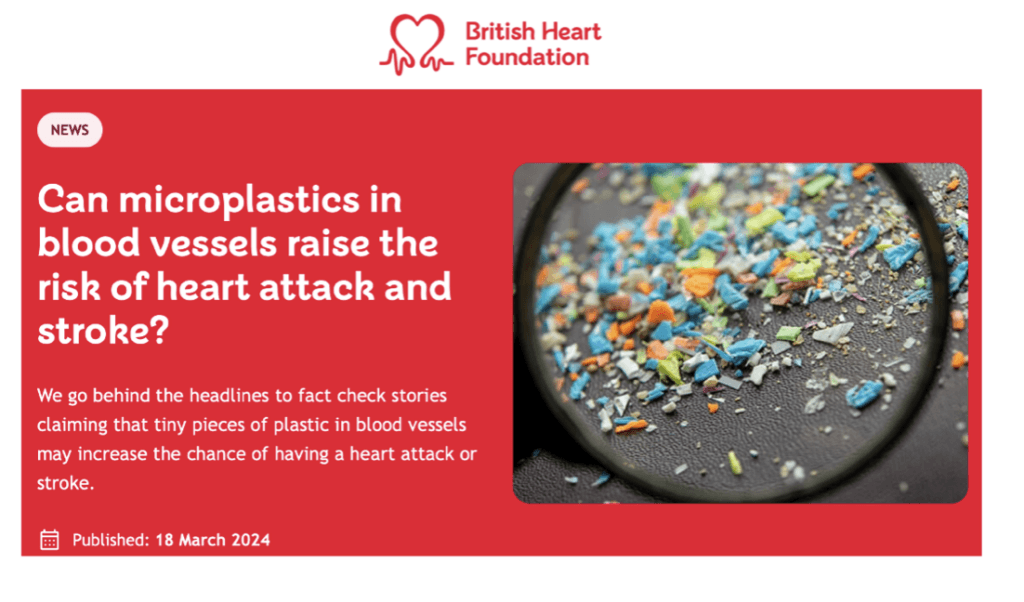
The narrative escalated dramatically in March 2024 when a New England Journal of Medicine (NEJM) study reported the presence of plastic particles in carotid artery plaque and an association with heart attack, stroke, and death. In an interview with The Guardian, the paper’s lead author, Italian scientist and physician Raffaele Marfella, coined the slogan: “plastic-free is healthy for the heart and the Earth,” claiming “we are defenseless against plastic pollution.”
The findings were uniquely combustible. “Microplastics in the body” media stories can feel abstract; “NEJM study links plastics in arteries to death” does not. The study went viral, widely reported as a “smoking gun.” The Guardian used especially loaded language, characterizing human blood vessels as “contaminated” and describing the findings as “potentially life-threatening.”
What was once speculative science quickly hardened into a popular belief that microplastics are an immediate and escalating health threat. The framing moved from “plastics are everywhere” to “plastics can kill you” — often in ways that read as evidence of a settled causal mechanism for heart attack and stroke.
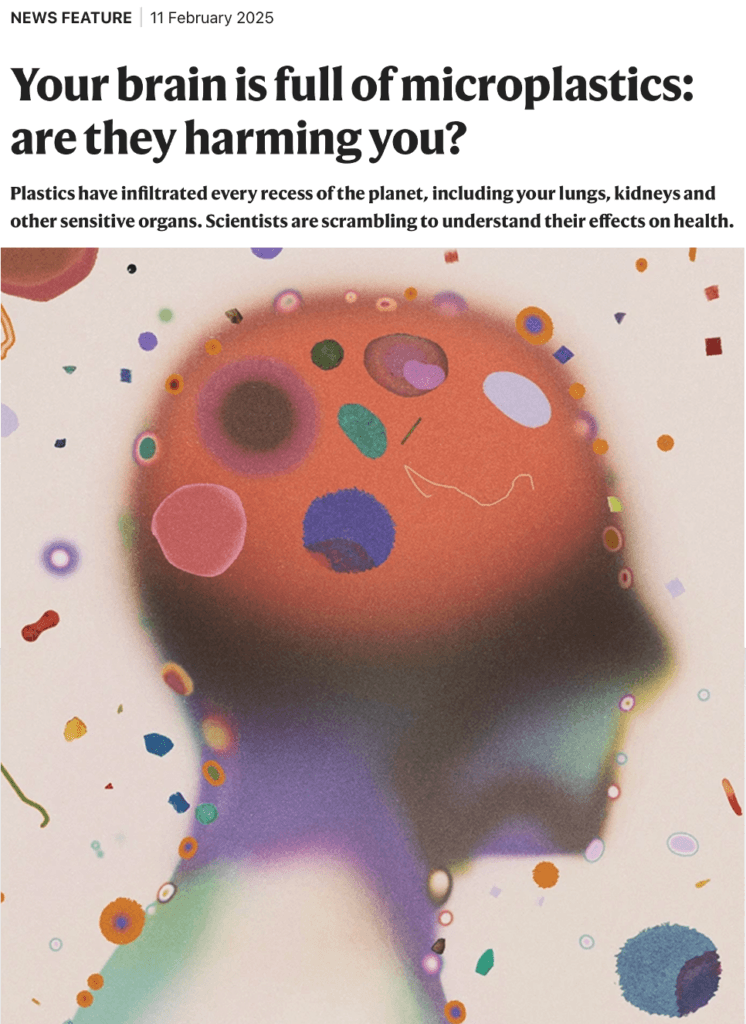
Concerns heightened even more in February 2025 after an analysis published in Nature Medicine claimed to find trace plastics in the brain. Nature incautiously headlined an article, “Your brain is full of microplastics”, with a stunning image of a brain swarming with particles. And of course, The Guardian, once again, was all in with a shocking headline: “Levels of microplastics in human brains may be rapidly rising.” The study claimed there was a rising trend in micro- and nanoplastics found in tissue from dozens of postmortems carried out between 1997 and 2024.
Narrative Reversal
Alarmism sells, and many outlets treated early microplastics “detections” as verdicts, not hypotheses. But many experts in the field were never convinced of the gravity of the claims. Last year, nine measurement specialists pushed back in a letter in Nature Medicine, arguing that the February 2025 brain study had too few contamination safeguards and too little validation, making its reported levels hard to trust.
“This paper is really bad—and it is very explainable why it is wrong,” said co-author Dr. Dušan Materić, an analytical chemist at the Helmholtz Centre for Environmental Research in Germany. And it isn’t just about brains: Placenta, lipid-rich tissues, and atherosclerotic plaque are exactly the kinds of samples where normal biology can mimic plastic signals.
The fight shifted from “plastic pollution exists” to whether the headline “plastic in human tissue” findings are robust enough to support disease claims. A major target of the skepticism is Py-GC-MS, a heat-based test that some researchers say can misread tissue chemistry as polyethylene or PVC in complex samples.
But even perfect detection wouldn’t settle the bigger point: “found” isn’t the same as “harmful,” and “harmful” isn’t the same as “high risk at real-world concentrations.” Risk assessment requires a chain of evidence, not a single detection: Hazard is not the same as risk, association is not causation, and detection is not validated identification.
The senior author of one of the seminal studies criticized by Materić and his colleagues — Prof Marja Lamoree at Vrije Universiteit Amsterdam — has begun retreating from the certainty of the public narrative she helped create. “I’m convinced we detected microplastics,” she said. “But I’ve always said that [the amount estimated] could be maybe twice lower, or 10 times higher. … It’s still a super-immature field and there’s not many labs that can do [these analyses well]. When it comes to solid tissue samples, then the difficulty is they are usually taken in an operating theatre that’s full of plastic.”
The Scare Narrative Legal Ecosystem
Confusion between hazard and risk is a recurring feature of chemical scares. Advocacy groups, activist academics, and plaintiffs’ firms are poised to jump on even sketchy health or environmental studies to turn them into class action lawsuits. We’ve seen that arc with products and chemicals regarded by regulators and mainstream scientific bodies as generally safe: talc, glyphosate, BPA, antidepressants, Gardasil, and most recently Tylenol. How many fund raising pitches did we see over the past decade with pictures of dying honeybees, felled by pesticides, only to be told that oops, the media had made a mistake and they are not endangered.

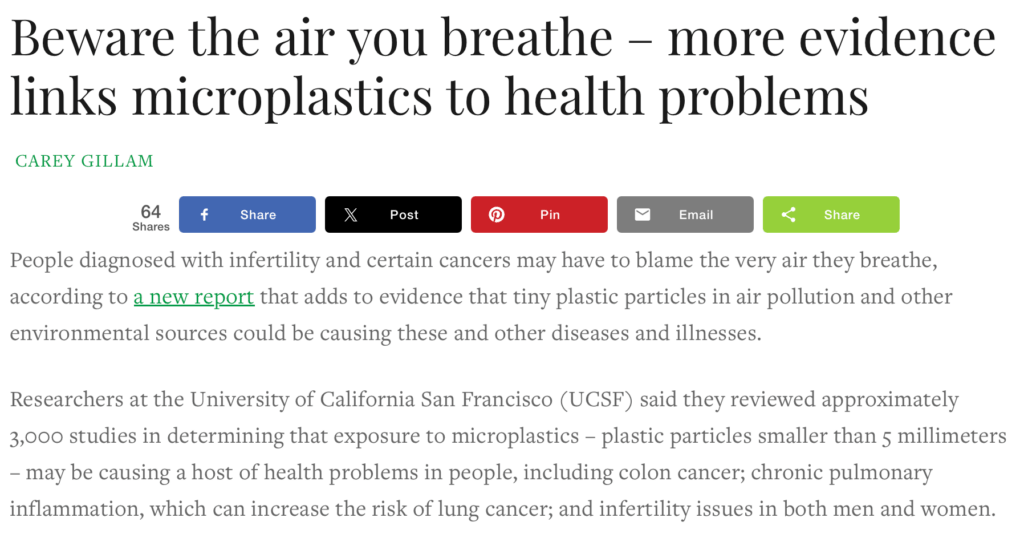
Environmental groups move almost in unison to frame microplastics and other environmental issues as established health threats. The Natural Resources Defense Council, Sierra Club, Greenpeace, and Friends of the Earth — partly funded by “dark money” donations, including from law firms — all played to type. The most vocal, Environmental Working Group, has acknowledged support from plaintiff lawyers (here, here, here). It has published twenty microplastics stories in the past three years, half through its New Lede project edited by Carey Gillam, who has also written microplastics pieces for The Guardian.
Gillam is a polarizing figure in these debates: A former Reuters reporter who left the news agency in 2015 after widespread criticism of the activist slant of her reporting on GMOs and crop chemicals. Her books, Whitewash: The Story of a Weedkiller, Cancer, and the Corruption of Science and The Monsanto Papers, became treasure troves for litigators. Wisner Baum (formerly Baum Hedlund) and its associated counsel, Robert F. Kennedy, Jr., coordinated with Gillam in preparing the first successful glyphosate lawsuit — and features in a “Monsanto Papers” section on its website. Wisner Baum is widely known as the “Church of Scientology firm”.
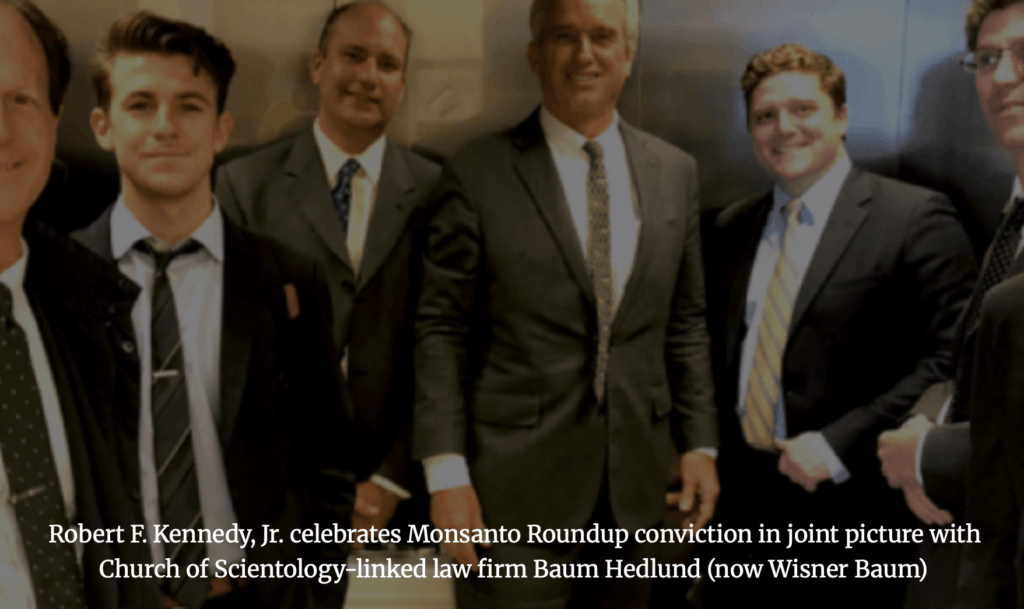
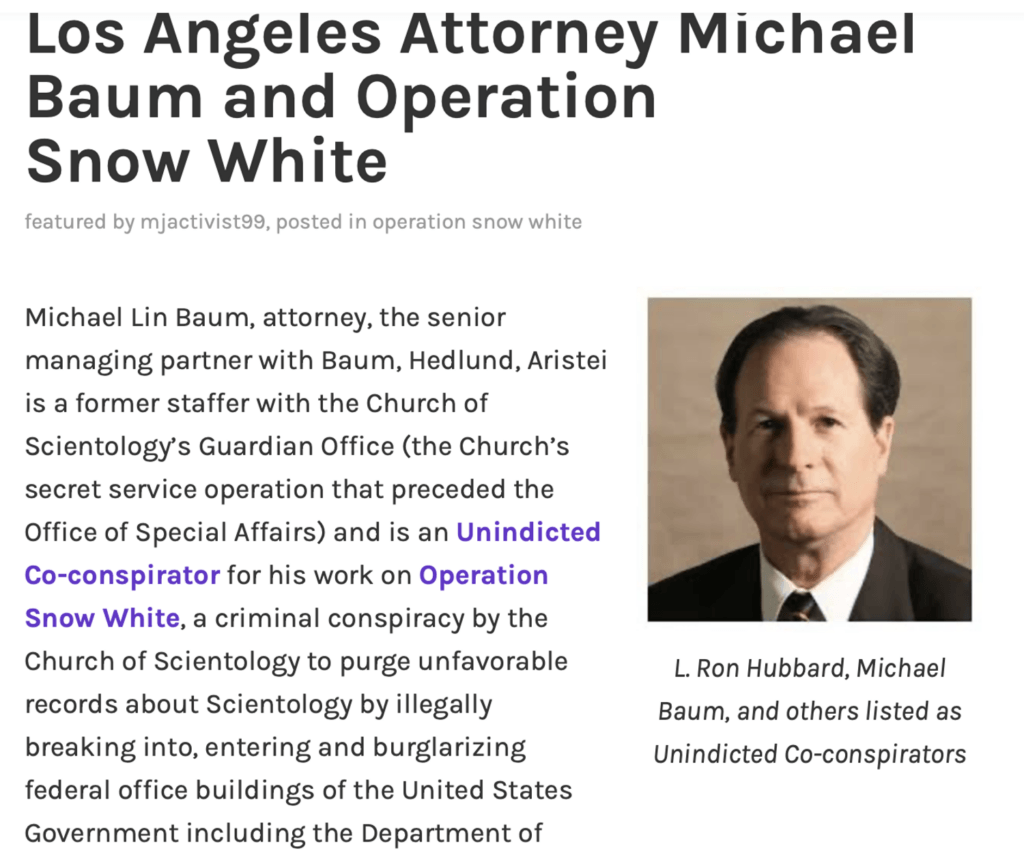
Far from a side influence, Scientology and the lawyers at Wisner Baum have become a central strand in the activist-litigator anti-chemical machine: a Scientology-linked law firm whose ideological worldview and legal targets became a central driver in shaping activist campaigns against pesticides, pharmaceuticals, consumer products and vaccines. Wisner Baum founder Michael Baum was a central figure who was described in court records as a “covert operative” in “Operation Snow White”— the monumental 1970s federal espionage case arising from a Church campaign to infiltrate U.S. government offices and remove damning records targeting Scientology and its founder, L. Ron Hubbard, who later went into hiding as pressure from federal investigators mounted. He continued to run the organization while in seclusion until his death in 1986, and remains revered today by the Church.
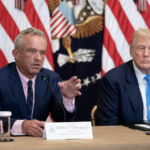
Monetizing and expanding his work with Wisner Baum in the wake of the early glyphosate cases, RFK, Jr. emerged as a central figure in tightening the litigator-activist bond that has expanded to include the MAHA movement. He acknowledged to Congress during his confirmation hearings as Secretary of Health and Human Services that he received millions of dollars from Wisner Baum for litigation work on tort cases. He told the Senate he would establish his independence by assigning his interest to his son, Conor Kennedy, who is now an attorney at Wisner Baum.
University Professors Team With Litigators to Target “Corporate Harm”
In her various articles on plastics and the perfidy of the chemical industry, Gillam’s go-to academic scientists are Stanford University professor Tracey Woodruff and pediatrician and Boston College epidemiologist Philip Landrigan. They both run programs with missions and messaging that align well with litigation-laden crises and are often quoted together in articles as experts on chemicals. They co-authored with other scientists the launch article for The Lancet Countdown on Health and Plastics, which characterized plastics as a “grave, growing, and under-recognized danger to human and planetary health, which got huge play in the media.
For 18 years until February, Woodruff was director of the University of California, San Francisco’s Program on Reproductive Health, which, according to its mission statement, targets “harmful chemicals.” She was a prominent voice in the endocrine-disruptor/plastic chemicals campaigns aimed at banning the plasticizer BPA (bisphenol A), a chemical found in microscopic quantities in some plastic products and on store receipts, as a reproductive toxin. But the crisis narrative ran into headwinds. The Obama administration funded $30 million in research into its safety and found no basis to ban or restrict it. Nevertheless, the campaign became the centerpiece of environmental groups for years and a target of thousands of lawsuits. Ironically, BPA has been displaced in plastics by BPS, even though it is considered even more toxic — a reminder of the “regrettable substitution” dynamic that often follows chemical scares.
Microplastics are Woodruff’s current focus. The University of California, San Francisco houses what it calls “The Poison Papers — documents from encounters with Monsanto and the EPA. Its Center to End Corporate Harm describes plastics and petrochemicals as “health-harming industries” engaged in a “decades-long assault” on regulators — language that reads less like neutral research and more like a prosecution brief. It features a link — “Serve as an expert witness” — and highlights Woodruff by name. Its Risk Management has a section that reads, “A law firm wants to hire me as their expert witness,” and notes it is the individual’s choice whether to serve.


Landrigan is not just a mainstream pediatric epidemiologist; he’s also a high-profile environmental-health advocate whose chemical-risk messaging has drawn pushback from other scientists. He was the senior author two years ago of the American Academy of Pediatrics’ GMO guidance that singled out glyphosate residues as a threat to child health. Science magazine and numerous scientists called it “fearmongering.”
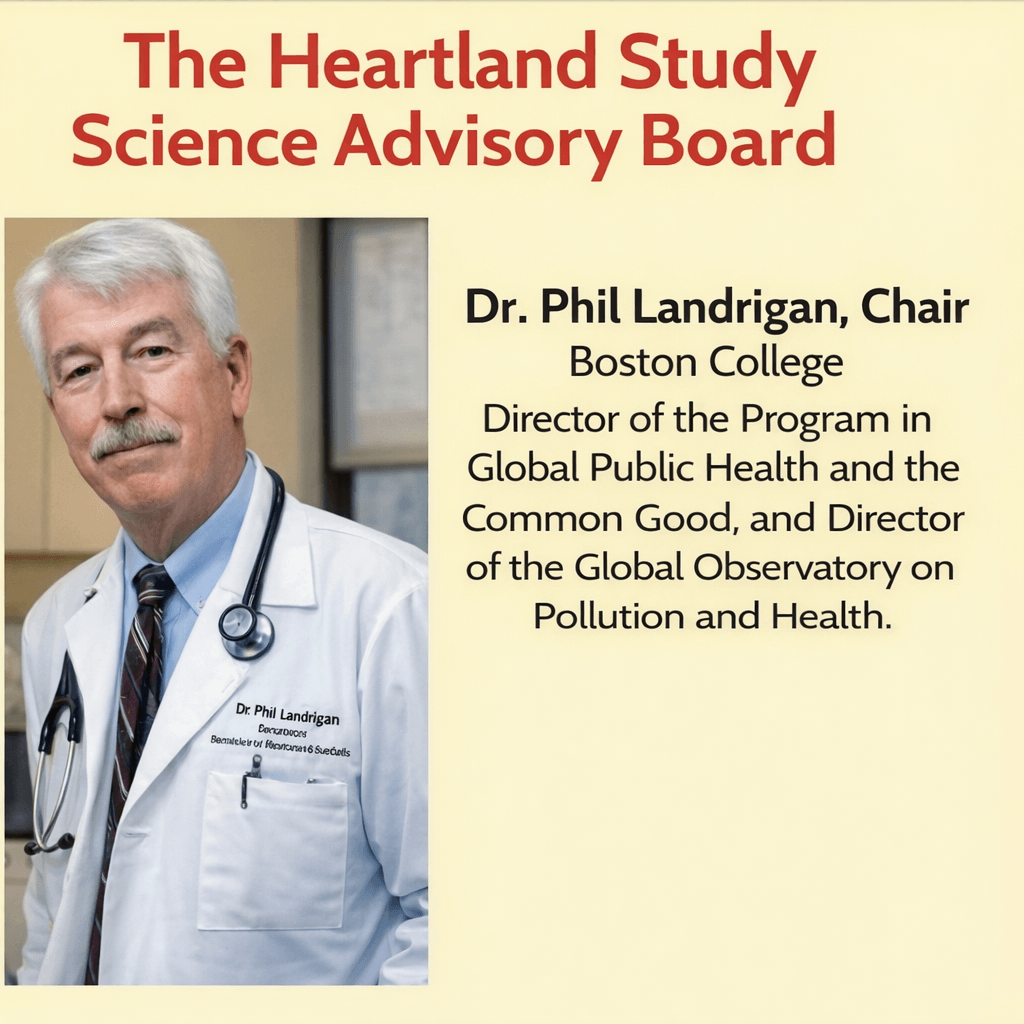
In a letter to The Guardian, Landrigan was dismissive of its investigation that challenged claims that microplastics may not pose a health threat after all. “Microplastics harm health,” he wrote, calling them “Trojan horses” that carry plastic additives into the body and cause diseases, from cancer to heart disease and from IQ loss in children to decreased fertility.”
Landrigan also chairs the Science Advisory Board of the Heartland Health Research Alliance (HHRA) — a nonprofit formed by environmental groups to manage and fund the “Heartland Study” — a vehicle used by tort law firms to feed litigation narratives targeting corporations that make chemical products. Heartland was launched with seed money from Robert F. Kennedy, Jr. and a principal at Wisner Baum, which has used their research in numerous lawsuits.
Its director, Charles Benbrook, is an economist and organic industry consultant with a long history of controversy. Landrigan and Benbrook have co-authored numerous articles on the dangers of chemicals. Benbrook was an organic industry-funded adjunct professor at Washington State University before being fired in 2016 for failing to disclose industry-funded conflicts of interest. He has served as an expert witness in more than a dozen lawsuits involving GMOs and pesticides, and since 2014 he has been a paid consultant for mass tort pesticide litigators on class action cases involving glyphosate, paraquat and chlorpyrifos, often with Baum Hedlund. He has acknowledged receiving more than $500,000 in related consulting associated with pesticide lawsuits. Shortly before Benbrook was axed at WSH, a Freedom of Information Act request showed him bargaining for $200,000 to produce “research” papers with predetermined conclusions in support of the organic industry’s campaign to discredit GMOs and crop chemicals.
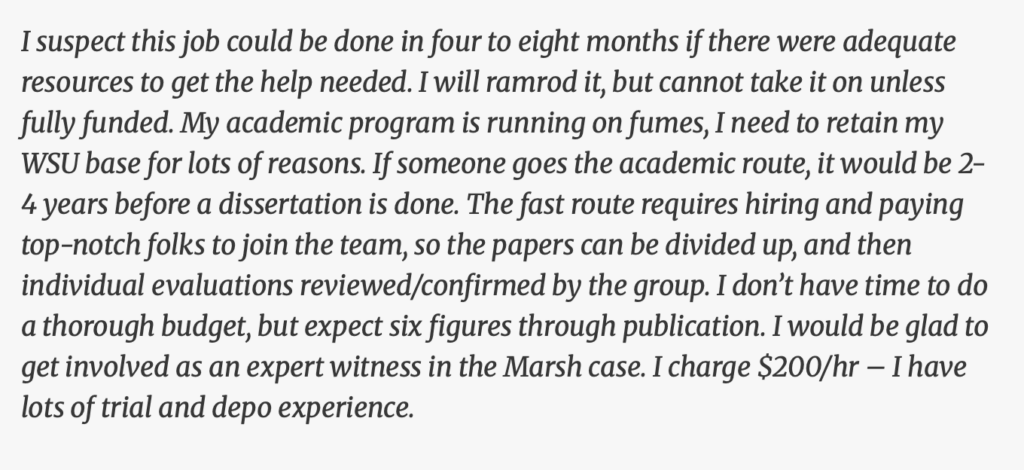
HHRA’s vice-chair is Robin Greenwald of Weitz & Luxenberg, whose experience includes environmental and consumer class-action cases. Greenwald was appointed co-lead counsel in the federal Roundup (glyphosate) MDL, a role that sits at the center of mass-tort coordination. With Landrigan holding a leadership role at HHRA, critics point out the tight link between the production of alarming health claims, policy campaigns, and legally actionable narratives.
How the Microplastics Narrative Became Lawsuit-Ready
The conflict over whether the direction of environmental-health research is being distorted by advocacy and links to the plaintiffs’ bar is not unique to microplastics. But microplastics are uniquely suited to the feedback loop because the story is so emotionally powerful (“harmful plastic inside you”), analytically difficult (easy to overinterpret, difficult to resolve), and legally portable (products, exposure, alleged concealment). The early litigation template has already formed in high-profile consumer-fraud cases even while measurement standards and proof of causality are still uncertain.
That combination helps to explain why concerns about microplastics were able to shift so quickly from uncertainty about chemical detection methods to courtroom-ready claims about injury and culpability — and why the January 2026 methodological backlash lands as a challenge not only to a few journal articles, but also to the narrative supply chain that turned them into the source of headline-driven public alarm.
It is not just the influence of academia and “public interest” NGOs at work, of course. The plaintiffs’ ecosystem itself is now openly building “microplastics dockets”: Law firms and websites that generate “leads” for potential litigants are advertising investigations, soliciting clients, and packaging unsettled science into allegations of “negligence,” “toxicity,” “exposure,” and “injury.” Bloomberg Law has described microplastics as a target in a “surge” of lawsuits and noted that repeat-player firms are behind multiple filings in the space. One of many examples: The Lyon Firm publicly states it is “reviewing new cases” involving “microplastics” in food products and invites readers to contact its attorneys for a “free consultation.”
If the scientific debate seems academic, the legal system has been weighing what is actionable. Over the last two years, consumer class action lawsuits have increasingly been built on a single, fear-amplifying, litigation-tempting premise: Products marketed as “pure,” “safe,” or “natural” are, it is alleged, contaminated with harmful microplastics and, therefore, are deceptively marketed.
What is striking and relevant is how “concentrated” parts of the microplastic docket have become: Multiple class action lawsuits across different consumer categories are often filed by the same plaintiffs’ firms — notably Clarkson Law, Todd M. Freeman, and Ahdoot and Woolfson — in what seems a coordinated effort to scale a “microplastics” theory of liability.
A March 2024 complaint against BlueTriton’s Poland Spring water, for instance, alleged that “every bottle … contains dangerous levels of microplastics.” In May 2025, a federal court dismissed with prejudice a putative class action lawsuit that alleged that Fiji Water’s “Natural Artesian Water” labeling was deceptive due to purported microplastic contamination. The court faulted, among other issues, the inadequacy of the plaintiff’s testing allegations. Meanwhile, the microplastics theory has migrated far beyond bottled water to Ziploc bags, Rubbermaid food containers, and baby bottles — with the suits widely celebrated by advocacy groups who helped generate the publicity that helped pave the way for the litigation.
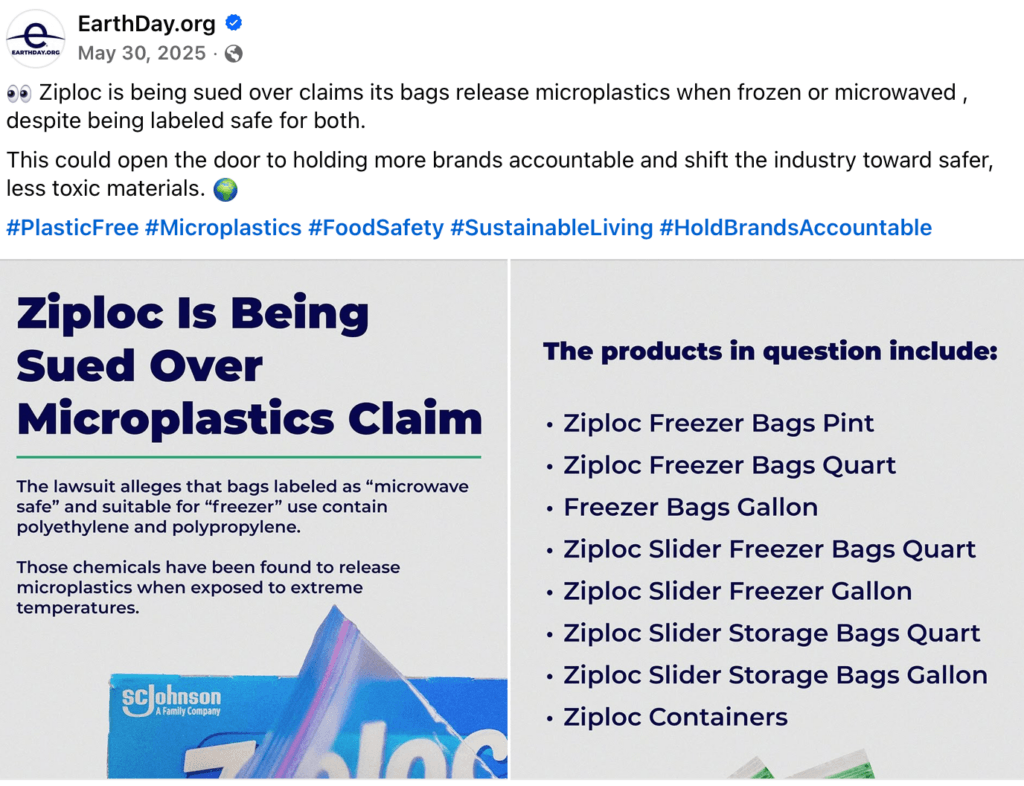
Allegations of harm, even absent proof, can greatly skew public opinion and the results of litigation. Once a threat narrative has become culturally established, it becomes monetizable. That extends to more than tort litigation targeting chemicals. It also includes a growing ecosystem of social media health claims and boutique, snake-oil interventions marketed to anxious consumers — all despite continued uncertainty about internal dose, persistence, and demonstrated harm caused by typical degrees of exposures.
What We Know — and What We Don’t
None of the scientific pushback argues that plastic pollution is imaginary; it’s ubiquitous, and people are exposed via food, drink, and air. Waste reduction, smarter materials, and less unnecessary packaging are sensible environmental goals. But turning tentative, contamination-prone detections into a confident claim of a “silent epidemic” risks misdirecting policy, rewarding perverse research incentives, eroding trust in future research findings — and handing the advocacy-litigation partnership far more leverage than the evidence can justify.
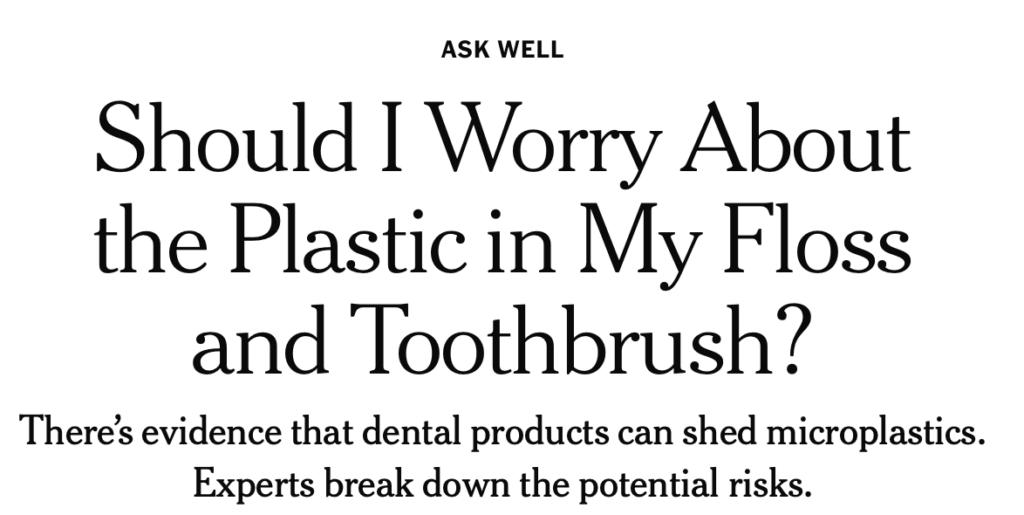
What the backlash challenges is the overstated confidence behind claims that our brains and blood are “besieged” by microplastic particles. Even assuming the particles detected are in fact plastic, there is not necessarily a causal link between their presence and harm. Fanned by headlines, the public conversation sprinted to “we’re contaminated and sick,” while the scientific community is still uncertain. Even speculative framing — as the New York Times did last month in an article about microplastics in dental floss and toothbrushes — risks hardening uncertainty into alarm.
The microplastics controversy is a case study in how modern “chemical panics” are manufactured and amplified — not only by activists and sympathetic media, but also by a litigation economy that profits when anxiety hardens into presumption. Once a claim becomes culturally “true” (“it’s in your organs,” “it’s causing disease,” and “industry covered it up”), it becomes legally actionable: a ready-made grievance, a monetizable exposure story, a recruitment pitch, and a lure to mass filings. At that point, backtracking requires a chain of unlikely reversals: Scientists must walk back claims, agencies need to revise already-issued guidance, and newsrooms must replace a scare storyline with the messier conditional reality. That kind of coordinated de-escalation just doesn’t happen.
We’ve seen this fear-to-filing pipeline repeatedly in other contested controversies — most recently involving Tylenol and food additives — where thin or unsettled evidence is treated as final, “presence” is sold as “harm,” and the courtroom becomes a substitute for scientific closure. In that system, alarm recruits plaintiffs, drives donations, generates headlines, and sustains an expert-witness and litigation-promotion marketplace. Under those conditions, ambiguity is not a restraint but an asset—and correction becomes institutionally costly and politically thankless.
This is where product controversies become legally explosive and culturally destructive, as unsupported claims ricochet through social media and boutique, snake-oil interventions are marketed to anxious consumers. And now the same litigation playbook is being politically turbocharged. Plaintiffs’ lawyers increasingly see Robert F. Kennedy Jr.’s MAHA crusade—targeting “Big Food,” “Big Pharma,” and “chemical companies”—as an effective vehicle to sell their narratives. The Texas Tylenol case, which was launched after President Trump and RFK, Jr. held a joint news conference urging pregnant women to refrain from using acetaminophen — is the template: a suit built around a scientifically dubious autism-risk claim, but promoted by populist leaders and seized on by plaintiffs’ counsel as a recruitment and pressure tool. That is how speculation becomes leverage: not through gathering convincing evidence, but through political validation and courtroom pressure. Once that loop is established, the burden silently flips — companies are pressured to pay to end the story, not because causation is proved, but because the headline has already convicted them.
Don’t expect a rollback from constituencies that benefit from alarmism: advocacy groups will keep mobilizing around politicized narratives, and plaintiffs’ firms will keep leveraging headlines to recruit new claimants. The strange, emerging coalition of the activist left and MAHA has begun to carry this anti-corporate tort focus into parts of the Republican coalition, blurring a long-standing party line that once treated trial lawyers as adversaries. RFK Jr.’s son, Conor Kennedy, is a vivid symbol of that realignment: he is an attorney at Wisner Baum, working on the Zantac cancer litigation team, “with an emphasis on plaintiff mass tort litigation.”

That bipartisan shift makes de-escalation of this dynamic even less likely: once a claim becomes embedded in the public consciousness, it becomes financially and legally durable, long after the scientific certainty evaporates. Corrections arrive slowly, if at all; incentives don’t. Envioronmental groups that fundraise on fear keep fundraising. The firms that recruit off headlines keep recruiting. And the public — caught between alarmist certainty and belated nuance — pays the cost in distorted policy, higher prices, and a deeper distrust of science itself.
Jon Entine is the executive director of the Science Literacy Project/Genetic Literacy Project.
Henry I. Miller is a physician and molecular biologist and the Glenn Swogger Distinguished Scholar at the Science Literacy Project. He was the co-discoverer of the RNA-dependent RNA polymerase in the influenza virus and the founding director of the U.S. Food and Drug Administration’s Office of Biotechnology.
This is an updated and expanded version of an article that was posted at Breakthrough Institute.