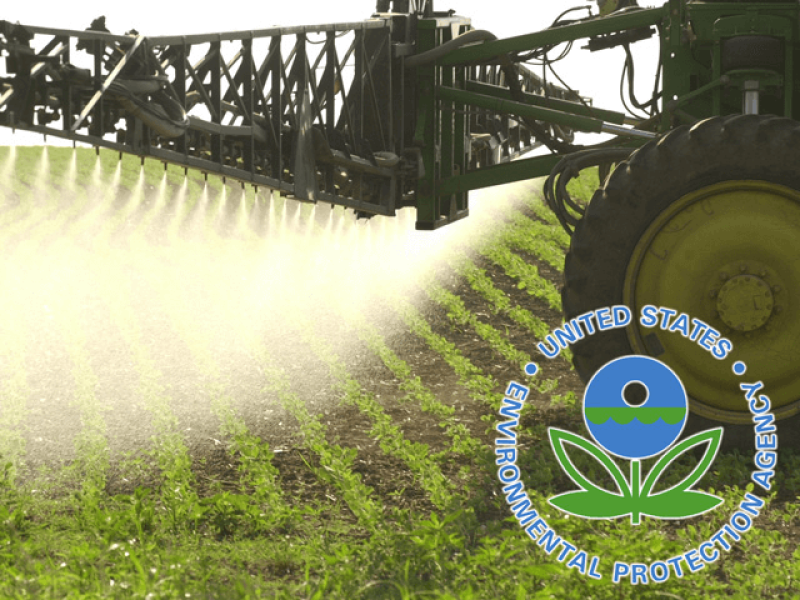

President Trump recently signed an Executive Order that expands U.S. production of glyphosate, a herbicide contained in commercial and domestic weed killers, such as Roundup.
Glyphosate has been rigorously tested in more than 2,000 studies, including the U.S. National Cancer Institute’s large Agricultural Health Study, and has been used by farmers and home gardeners for more than 50 years. Yet some environmental advocates and other groups contend it causes cancer, specifically non-Hodgkins Lymphoma.
This outcry stems primarily from a 2015 hazard assessment by the International Agency for Research on Cancer’s (IARC), a semi-autonomous agency of the World Health Organization, which concluded that glyphosate “probably” causes cancer.
That finding has also fueled mass tort litigation against Bayer/Monsanto, the company that produces glyphosate, resulting in thousands of lawsuits and billions of dollars in settlements. It should be pointed out that IARC looks at hazard (the potential to cause cancer under any circumstances) rather than risk (the likelihood of cancer occurring under real-world exposure levels)—leading to classifications that many experts feel cause unnecessary public alarm.
The IARC decision has been criticized by scientists and regulatory bodies on several grounds. First, it lacked transparency: meetings were by invitation only, and members were told not to discuss proceedings externally. Second, it excluded key studies finding no cancer link—most notably the National Cancer Institute’s Agricultural Health Study of 54,000 farm workers, which found no significant association. When omitted from combined analyses, the glyphosate-cancer relationship grew significantly; a Reuters investigation found that many other null-result studies were also edited out. Third, conflicts of interest tainted the panel: Christopher Portier, a special IARC advisor, reportedly signed a lucrative consulting contract with law firms suing Monsanto shortly after the report’s release. The animal data fared no better: Statistician Robert Tarone testified before Congress that IARC cherry-picked positive rodent results while ignoring contradictory findings from the same data.
In 2021, the Center for Truth in Science funded a scientific expert panel review of eight meta-analyses of the carcinogenicity of glyphosate and concluded the evidence did not show a causal relationship.
Several science-based facts are worth keeping in mind. Each year, the USDA conducts a survey consistently showing that pesticide residues in food are well below levels that pose any danger, and ongoing human exposure to glyphosate is extremely small compared to the EPA’s established safe dose. It’s also worth noting that plants naturally produce their own pesticide levels, consumed by humans in much larger amounts, that do not harm humans. Glyphosate works by targeting a biochemical pathway in weeds that does not exist in humans, which is key to understanding why it poses low risk when used properly. Finally, GMO crops are currently engineered in direct conjunction with glyphosate—seed developers specifically develop crops resistant to the herbicide, making it a foundational tool in modern farming.
Glyphosate is, after all, a critical resource for farmers. It is effective at weed control and lessens the need for tilling the soil (causing soil quality decline). Banning glyphosate in the U.S. would significantly raise farming costs—some estimates suggest input costs could increase 2 to 2.5 times with an additional $1.9 billion in tillage costs and a 62% increase in the cost of weed control for some crops.
A ban would also reduce agricultural revenue by $1.9 billion to $6.76 billion annually and drive up food prices significantly, according to a report by Aimpoint Research and the Directions Group, commissioned by Bayer. Environmentalists should also take note: a ban would increase fuel-intensive tilling and significantly raise C02 emissions.


A study by researchers at Michigan State University modeled the effects of a glyphosate tax and found that farmers who would be forced to switch to alternative herbicides would face a net social welfare loss, driven largely by the increased cost of corn production—and that replacement herbicides could cause more harm.
Newer herbicides are currently being studied, and the scientific reality is that at some point glyphosate will lose its effectiveness as weeds become resistant to it. Until that day comes, it remains an important and proven tool that farmers depend on. Supporting the expansion of domestic glyphosate production is not just a good agricultural decision, but a practical one grounded in the best available science.
Michael L. Dourson is an American toxicologist and Director of Science at the nonprofit organization, Toxicology Excellence for Risk Assessment. Find Michael on X @mdourson
Richard Williams is a Senior Affiliated Scholar, the former Director of the Regulatory Studies Program, and the former Vice President of Policy Research at the Mercatus Center at George Mason University. He is also the author of Fixing Food: An FDA Insider Unravels the Myths and the Solutions. Follow Richard on Substack
A version of this article was originally posted at RealClearScience and has been reposted here with permission. Any reposting should credit the original author and provide links to both the GLP and the original article. Find RealClearScience on X @RCScience