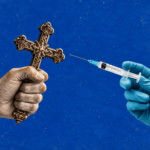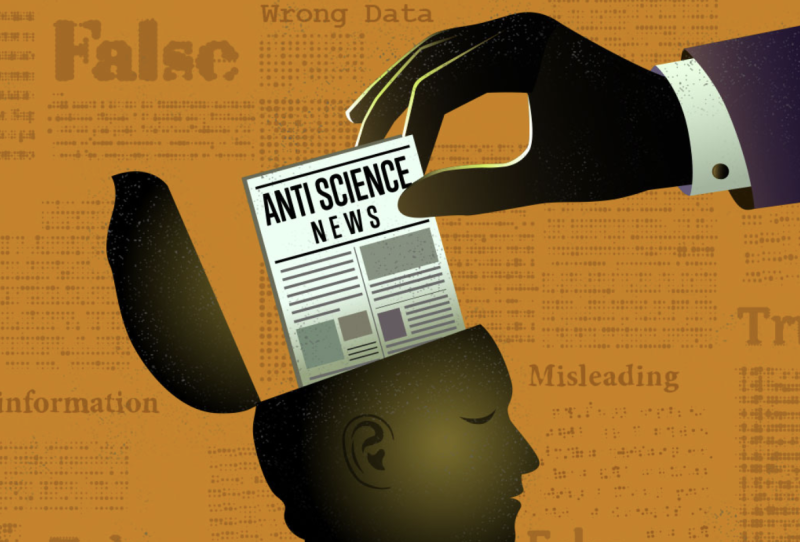
Health misinformation is exploding online — and government and health groups shoulder some of the blame

Credit: NEJM
Credit: NEJM

In the new study, published in JAMA Network Open, researchers scrutinized advertising revenue from 11 news sites flagged for spreading health misinformation, including false claims about the safety of COVID-19 vaccines.

About 10% of the more than $336 million that the sites made from advertising from 2021 to 2024 came from health groups, including government agencies such as the Centers for Disease Control and Prevention (CDC); drug makers such Pfizer and Eli Lilly; and nonprofits such as the American Heart Association (AHA) and Alzheimer’s Association.
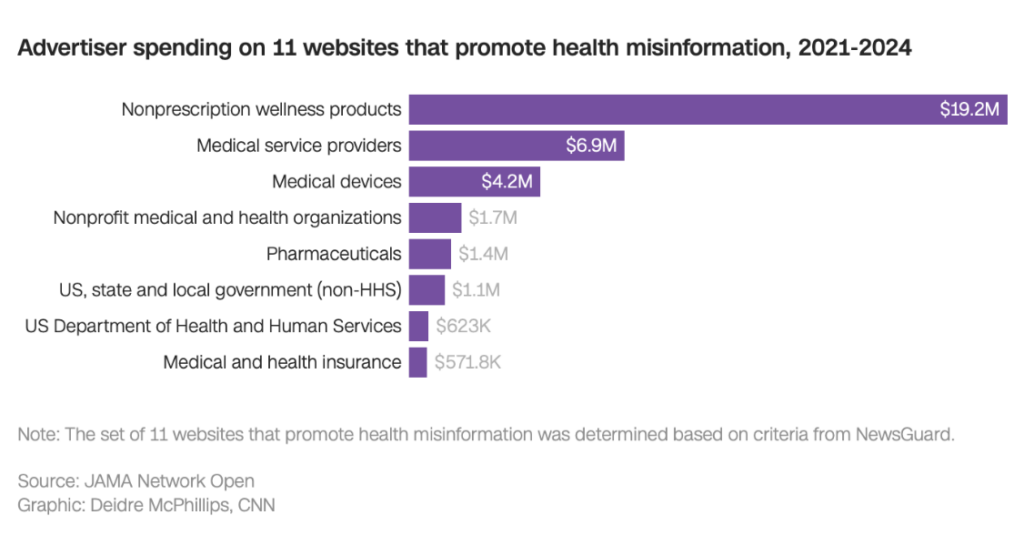
News websites with a history of spreading health misinformation, including NewsMax and ZeroHedge, “are directly at odds with the missions of these organizations,” said Neeraj Patel, a fourth-year medical student at the Yale School of Medicine and first author of the new paper.

Follow the latest news and policy debates on sustainable agriculture, biomedicine, and other ‘disruptive’ innovations. Subscribe to our newsletter.

The misinformation industry earns $2.6 billion a year in estimated advertising revenue, according to a 2021 report from NewsGuard, which deploys trained journalists to track online misinformation …. For every $2.16 in digital ad revenue sent to legitimate newspapers, US advertisers send $1 to misinformation websites, according to the report.
This is an excerpt. Read the original post here

{{ reviewsTotal }}{{ options.labels.singularReviewCountLabel }}
{{ reviewsTotal }}{{ options.labels.pluralReviewCountLabel }}
{{ options.labels.noReviewsLabel }}
{{ options.labels.newReviewButton }}
{{ userData.canReview.message }}

Related Articles

Infographic: Global regulatory and health research agencies on whether glyphosate causes cancer

Infographic: Global regulatory and health research agencies on whether glyphosate causes cancer

Does glyphosate—the world's most heavily-used herbicide—pose serious harm to humans? Is it carcinogenic? Those issues are of both legal and ...

Most Popular

ChatGPT-Image-Mar-10-2026-01_39_01-PM
Viewpoint—“Miracle molecule” debunked: Why acemannan supplements don’t work
ChatGPT-Image-Jul-22-2026-09_13_07-AM
Viewpoint—The Strategic Litigation boom: Understanding the tightening coalition among NGOs, foundations, journalists, and tort lawyers
organic scaled
Facts & Fallacies podcast: Organic food cuts pesticide exposure? A response to Dr. Rhonda Patrick
Screenshot-2026-07-07-at-12.55.44-PM
Viewpoint: Yes, we can adapt to a changing climate without devastating the environment and the economy
ChatGPT-Image-Jul-6-2026-02_25_26-PM
40 million Americans take glucosamine. If you have memory loss, it could accelerate cognitive decline.
Screenshot-2026-06-26-at-10.14.50-AM
Viewpoint: The facts behind the grifter-promoting wellness and anti-aging peptide craze: Don’t waste your money
ChatGPT-Image-Jun-25-2026-12_23_17-PM
No, Bill Gates did not secretly engineer ticks to promote veganism
ChatGPT-Image-Jul-8-2026-12_32_48-PM
Viewpoint: SCOTUS strikes a blow against junk science in Bayer glyphosate case. Will it deter mass tort litigators?
glp menu logo outlined

Get news on human & agricultural genetics and biotechnology delivered to your inbox.