Bee friendly insecticides? Scientists unlock genetic key to kill crop pests, sparing beneficial insects

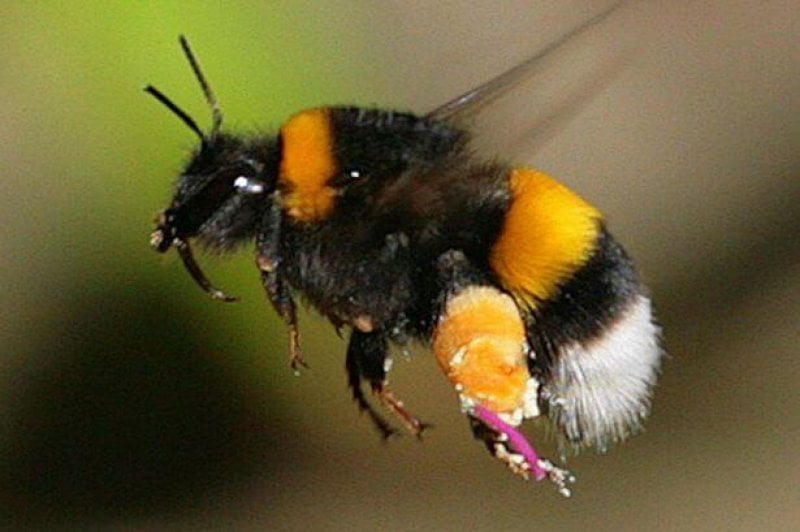
Bumble bee

Researchers at Michigan State University’s entomology department have unlocked a key to maintain the insecticide’s effectiveness in eliminating pests without killing beneficial bugs, such as bees. The study, featured in the current issue of Proceedings of the National Academy of Sciences, shows that molecular tweaks can make the difference.

Pyrethroids target the voltage-gated sodium channel, a protein found in nerve and muscle cells used for rapid electrical signaling. Pyrethroids basically work by binding to the voltage gate of the sodium channel and prevent it from closing. The nervous system becomes over-stimulated and the insect is killed. These pesticides, however, don’t have the same effect on humans, or other mammals for that matter.

…

[The researchers]  honed in on a single protein that could afford bumble bees the same resistance as humans – tau-fluvalinate, a pyrethroid insecticide.

…

“This opens the possibility of designing new chemicals that target sodium channels of pests but spare bees,” [said Ke Dong, MSU insect toxicologist and neurobiologist and co-author of the paper].

[Editor’s note: Read the full study (behind paywall)]

The GLP aggregated and excerpted this article to reflect the diversity of news, opinion and analysis. Read full, original post: Refining pesticides to kill pests, not bees

Related Articles

Infographic: Global regulatory and health research agencies on whether glyphosate causes cancer

Infographic: Global regulatory and health research agencies on whether glyphosate causes cancer

Does glyphosate—the world's most heavily-used herbicide—pose serious harm to humans? Is it carcinogenic? Those issues are of both legal and ...

Most Popular

ChatGPT-Image-Mar-10-2026-01_39_01-PM
Viewpoint—“Miracle molecule” debunked: Why acemannan supplements don’t work
ChatGPT-Image-Sep-10-2026-10_36_07-AM
Viewpoint: Even lousy scientific articles can shield authors when they hype dubious health claims and products
sorghum farmers in kenya FARMERS TREND
Here are all the ways CRISPR gene editing is transforming Africa’s staple crops—and there’s a lot more innovation to come
Screenshot-2026-10-01-at-11.21.27-AM
Vaccine hesitancy, like malaria, surges globally, topping 35% in some countries
ChatGPT-Image-Sep-30-2026-01_11_07-PM
How U.S. teamed with Russia to block global human AI weapons oversight
ChatGPT-Image-Sep-30-2026-01_25_34-PM
Blood tests for Alzheimer’s? The latest grifter, social media scam.
ChatGPT-Image-Sep-21-2026-03_15_09-PM
Viewpoint: Chipotle-inspired lesson: 10,000 sick customers suggest that processed foods can be safer than fresh ones
ChatGPT-Image-Sep-30-2026-01_38_36-PM
Viewpoint: Died “with measles” vs. died “from measles”: RFK, Jr.’s dangerously subversive word games
Screenshot-2026-09-28-at-1.16.38-PM
Defying public perceptions, U.S. cancer deaths plunged 35% since 1991
ChatGPT-Image-Sep-29-2026-12_16_42-PM
Social media influencers are driving food misinformation across Europe
glp menu logo outlined

Get news on human & agricultural genetics and biotechnology delivered to your inbox.