Could genetic engineering save coffee from a deadly fungus?

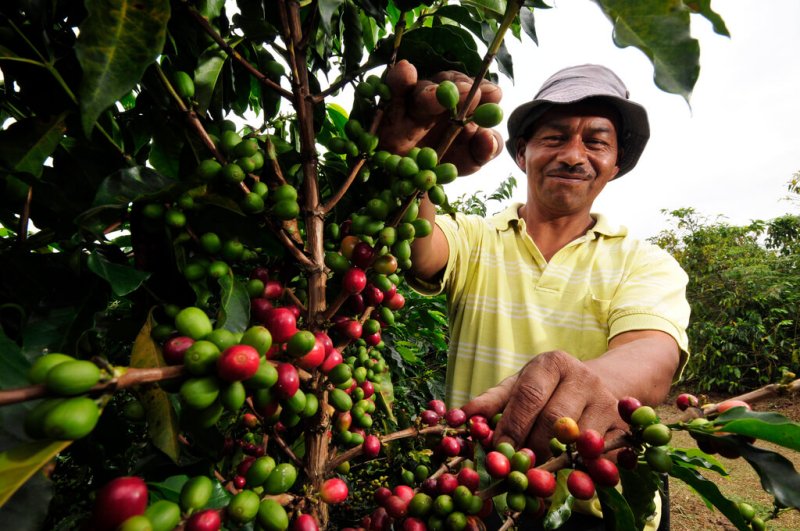
Pic by Neil Palmer CIAT A coffee farm worker in Cauca southwestern Colombia
A coffee farm worker in Cauca southwestern Colombia. Image: Neil Palmer CIAT

Genetic diversity or lack thereof can have real consequences for our diets, and more importantly, for our health.

…

The concern is that the arabica coffee (Cofea arabica), the darling of aficianados, is being threatened by a rust, which is a type of fungus. In 2008 it wiped out 40 percent of Colombia’s coffee crop. The problem is that “Cultivated arabica plants have a genetic diversity of just 1.2%, compared with more than 20% for crops such as rice and soy, making it less able to adapt to changing conditions.” How to deal with this (besides switching to tea, that is)? Suggested answers include raising healthier trees by amending the soil, devising more effective fungicides, and cross-breeding to incorporate resistance genes from wild relatives. These solutions could certainly help, but would take a fair amount of time to be effective. Enter genetic engineering — why not isolate and incorporate those same resistance genes from wild relatives into the arabica genome? It certainly would be faster than cross-breeding, and wouldn’t require the development of new pesticides.

…

Whatever the reasons, lack of genetic diversity in plants, animals and humans is an issue that can be dealt with, at least in theory, by genetic engineering. We should be accelerating research into how best to utilize this powerful technology to address such problems.

Read full, original post: Low Genetic Diversity Afflicts Coffee And Dogs: Genetic Engineering Could Help

Related Articles

Infographic: Global regulatory and health research agencies on whether glyphosate causes cancer

Infographic: Global regulatory and health research agencies on whether glyphosate causes cancer

Does glyphosate—the world's most heavily-used herbicide—pose serious harm to humans? Is it carcinogenic? Those issues are of both legal and ...

Most Popular

Screenshot-2026-11-17-at-12.18.09-PM
Challenging glyphosate fear-mongering: Statewide Nebraska study finds no link between weedkiller use and non-Hodgkin lymphoma
Screenshot-2026-11-16-at-2.37.32-PM
30 years of GMO farming: Is the boom in glyphosate and glufosinate use harming the environment? Data show they’re the most sustainable choice
Soybean Harvest in Cupped Hands
30 years of GMO farming: Defying cynics, we’ve had larger harvests, lower costs, and $385 billion in added global farmer income
ChatGPT-Image-Mar-10-2026-01_39_01-PM
Viewpoint—“Miracle molecule” debunked: Why acemannan supplements don’t work
Stormlit Portrait Over Golden Mountains
Searching for life where no one thought to look: A renowned astrophysicist’s seemingly quixotic quest to explore Venus’s clouds
Screenshot-2026-11-13-at-10.02.02-AM
Viewpoint: Why it’s such a big deal that under Trump-RFK Jr., the U.S. has lost its ‘measles-free’ status  
Screenshot-2026-11-19-at-7.54.57-PM
European General Court sides with scientists, dismisses activist claims that glyphosate is toxically dangerous
Screenshot-2026-11-09-at-3.01.19-PM
Are Texas data centers killing calves? Debunking viral AI claims
Screenshot 2026-07-29 at 10.40
The COVID vaccine turbo cancer scare is back. Science still proves it’s wrong.
glp menu logo outlined

Get news on human & agricultural genetics and biotechnology delivered to your inbox.