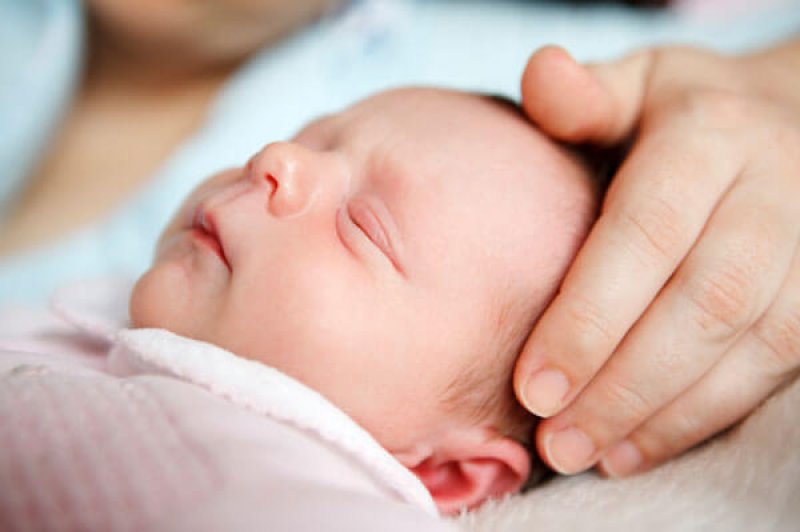
Could pre-pregnancy genetic screening help with difficult child-bearing decisions?

baby just born jgpo k
Image source: SheKnows

Pregnancy comes with many unknowns. Perhaps one of the most harrowing is whether a child will be born healthy. Now, preconception screening—looking at the genetic risk factors of both partners before they conceive—is starting to answer that question.

[R]esearchers at the National Human Genome Research Institute’s Clinical Sequencing Exploratory Research Consortium are trying to expand screening options using whole-genome sequencing, which allows researchers to look broadly for carrier risk rather than screening specific genes or targeted panels.

Science spoke with Sue Richards, a clinical medical geneticist at Oregon Health & Science University.

Q: What are the upsides? Why would people want to get this new kind of testing?

A: Because we were using this technology of whole-genome sequencing, we were able to screen and offer people additional information about their own personal health. If you have a clinically actionable variant that for example is going to predispose you to have breast cancer or colon cancer, then we would report that finding if they wanted that. It was interesting that 99% wanted [medically actionable] information back. I think it speaks loudly to the fact that people want to know this information when they’re given that choice.

Read full, original post: Should you get a genetic screen before having kids?

{{ reviewsTotal }}{{ options.labels.singularReviewCountLabel }}
{{ reviewsTotal }}{{ options.labels.pluralReviewCountLabel }}
{{ options.labels.newReviewButton }}
{{ userData.canReview.message }}

Related Articles

Infographic: Global regulatory and health research agencies on whether glyphosate causes cancer

Infographic: Global regulatory and health research agencies on whether glyphosate causes cancer

Does glyphosate—the world's most heavily-used herbicide—pose serious harm to humans? Is it carcinogenic? Those issues are of both legal and ...

Most Popular

Screenshot-2026-04-22-at-12.21.32-PM
Viewpoint: Why the retracted Monsanto glyphosate study doesn’t change the science—the world’s most popular herbicide is safe 
ChatGPT-Image-Apr-16-2026-02_56_53-PM
Financial incentives, over diagnosis, and weak oversight: Autism claims are driving up Medicare costs
Picture1
The FDA couldn’t find a vaccine safety crisis, so it buried its own research
global warming
‘Implausible’: Top climate scientists reject worst-case scenario—soaring temperatures and fast-rising sea levels
ChatGPT-Image-May-1-2026-11_42_59-AM-2
Viewpoint: NAD is the wellness grifters latest evidence-lite longevity fad. At least the mice are impressed.

Sorry. No data so far.

glp menu logo outlined

Get news on human & agricultural genetics and biotechnology delivered to your inbox.