Glyphosate cancer lawsuits ‘needlessly alarm’ the public abut a ‘critical farming tool’

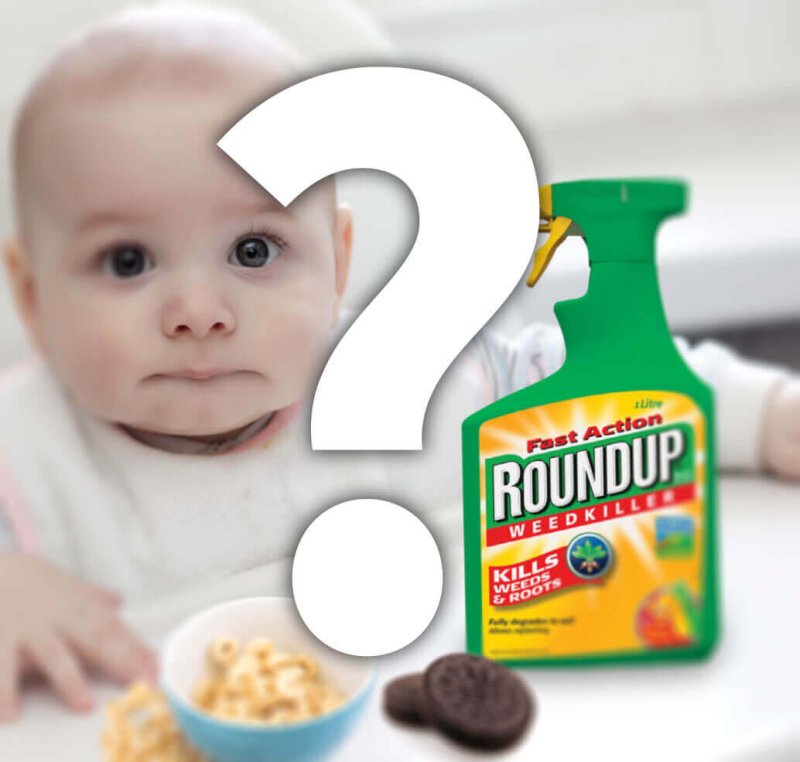
baby roundup question

[A] federal district judge presiding over class-action litigation in California [recently] made a troubling decision that will reverberate across the American economy for years.

The class-action lawsuit alleged that agriculture giant Monsanto caused cancer through its flagship product Roundup, which contains the herbicide glyphosate. The ruling by Judge Vincent Chhabria…allowed the case to proceed, yet in the same breath, he discredited the strength of the evidence underlying his own ruling.

In short, Judge Chhabria denied Monsanto’s motion for summary judgment to dismiss, despite his own opinion that the underlying science presented by the plaintiffs is “shaky” at best…

Judge Chhabria identified and acknowledged flaws in an assessment by…the International Agency for Research on Cancer (IARC), that glyphosate is a “probable carcinogen.”

Judge Chabria himself wrote, “As IARC takes pains to point out, its decision that a substance is ‘probably carcinogenic to humans’ is a hazard assessment – merely the first step in determining whether the substance currently presents a meaningful risk to human health.”

[T]his case will generate needless public alarm and confusion about a safe and critically important tool for agriculture producers across the world…it’s inappropriate to ask a jury of laypersons to ultimately steer the course of the agricultural industry’s ability to deliver safe and affordable food…

Read full, original article: A UN agency’s ‘shaky’ science got a US judicial go-ahead, and we will all pay as a result

{{ reviewsTotal }}{{ options.labels.singularReviewCountLabel }}
{{ reviewsTotal }}{{ options.labels.pluralReviewCountLabel }}
{{ options.labels.newReviewButton }}
{{ userData.canReview.message }}

Related Articles

Infographic: Global regulatory and health research agencies on whether glyphosate causes cancer

Infographic: Global regulatory and health research agencies on whether glyphosate causes cancer

Does glyphosate—the world's most heavily-used herbicide—pose serious harm to humans? Is it carcinogenic? Those issues are of both legal and ...

Most Popular

ChatGPT Image May 10, 2026, 08_16_59 PM 2
Overmedicalization? RFK Jr.’s antidepressant crackdown raises conflict questions over his fee stake in Wisner Baum, the tort firm built on suing drug makers
Picture1-5
Science Disinformation Gap: The transatlantic battle over social media and censorship
Picture1-1
Cooling the planet with balloons: Could a geoengineering gamble slow global warming?
Screenshot-2026-05-11-104424
Hantavirus outbreak research: Trump administration shut down study last year on rodent-to-human transmission
Picture1-14
When superbugs threaten vulnerable children: Can AI help solve antibiotic resistance?
Screenshot 2026-05-11 at 11.30
Despite politicized disinformation, Midwest AI data centers are fueling a solar energy boom
ChatGPT-Image-Apr-13-2026-02_20_22-PM
Viewpoint: Misinformation infodemic? Why assessing evidence is so challenging 
S
As vaccine rejectionism spreads, measles may be taking a more dangerous turn
Screenshot-2026-05-08-at-11.55.47-AM
Anti-vax activists falsely blame COVID vaccines for the rising U.S. cancer rate among younger people.
Screenshot-2026-05-01-at-1.29.41-PM
Viewpoint: What happens when whole grains meet modern food manufacturing? Labels don’t tell the whole story.
Screenshot-2026-05-08-at-3.40.33-PM
Seeds of power: China turns to genetic engineering to become global superpower
Screenshot-2026-04-20-at-2.26.27-PM
Viewpoint — Food-fear world: The latest activist scientists campaign: Cancer-causing additives
glp menu logo outlined

Get news on human & agricultural genetics and biotechnology delivered to your inbox.