Family DNA disease connection: How my breast cancer diagnosis saved my father from pancreatic cancer

pamela munster bcra mn e c b fbc df f b b cb ee fit w
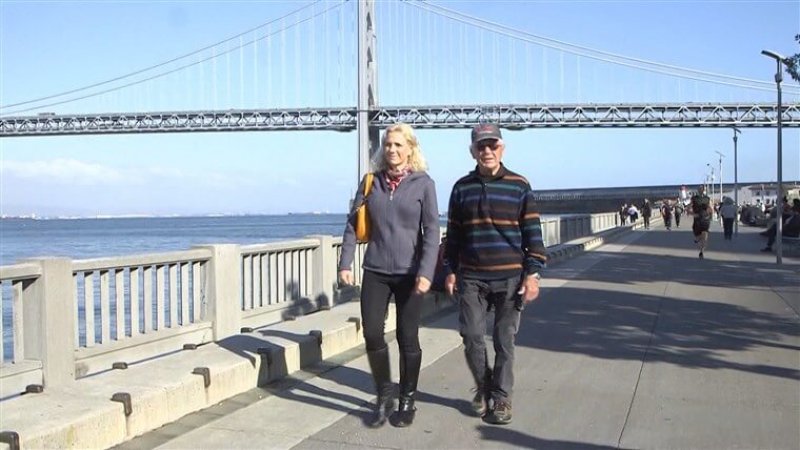
Dr. Pamela Munster and her father. Image credit: NBC News

In April 2012, as I prepared to undergo a double mastectomy, it was [my grandma] Gertrud’s face that flashed before me. I’d just endured weeks of worry, testing and decisions following an unlikely breast cancer diagnosis at the age of 48.

By the following summer, I was back in control—past the diagnosis and multiple surgeries. In November 2012, we had discovered that I carried the BRCA2 gene.

Life had barely returned to normal when, during one of our weekly calls, my father mentioned that he was having a bit of stomach trouble. Healthy all his life and with no reason to worry about what seemed to be indigestion, he did not think much of it.

But I did not think of ulcers or constipation. My mind went directly to pancreatic cancer.

For someone with a BRCA2 mutation, the risk for pancreatic cancer is up to 10 times higher than for those without the mutation.

Knowing that Papa was a BRCA2 carrier drastically raised my concern that this could be pancreatic cancer, but in 2013, at the time of his diagnosis, there were no recommendations to regularly screen someone with a BRCA2 mutation for pancreatic cancer. My own circumstances and my knowledge of the mutation were undoubtedly part of what saved him.

[This essay is adapted from Dr Pamela Munster’s new book, “Twisting Fate: My Journey with BRCA—From Breast Cancer Doctor to Patient, and Back,” published by The Experiment. She is a professor of medicine at the University of California, San Francisco.]

Editor’s note: Full article is behind paywall

Read full, original post: My Father’s Fight Against the Breast-Cancer Gene

{{ reviewsTotal }}{{ options.labels.singularReviewCountLabel }}
{{ reviewsTotal }}{{ options.labels.pluralReviewCountLabel }}
{{ options.labels.newReviewButton }}
{{ userData.canReview.message }}

Related Articles

Infographic: Global regulatory and health research agencies on whether glyphosate causes cancer

Infographic: Global regulatory and health research agencies on whether glyphosate causes cancer

Does glyphosate—the world's most heavily-used herbicide—pose serious harm to humans? Is it carcinogenic? Those issues are of both legal and ...

Most Popular

ChatGPT-Image-Mar-10-2026-01_39_01-PM
Viewpoint—“Miracle molecule” debunked: Why acemannan supplements don’t work
ChatGPT-Image-Jun-25-2026-12_23_17-PM
No, Bill Gates did not secretly engineer ticks to promote veganism
ChatGPT-Image-Jun-25-2026-01_14_50-PM
Viewpoint: Disinformation grift: The wellness industry is a lucrative and mostly worthless marketplace of ‘balms, brews, and baloney’
ChatGPT-Image-Jun-30-2026-01_09_47-PM
Viewpoint: As MAHA blows up over Supreme Court ruling limiting glyphosate litigation, Trump offers toothless plan to reduce pesticides in food
ChatGPT-Image-Jun-23-2026-12_19_35-PM
Ideological red flag: Led by anti-vax doctor, Tennessee is now the U.S. epicenter selling potent ivermectin shown worthless to prevent or treat Covid
ChatGPT-Image-Mar-4-2026-09_39_03-AM
Transgender female athletes and Title IX: Separating ‘policy’ from ‘legality’
Screenshot-2026-06-30-at-10.43.50-AM
Viewpoint: Why are there no approved bioengineered insect-protected (Bt) apples?
Screenshot-2026-06-30-at-3.08.03-PM
From infrared sauna blankets to collagen gummies, here’s the top 10 social-media-promoted wellness shams
marijuana-pot-in-hand-nveri-st-xpm-t-abq-fkifeos-s-rws-cmpx-
Facts & Fallacies podcast: Legalized weed drives drug addiction, psychosis?
photodune farming tractor s
Viewpoint: Glyphosate may be hazardous, but it is not dangerous as used by farmers. Critics of the Supreme Court’s Roundup ruling garble hazard with risk
Screenshot-2026-06-17-at-12.31.01-PM
Viewpoint: The dangerous influence of ‘woke’ post-modernism in science

Sorry. No data so far.

glp menu logo outlined

Get news on human & agricultural genetics and biotechnology delivered to your inbox.