Ethics and the controversial decision to make gene-edited babies

He
He Jiankui of China.

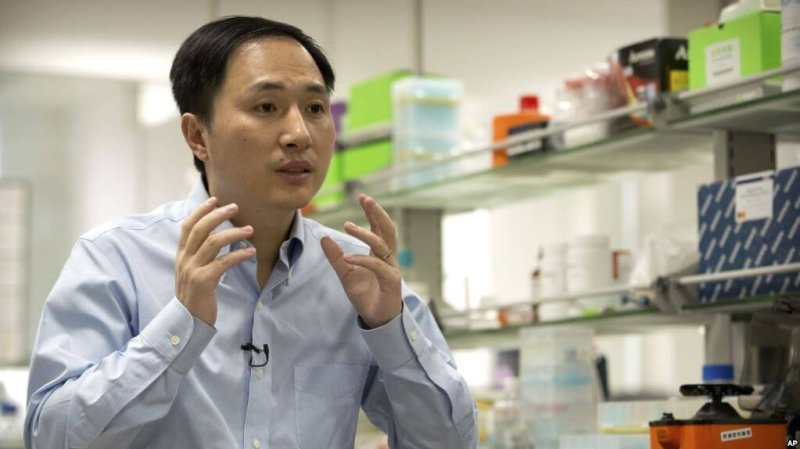
For someone who has caused a worldwide uproar over what many fellow scientists consider an ethical outrage, He Jiankui of China spent a remarkable amount of time discussing his work — which he claims led to the births of the first babies whose genomes had been edited when they were IVF embryos — with bioethicists, policy experts, and social scientists.

Two of them are father and son: Dr. William Hurlbut of Stanford University, a member of the U.S. President’s Council on Bioethics in the early 2000s, and J. Benjamin Hurlbut of Arizona State University, a biomedical historian. The Hurlbuts have discussed the ethics of human genome editing with He more than any other scholars in the West and probably the world.

Though neither Hurlbut supports what He has done, both came away from these conversations with an impression of He as a well-meaning and thoughtful scientist — and, as the younger Hurlbut put it, not a “rogue.”

…

He asked Hurlbut whether opponents of such research in the U.S. were members of fringe groups, or reflected a majority view. “He wanted to understand what that was about,” Hurlbut said.


…

“I knew where he was heading and tried to give him a sense of the practical and ethical implications,” Hurlbut said. “But he kept returning to the good that could be done.”

Read full, original post: He took a crash course in bioethics. Then he created CRISPR babies

Related Articles

Infographic: Global regulatory and health research agencies on whether glyphosate causes cancer

Infographic: Global regulatory and health research agencies on whether glyphosate causes cancer

Does glyphosate—the world's most heavily-used herbicide—pose serious harm to humans? Is it carcinogenic? Those issues are of both legal and ...

Most Popular

ChatGPT-Image-Mar-10-2026-01_39_01-PM
Viewpoint—“Miracle molecule” debunked: Why acemannan supplements don’t work
Screenshot-2026-10-06-at-2.36.47-PM
Is organic farming really more sustainable? 100 recent studies say ‘no’
Supreme-Court-Amid-Climate-Crisis
Should fossil fuel companies be shielded from lawsuits over climate change damage? The Supreme Court takes up the question
Screenshot 2025-09-17 at 12.41
Jump-starting global warming: Rising temperatures are driving up emissions from wildfires, fermenting wetlands, and melting permafrost
Screenshot-2026-10-02-at-9.11.36-AM
The genetics of personality
Radioactive-Americana-Collage-2
The kooky logic behind the raft of spurious cancer claims from Harvard’s T.H. Chan School of Public Health
Childrens-Health-Defense-Press-Briefing
Court links patient’s death to anti-vaccine doctor promoted by Kennedy’s Children’s Health Defense
Kind-People-Kind-Futures-Hands
Patches for sleep, weight, NAD+, energy, focus, periods. No evidence to support the latest social media wellness scams
Screenshot-2026-09-28-at-11.26.17-AM
Viewpoint: Wellness movement activists reposition nicotine from a killer addictive drug into a cure-all for brain ills
Screenshot-2026-09-22-at-10.54.12-AM
‘They misunderstand science’: Research attempting to tie autism to changes in the gut microbiome comes under fire
strand of dna genetics
No, GMO foods do not “damage genes, natural disposition and hormones, or decrease physical health and intelligence”
ChatGPT-Image-Sep-21-2026-11_21_39-AM
Viewpoint: Food cults: Online ‘nutrition communities’ can pose unique dangers
glp menu logo outlined

Get news on human & agricultural genetics and biotechnology delivered to your inbox.