China’s multi-billion-dollar investment in CRISPR could help feed its ‘massive’ population

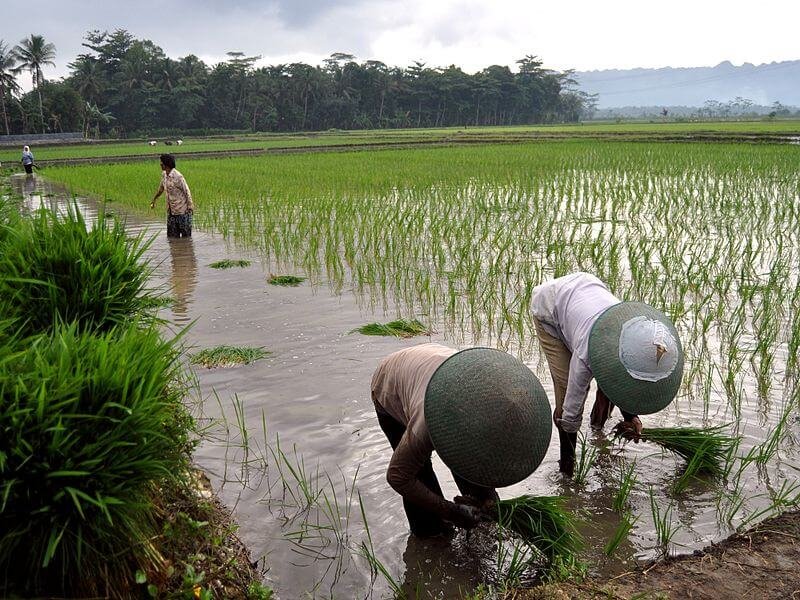
Bms rice planting rwg
[Cell biologist Gao Caixia] is one face of the Chinese governmentโ€™s bet that CRISPR can transform the countryโ€™s food supply …. But she is far from alone in China. Her team is one of 20 groups there seeking to use CRISPR to modify crop genes. โ€œAll the labs use CRISPR for basic research,โ€ Gao says. โ€œThey cannot live without CRISPR.โ€ China also expanded its efforts beyond its borders in 2017, when the state-owned company ChemChina bought Switzerland-based Syngentaโ€”one of the worldโ€™s four largest agribusinesses, which has a large R&D team working with CRISPRโ€”for $43 billion.

China may one day need CRISPR-modified plants to provide enough food for its massive population, notes rice researcher Li Jiayang, former president of the Chinese Academy of Agricultural Sciences in Beijing and vice minister of agriculture. โ€œWe have to feed 1.4 billion people with very limited natural resources,โ€ says Li, who works at the same CAS campus as Gao, the Institute of Genetics and Developmental Biology. โ€œWe want to get the highest yield of production with the least input on the land from fertilizers and pesticides, and breed supervarieties that are pest and disease resistant as well as drought and salt tolerant ….”

Read full, original article: To feed its 1.4 billion, China bets big on genome editing of crops

{{ reviewsTotal }}{{ options.labels.singularReviewCountLabel }}
{{ reviewsTotal }}{{ options.labels.pluralReviewCountLabel }}
{{ options.labels.newReviewButton }}
{{ userData.canReview.message }}

Related Articles

Infographic: Global regulatory and health research agencies on whether glyphosate causes cancer

Infographic: Global regulatory and health research agencies on whether glyphosate causes cancer

Does glyphosateโ€”the world's most heavily-used herbicideโ€”pose serious harm to humans? Is it carcinogenic? Those issues are of both legal and ...

Most Popular

Credit: ACSH
Viewpoint: Who and whatโ€™s to blame for the surge in vaccine-preventable diseases?
ChatGPT-Image-May-28-2026-12_56_54-PM
Viewpoint: Vaccines' non-specific effects? The โ€˜shoddyโ€™ Danish couple whose 'researchโ€™ inspires RFK, Jr.โ€™s health delusion
Organic-Produce
Viewpoint: Why you should ignore organic food advocatesโ€™ advice to avoid โ€˜pesticide soakedโ€™ conventional fruits and vegetables
ChatGPT Image Jun 3, 2026, 03_14_43 PM
Viewpoint: How Earthjustice became the poster child for the abuse of special interest activist funding
Screenshot-2026-06-05-at-2.12.30-PM
Some plants can poison you. So how did humans figure out what is safe to eat?
Screenshot-2026-06-08-at-11.05.51-AM
Can vaping lead to cancer? New โ€˜association studyโ€™ raises questions of โ€œlinks"
Screenshot-2026-06-05-at-3.30.20-PM
Republican lawmakers spread misinformation claiming solar farms permanently destroy potato farms
Screenshot-2026-06-08-at-10.19.30-AM
โ€˜Naturalโ€™ wellness supplements linked to liver injury
ChatGPT-Image-Jun-5-2026-01_17_48-PM
GLP-1 weight-loss drugs may reshape our desires and emotions
edb7f6d7-2370-418f-9578-74e29678e35c
Facts & Fallacies Podcast: Nicotine vapingโ€”public health miracle, or risk to children? Professor Cliff Douglas
ChatGPT-Image-Jun-5-2026-02_48_23-PM
Viewpoint: How Dr.TikTok (falsely) convinced me that cortisol was running my health
ChatGPT-Image-Mar-10-2026-01_39_01-PM
Viewpointโ€”โ€œMiracle moleculeโ€ debunked: Why acemannan supplements donโ€™t work
glp menu logo outlined

Get news on human & agricultural genetics and biotechnology delivered to your inbox.