CRISPR gene-editing can help turn Africa’s low-yielding rice varieties into sustainable staple crops

Farm Field Asia Plant Rice Nature Agriculture e

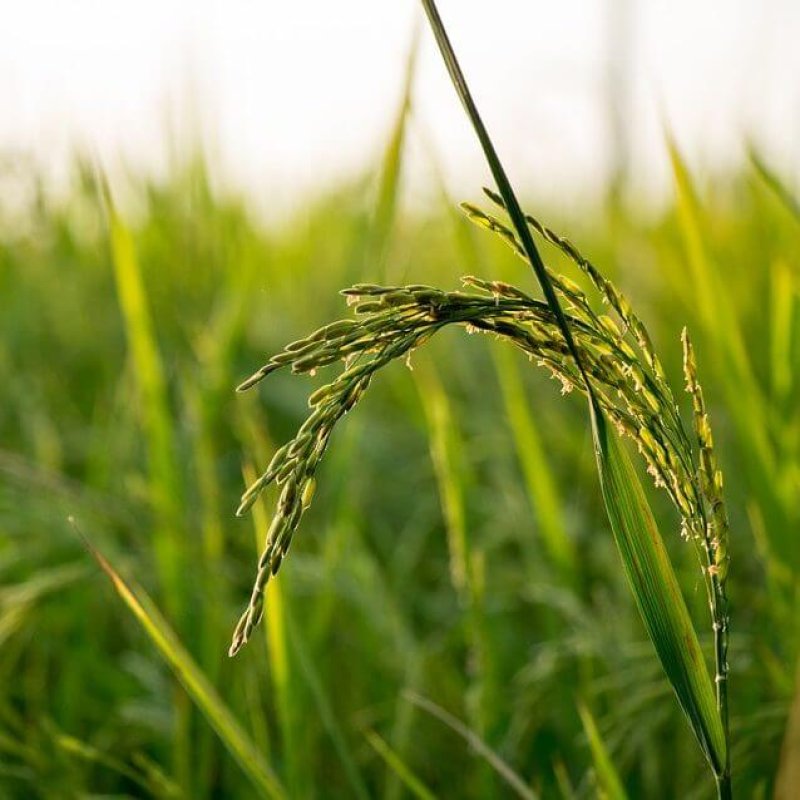
African Oryza glaberrima and Oryza sativa landraces are considered valuable resources for breeding traits due to their adaptation to local environmental and soil conditions. They often possess superior resistance to endemic pests and tolerance to drought and nutrient deficiencies when compared to the “imported” high production Asian rice varieties.

In contrast, “domestication traits” such as seed shattering, lodging, and seed yield are not well established in these African landraces. Therefore, the use of these African varieties for high production agriculture is limited by unpredictable yield and grain quality.

…

Importantly, our data show that the accelerated domestication approach by simultaneously stacking multiple mutant combinations through CRISPR-Cas technology provides a means for rapid domestication of African landraces that have traits making them more suitable for sustainable agriculture.
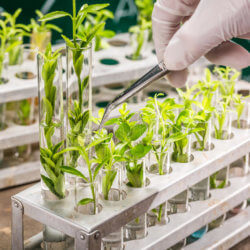
Interestingly, by applying the latest CRISPR mediated base-editing technologies it will not only be possible to obtain harvest increases by knocking out negative regulators of yield, as shown in this study, but it will also allow the introduction of any kind of favorable mutation. Altogether if these tools can be introduced in plant cells, they will empower fast adaptation of orphan and neglected crops to facilitate their use in modern high yielding agriculture practices.

Our study provides an example of how new breeding technologies can accelerate the development of highly productive African landrace rice varieties, an important advancement considering that Africa is a hotspot for worldwide population growth and therefore prone to food shortage.


Read the original post

Related Articles

Infographic: Global regulatory and health research agencies on whether glyphosate causes cancer

Infographic: Global regulatory and health research agencies on whether glyphosate causes cancer

Does glyphosate—the world's most heavily-used herbicide—pose serious harm to humans? Is it carcinogenic? Those issues are of both legal and ...

Most Popular

ChatGPT-Image-Mar-10-2026-01_39_01-PM
Viewpoint—“Miracle molecule” debunked: Why acemannan supplements don’t work
ChatGPT-Image-Sep-2-2026-02_03_32-PM
How much of a problem is AI’s water use?
ChatGPT-Image-Sep-22-2026-10_32_46-AM
There has been a slew of recent reports of food recalls and foodborne outbreaks. Do we face an escalating problem?
ChatGPT-Image-Aug-26-2026-12_46_16-PM
Viewpoint: The fake controversy over whether combining childhood vaccines is dangerous— a debate science resolved 25 years ago
ChatGPT-Image-Sep-21-2026-03_41_02-PM
Viewpoint: Does IQ really measure intelligence? BBC gets it wrong.
ChatGPT-Image-Sep-18-2026-01_38_09-PM
Microsoft exec: AI is a ‘doom loop’ scraping the ‘largest theft of labor in human history'
Screenshot-2026-09-17-at-12.00.30-PM
Investigative group ProPublica finds links between ectopic pregnancy deaths and abortion bans
Screenshot-2026-09-17-at-1.07.08-PM
'We are dangerously addicted to antidepressants': Should we heed RFK Jr.’s sobering warning?
Screenshot-2026-09-23-at-11.55.01-AM
How can we know if social media bans actually help teens?
ChatGPT-Image-Sep-17-2026-12_28_43-PM
Vitamin D, omega-3 fish oil and glucosamine supplements could cause brain damage 
Screenshot-2026-09-16-at-2.26.42-PM
Viewpoint: How to ecologically damage America’s forests: Ban glyphosate
ChatGPT-Image-Sep-23-2026-11_47_32-AM
Facing pressure from Trump administration, fewer hospitals offer medical treatment for transgender minors
Screenshot-2026-09-03-at-10.51.20-AM
Viewpoint: Why do online health lies outlive the evidence that debunks them? Read "Everyone Else Is Lying to You"
glp menu logo outlined

Get news on human & agricultural genetics and biotechnology delivered to your inbox.