Powerful psychedelic drug ibogaine could help people kick opioid addictions

iboga

Somewhere around two million Americans suffer from opioid-related substance use disorder. Treatments like buprenorphine and methadone calm the brain circuits affected by opioids, reducing cravings and withdrawal. In conjunction with counseling, these medications can gradually ferry addicted individuals back to normalcy. Unfortunately, medications are underutilized and states generally lack the resources to provide them to all afflicted individuals.

It is into this quagmire that some have suggested inserting a new, surprising treatment: a powerful psychedelic drug called ibogaine.

Derived from the root or bark of a West African shrub called Tabernanthe iboga, ibogaine has been used in the Bwiti spiritual discipline of the forest-dwelling Punu and Mitsogo peoples of Gabon for generations.

A curious side effect, anecdotally recognized in the 1960s, is that ibogaine significantly reduces cravings for alcohol, cocaine, methamphetamine, opiates, and nicotine, so much in fact that some people claimed to be completely rid of their drug addictions after a single, mind-altering dose.
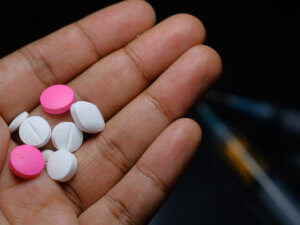

In 2016, researchers in New Zealand calculated that patients could be treated for their addictions with lower doses, around 0.87mg per kilogram of body weight, which is substantially lower than those presently being administered by gray market practitioners. Randomized, controlled trials are now underway to test their hypothesis.

Read the original post

Related Articles

Infographic: Global regulatory and health research agencies on whether glyphosate causes cancer

Infographic: Global regulatory and health research agencies on whether glyphosate causes cancer

Does glyphosate—the world's most heavily-used herbicide—pose serious harm to humans? Is it carcinogenic? Those issues are of both legal and ...

Most Popular

ChatGPT-Image-Mar-10-2026-01_39_01-PM
Viewpoint—“Miracle molecule” debunked: Why acemannan supplements don’t work
Screenshot-2026-09-10-at-11.50.46-AM
Did COVID vaccines kill 2,500 service members? RFK Jr. hires an investigator who compares vaccine promoters to Nazi doctors
ChatGPT-Image-Sep-13-2026-10_24_17-AM
Bayer urges court to approve $7.25 billion Monsanto Roundup settlement that could limit its future liabilities
Screenshot-2026-09-11-at-2.26.23-PM
Newly approved GMO chestnut trees planted across from the White House are stirring debate
ChatGPT-Image-Sep-15-2026-06_05_13-PM
CRISPR fine-tuning unlocks vitamin C-rich potatoes without yield loss
ChatGPT-Image-Sep-15-2026-05_59_18-PM
RFK Jr. spent two years distancing himself from Children’s Health Defense. Now he’s keynoting its anti-vaccine DC conference.
Screenshot-2026-09-10-at-12.20.19-PM
'Jet fuel didn't melt the steel': 9/11 conspiracy theories debunked
ChatGPT-Image-Aug-28-2026-03_33_46-PM
Viewpoint: Bad science—Five bogus Trump administration claims about vaccines and autism
Screenshot-2026-09-15-at-11.04.54-AM
Viewpoint: Childhood deaths in dispute: Why the CDC vs Pennsylvania conflict over measles vaccines matters
Screenshot 2026-09-10 at 11.28
A meaty problem: How to make cell-grown protein taste like steak, chicken, and seafood
organic-labeling-slide-dcba-aa-c-a-dde-a-fcd-e-c-d-
Viewpoint: Organic food costs more—but is it healthier, safer, and more nutritious? The latest science findings may surprise you.
ChatGPT-Image-Aug-14-2026-11_16_47-AM
Fibermaxxing: Latest Instagram diet craze raises hope that a fiber-rich diet can improve health
glp menu logo outlined

Get news on human & agricultural genetics and biotechnology delivered to your inbox.