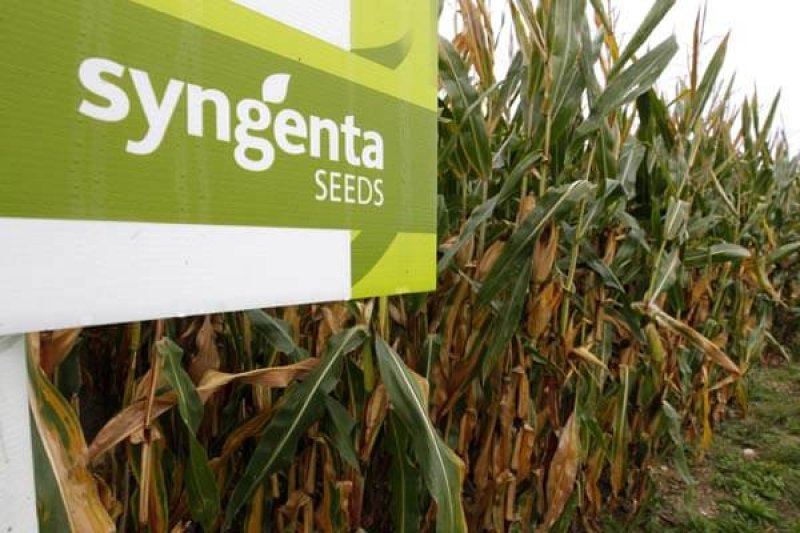
Consumer pesticide fears spur chemical giant Syngenta to develop more eco-friendly farm technologies

dbbd fda a

Conventional pesticide makers including Syngenta and Bayer AG have been under pressure in recent years over their products’ impact on the environment and biodiversity, as more and more consumers grow more environmentally conscious and distrustful of pesticides used to produce their food.

Climate change, together with the sustainability push, is upending strategies and businesses of well-established companies from oil producers investing in renewable energy to meat producers making plant-based burgers.

Syngenta is working with farmers to educate them on using pesticides only when needed and safely. It uses digital precision agriculture, which targets diseases, weeds and diseases only where it’s needed. In China, for example, it’s expanding a network of centers where it helps farmers get higher yields while using less pesticides and fertilizers, and protecting soil and water. It charges farmers per hectare instead of per bottle of pesticide.

“Our goals are aligned – minimize the use of pesticide to control the pest,” [said Chief Executive Officer Erik Fyrwald.] …. Safer chemistries and biotechnology will help reduce pesticides “more and more toward zero,” he said. “I don’t think it’ll get to zero.”


Read the original post

{{ reviewsTotal }}{{ options.labels.singularReviewCountLabel }}
{{ reviewsTotal }}{{ options.labels.pluralReviewCountLabel }}
{{ options.labels.newReviewButton }}
{{ userData.canReview.message }}

Related Articles

Infographic: Global regulatory and health research agencies on whether glyphosate causes cancer

Infographic: Global regulatory and health research agencies on whether glyphosate causes cancer

Does glyphosate—the world's most heavily-used herbicide—pose serious harm to humans? Is it carcinogenic? Those issues are of both legal and ...

Most Popular

ChatGPT Image Jun 3, 2026, 03_14_43 PM
Viewpoint: How Earthjustice became the poster child for the abuse of special interest activist funding
ChatGPT-Image-Jun-11-2026-01_15_03-PM
Selective Pressure, Selective Silence
Screenshot-2026-06-05-at-2.12.30-PM
Some plants can poison you. So how did humans figure out what is safe to eat?
ChatGPT Image Jun 3, 2026, 03_54_37 PM
Viewpoint: “Turn on, tune in, drop out”—Kennedy embraces the Timothy Leary psychedelic revolution
ChatGPT-Image-Mar-10-2026-01_39_01-PM
Viewpoint—“Miracle molecule” debunked: Why acemannan supplements don’t work
Screenshot 2026-05-26 at 10.15
Viewpoint: Double standard—Why does the wellness industry get a free pass while Big Healthcare is treated as morally suspect?
ChatGPT-Image-May-26-2026-07_51_21-AM-2
Viewpoint: There are more than 1,000 chemicals in a cup of coffee—including many substances that can cause cancer. Why isn’t it banned?
ChatGPT Image May 28, 2026, 08_16_38 PM
Viewpoint: Why the EPA mismeasures cancer risk of chemicals and what should be done to fix it
Screenshot-2026-06-03-at-1.24.46-PM
Challenging anti-GMO disinformation: Why genetically-tweaked crops offer bushels of benefits
Picture1
Sounds we can’t hear — the hidden planetary signals behind science, fear, and misinformation

Sorry. No data so far.

glp menu logo outlined

Get news on human & agricultural genetics and biotechnology delivered to your inbox.