Viewpoint: Can you inherit anorexia and other eating disorders?

mother and daughter at home having a serious talk x header x

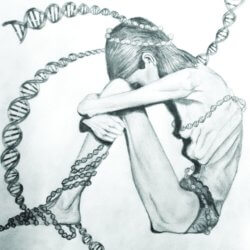
Experts have long known that eating disorders stem from a combination of hereditary and environmental factors, but no one had ever delved deep enough to pinpoint the specific genes at play until [Cynthia] Bulik and her team stepped up to the plate. [The Anorexia Nervosa Genetics Initiative’s] findings have been illuminating for researchers and patients, revealing that the origins of anorexia include a combination of metabolic and psychiatric components. More specifically, ANGI identified eight genetic variants significantly associated with anorexia nervosa; and the research shows that the origins of this serious disorder appear to be both physical and psychological.

Earlier research from Bulik and colleagues found that a first-degree relative of someone with a disorder is up to 12 times more likely to develop one than a relative of someone ED-free.

Mis- and disinformation are distorting science and public policy. Subscribe to our Daily and Weekly Digests for incisive coverage of ‘disruptive’ innovations in AI, agricultural biotechnology, food, chemicals, nuclear energy, vaccines, and other disruptive innovations.

According to the paper Bulik and her colleagues published in Nature Genetics in July 2019, ANGI revealed for the first time that there’s a genetic basis of anorexia that overlaps with metabolic traits, including how the body processes sugar and fats, as well as anthropometric (body measurement) characteristics that are not due to the genetic effects that influence body mass index (BMI). The upshot: It doesn’t matter what size, shape, or weight you are — anyone with these metabolic traits could be vulnerable to developing anorexia.
Read the original post

Related Articles

Infographic: Global regulatory and health research agencies on whether glyphosate causes cancer

Infographic: Global regulatory and health research agencies on whether glyphosate causes cancer

Does glyphosate—the world's most heavily-used herbicide—pose serious harm to humans? Is it carcinogenic? Those issues are of both legal and ...

Most Popular

ChatGPT-Image-Mar-10-2026-01_39_01-PM
Viewpoint—“Miracle molecule” debunked: Why acemannan supplements don’t work
Screenshot-2026-09-17-at-1.07.08-PM
'We are dangerously addicted to antidepressants': Should we heed RFK Jr.’s sobering warning?
ChatGPT-Image-Sep-22-2026-10_32_46-AM
There has been a slew of recent reports of food recalls and foodborne outbreaks. Do we face an escalating problem?
ChatGPT-Image-Sep-2-2026-02_03_32-PM
How much of a problem is AI’s water use?
Screenshot-2026-09-03-at-10.51.20-AM
Viewpoint: Why do online health lies outlive the evidence that debunks them? Read "Everyone Else Is Lying to You"
ChatGPT-Image-Aug-26-2026-12_46_16-PM
Viewpoint: The fake controversy over whether combining childhood vaccines is dangerous— a debate science resolved 25 years ago
ChatGPT-Image-Sep-23-2026-01_52_03-PM
Viewpoint: 4 very real AI doomsday scenarios
Screenshot-2026-09-23-at-11.55.01-AM
How can we know if social media bans actually help teens?
Screenshot-2026-09-22-at-11.40.28-AM
After Idaho criminalized abortion providers in 2022, one-third of obstetricians fled. Health care advocates are making rural health the case for repealing the ban
Screenshot-2026-09-23-at-3.15.09-PM
Anti-GMO activists in Pakistan rev up their campaign of dire warnings
Screenshot-2026-09-17-at-12.00.30-PM
Investigative group ProPublica finds links between ectopic pregnancy deaths and abortion bans
ChatGPT-Image-Sep-17-2026-12_28_43-PM
Vitamin D, omega-3 fish oil and glucosamine supplements could cause brain damage 
glp menu logo outlined

Get news on human & agricultural genetics and biotechnology delivered to your inbox.