Canada exempts gene-edited plants from regulatory review, speeding new crop development

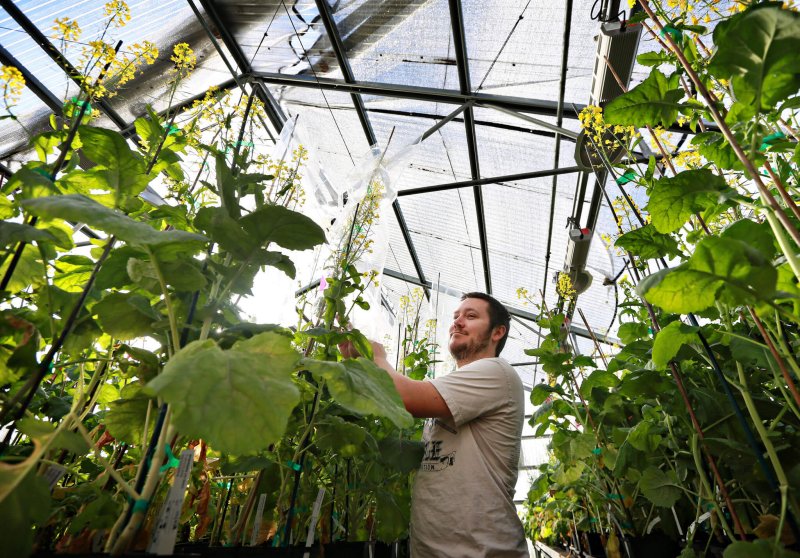
Credit: Sandy Huffaker/New York Times

Gene-edited plants differ from traditional GMOs because the method used to modify their genetic codes differs, and they often don’t contain DNA from another organism. Older genetic-modification techniques added entire segments of foreign DNA to an organism’s genome to obtain desirable traits. In contrast, gene editing changes only a few base pairs — the genome’s building blocks — within the organism’s DNA to alter a specific gene.

Health Canada and the [Canadian Food Inspection Agency, or] CFIA categorize new organisms into two categories, “novel” and “non-novel.” In the context of gene editing:

“Novel” organisms have traits that are not naturally occurring and have not been previously approved for sale by Health Canada and the CFIA. Organisms that pose an obvious risk — they could be toxic or cause an allergic reaction, for instance — or that contain foreign DNA in the final product are considered novel.

Follow the latest news and policy debates on sustainable agriculture, biomedicine, and other ‘disruptive’ innovations. Subscribe to our newsletter.

“Non-novel” organisms are organisms that have a history of safe use, show no characteristics that are new to the species and do not contain genetic material from another organism after its genome has been edited.

Currently, GMOs on the market in Canada must pass through Health Canada and the CFIA to determine if they are “novel.” If so, they are subject to regulatory oversight; seeds that exhibit “non-novel” traits will not.


Read the original post

{{ reviewsTotal }}{{ options.labels.singularReviewCountLabel }}
{{ reviewsTotal }}{{ options.labels.pluralReviewCountLabel }}
{{ options.labels.newReviewButton }}
{{ userData.canReview.message }}

Related Articles

Infographic: Global regulatory and health research agencies on whether glyphosate causes cancer

Infographic: Global regulatory and health research agencies on whether glyphosate causes cancer

Does glyphosate—the world's most heavily-used herbicide—pose serious harm to humans? Is it carcinogenic? Those issues are of both legal and ...

Most Popular

ChatGPT-Image-Jun-9-2026-01_11_37-PM
Turmeric supplements: More risks than benefits
ChatGPT-Image-Mar-10-2026-01_39_01-PM
Viewpoint—“Miracle molecule” debunked: Why acemannan supplements don’t work
wuhan institute of virology main entrance
​​COVID lab leak? Making a case that the Wuhan market origins theory is wrong
Screenshot-2026-06-05-at-2.12.30-PM
Some plants can poison you. So how did humans figure out what is safe to eat?
Screenshot-2026-06-17-at-9.44.03-AM
Viewpoint: Embryos are becoming the newest battleground of love, loss, and legal uncertainty
ChatGPT-Image-Jun-14-2026-09_41_44-AM-2
Viewpoint—‘The gleeful efficiency of an arsonist’: Administration’s health and science research cuts are ‘sabotaging’ America’s future
ChatGPT Image May 26, 2026, 08_42_17 AM (1)
Viewpoint: Greenpeace and poison: How environmental advocacy groups rely on compliant (and often ignorant) journalists to spread disinformation and spark litigation
ChatGPT-Image-Jun-11-2026-01_15_03-PM
Selective Pressure, Selective Silence
ChatGPT Image May 28, 2026, 08_16_38 PM
Viewpoint: Why the EPA mismeasures cancer risk of chemicals and what should be done to fix it

Sorry. No data so far.

glp menu logo outlined

Get news on human & agricultural genetics and biotechnology delivered to your inbox.