Viewpoint: Why terms like ‘regenerative agriculture’ and ‘intensive farming’ are meaningless

Credit: Adobe
Credit: Adobe

Quick: What do all of these terms have in common:

  • Regenerative agriculture.
  • Industrial agriculture.
  • Organic agriculture.
  • Non-GMO agriculture.
  • Intensive agriculture.
  • Corporate agriculture.
  • Conventional agriculture.
  • Urban agriculture.

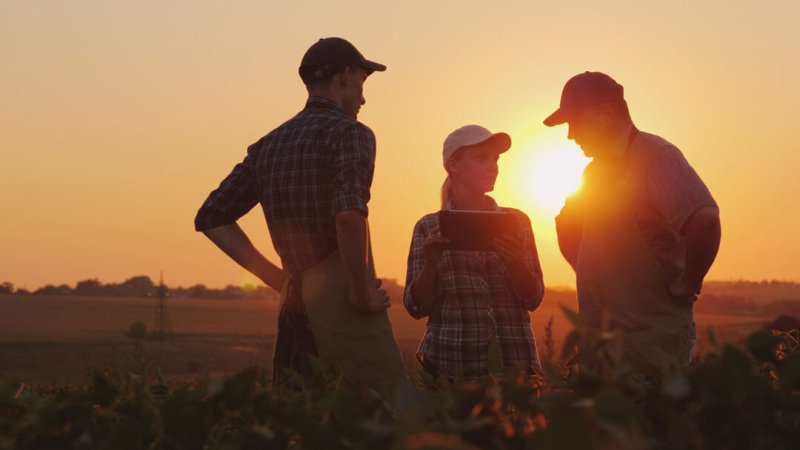
Answer: These aren’t terms farmers use regularly. Honestly, I’ve never heard a group of farmers employ these words while talking about production methods or substantive conversations. Not while getting permits and licenses. Not when negotiating contracts. Not during seminars. And not during transactions.

Follow the latest news and policy debates on sustainable agriculture, biomedicine, and other ‘disruptive’ innovations. Subscribe to our newsletter.

Actual conversations about how to farm have little-to-nothing to do with those words. Farmers make decisions to farm in a way that increases yields, requires less inputs, is profitable, preserves the land for future generations, produces nutritious food, fills contracts, lowers costs, builds soil health, fits with the weather, complies with regulations, and actually works. If the choices they make qualify them as one type of farming over another, they usually don’t even know or care. That’s just not the point.

Yet the rest of the world wants to understand agriculture only within those labels. It makes things more simple. Some terms are all good. Some terms are all bad. And where a particular farm fits shapes how activists, and — to some extent — the public, see it.


Read the original post

{{ reviewsTotal }}{{ options.labels.singularReviewCountLabel }}
{{ reviewsTotal }}{{ options.labels.pluralReviewCountLabel }}
{{ options.labels.newReviewButton }}
{{ userData.canReview.message }}

Related Articles

Infographic: Global regulatory and health research agencies on whether glyphosate causes cancer

Infographic: Global regulatory and health research agencies on whether glyphosate causes cancer

Does glyphosate—the world's most heavily-used herbicide—pose serious harm to humans? Is it carcinogenic? Those issues are of both legal and ...

Most Popular

S
As vaccine rejectionism spreads, measles may be taking a more dangerous turn
Screenshot-2026-05-01-at-1.29.41-PM
Viewpoint: What happens when whole grains meet modern food manufacturing? Labels don’t tell the whole story.
Screenshot 2026-05-06 at 2.56
Singularity crisis ahead? Can super babies save us from rogue AI geniuses?
Screenshot-2026-03-13-at-12.14.04-PM
The FDA wants to make many popular prescription drugs OTC—a great idea. Here’s why it’s unlikely to happen
Screenshot-2026-05-06-at-2.07.43-PM
Manufacturing a conspiracy: The timeline of how  the White House embraced the fringe claim that scientists are being mysteriously murdered
Screenshot-2026-05-01-at-11.56.24-AM
‘Science moves forward when people are willing to think differently’: Memories of DNA maverick Craig Venter
Screenshot-2026-04-03-at-11.15.51-AM
Paraben panic: How a flawed study, media hype, and chemophobia convinced the public of the danger of one of the safest classes of preservatives
Screenshot-2026-04-20-at-2.26.27-PM
Viewpoint — Food-fear world: The latest activist scientists campaign: Cancer-causing additives
Screenshot-2026-04-30-at-2.19.37-PM
5 myths about summer dehydration that could damage your health — or even kill you
images
The never-ending GMO debate: Pros and cons
Screenshot-2026-04-12-135256
Bixonimania: The fake disease scam that AI swallowed whole
glp menu logo outlined

Get news on human & agricultural genetics and biotechnology delivered to your inbox.