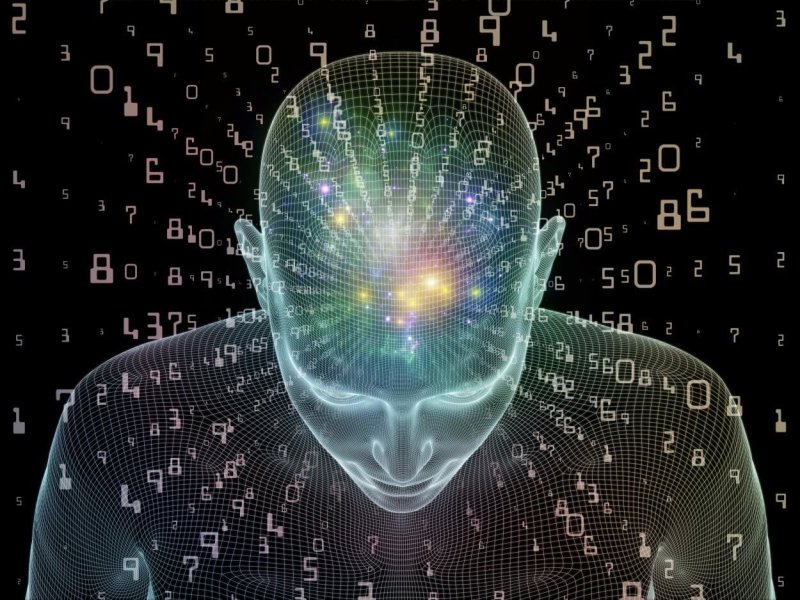
Are our brains wired for numbers?

Credit: DepositPhotos
[Cognitive neuroscientist Brian] Butterworth is one of several researchers who believe that the human brain can be thought of as having a “sense” for number, and that we, like our evolutionary ancestors, are neurologically hardwired to perceive all sorts of quantities in our environments, whether that serves for selecting the bush with more fruit on it, recognizing when a few predators on the horizon become too many, or telling from a show of hands when a consensus has been reached.

Mis- and disinformation are distorting science and public policy. Subscribe to our Daily and Weekly Digests for incisive coverage of ‘disruptive’ innovations in AI, agricultural biotechnology, food, chemicals, nuclear energy, vaccines, and other disruptive innovations.

Indeed, that most humans, even from a very early age, can quickly and accurately distinguish among different quantities of things is so obvious that it’s frequently taken for granted. This ability, known as numerosity perception, is distinct from counting—the process of keeping a tally while going through a set of objects—and is present in infants long before they learn words or symbols for particular numbers.

It is evident, too, among adults in isolated human populations that typically don’t use numbers much in their daily lives. Moreover, it’s not human-specific: experiments with monkeys, crows, fish, and even bees indicate that numerosity perception, at least for relatively small quantities, is widely distributed across the animal kingdom.

This is an excerpt. Read the original post here.

Related Articles

Infographic: Global regulatory and health research agencies on whether glyphosate causes cancer

Infographic: Global regulatory and health research agencies on whether glyphosate causes cancer

Does glyphosate—the world's most heavily-used herbicide—pose serious harm to humans? Is it carcinogenic? Those issues are of both legal and ...

Most Popular

ChatGPT-Image-Sep-23-2026-02_36_39-PM
Viewpoint: After firing the entire National Science Board, Trump reshapes funding initiatives. Here’s the good and the bad.
ChatGPT-Image-Mar-10-2026-01_39_01-PM
Viewpoint—“Miracle molecule” debunked: Why acemannan supplements don’t work
sorghum farmers in kenya FARMERS TREND
Here are all the ways CRISPR gene editing is transforming Africa’s staple crops—and there’s a lot more innovation to come
ChatGPT-Image-Sep-10-2026-10_36_07-AM
Viewpoint: Even lousy scientific articles can shield authors when they hype dubious health claims and products
ChatGPT-Image-Sep-30-2026-01_38_36-PM
Viewpoint: Died “with measles” vs. died “from measles”: RFK, Jr.’s dangerously subversive word games
ChatGPT-Image-Sep-30-2026-01_25_34-PM
Blood tests for Alzheimer’s? The latest grifter, social media scam.
ChatGPT-Image-Sep-30-2026-01_11_07-PM
How U.S. teamed with Russia to block global human AI weapons oversight
Screenshot-2026-10-01-at-11.21.27-AM
Vaccine hesitancy, like malaria, surges globally, topping 35% in some countries
Screenshot 2025-10-15 at 1.00
What you probably don’t know: For most fast-food fans, bioengineering isn’t a choice — it’s the norm
glp menu logo outlined

Get news on human & agricultural genetics and biotechnology delivered to your inbox.