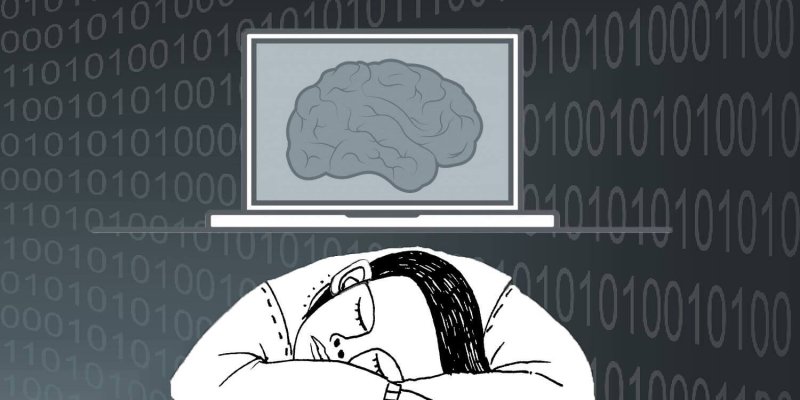
Just like in humans, allowing artificial intelligence (AI) programs to ‘sleep’ in between tasks reduces mistakes

Credit: ScreenRant
Credit: ScreenRant

What our brains do when our eyes are closed and our visual cortex isn’t processing the outside world may be just as important to our biological armor against attacks. Maksim Bazhenov, a computational neuroscientist at the University of California, San Diego, has spent more than two decades studying what happens in our brains while we sleep. Recently, his lab began investigating whether putting algorithms to sleep might fix a host of AI problems, including adversarial examples.

Mis- and disinformation are distorting science and public policy. Subscribe to our Daily and Weekly Digests for incisive coverage of ‘disruptive’ innovations in AI, agricultural biotechnology, food, chemicals, nuclear energy, vaccines, and other disruptive innovations.

Their idea is simple. Sleep plays a critical role in memory consolidation, which is how our brains turn recent experiences into long-term memories. Researchers like Bazhenov think sleep might also contribute to building and storing our generalized knowledge about the things we encounter every day.

If that’s the case, then artificial neural networks that do something similar might also get better at storing generalized knowledge about their subject matter — and become less vulnerable to small additions of noise from adversarial examples.

“Sleep is a phase when the brain actually has time to kind of turn off external input and deal with its internal representations,” said Bazhenov. “And just like a biological system, [machines] may need some period of sleep.”


This is an excerpt. Read the original post here. 

Related Articles

Infographic: Global regulatory and health research agencies on whether glyphosate causes cancer

Infographic: Global regulatory and health research agencies on whether glyphosate causes cancer

Does glyphosate—the world's most heavily-used herbicide—pose serious harm to humans? Is it carcinogenic? Those issues are of both legal and ...

Most Popular

Neon Syringe Portrait with BPC-157
Viewpoint: Peptides and medical freedom: The MAHA obsession that can damage your health
Glossy Plastic Bag of Tokens and Labels
Viewpoint: How CNN got played by environmental activists pushing a plastics scare and litigation agenda
ChatGPT-Image-Mar-10-2026-01_39_01-PM
Viewpoint—“Miracle molecule” debunked: Why acemannan supplements don’t work
Screenshot-2026-10-21-at-11.30.51-AM
Viewpoint: Yes, our food system stinks, but the attack of ultra-processed foods is often misplaced
Screenshot 2026-07-29 at 10.40
The COVID vaccine turbo cancer scare is back. Science still proves it’s wrong.
Screenshot-2026-10-30-at-11.20.30-AM
‘Silent killer’: Hepatitis B could surge under Trump–RFK Jr. rollback of newborn vaccine recommendations
Screenshot 2026-10-27 at 10.32
“Do your own research”: What Medicare’s annual open enrollment circus teaches us about the seductive trap of DIY health and science
Robots in a Futuristic Conference Meeting
Helpful until we’re helpless? Researchers warn AI is gradually eroding human control
Screenshot-2026-10-30-at-11.36.40-AM
An Earth-saving benefit of global warming?: How fossil fuel-burning humans stopped the looming Ice Age
Screenshot 2026-10-20 at 1.37
Race against food rot: How AI and gene editing could slash fruit and vegetable waste
Screenshot-2026-10-29-at-10.31.49-AM
Solar engineering to cool the planet might well work. Could it touch off a geoengineering arms race?
glp menu logo outlined

Get news on human & agricultural genetics and biotechnology delivered to your inbox.