Viewpoint: Challenging scaremongering about alleged dangers of eating too much yogurt, cheese and other dairy products

The claim that dairy increases estrogen has already sunk into the public consciousness. Credit: Elliot Snowman

In 2016, a study looked into whether dietary dairy would increase the circulating levels of oestrogen in mice – the researchers took milk from pregnant cows that was claimed to have an increased level of oestrogen, and measured the concentration.

Mis- and disinformation are distorting science and public policy. Subscribe to our Daily and Weekly Digests for incisive coverage of ‘disruptive’ innovations in AI, agricultural biotechnology, food, chemicals, nuclear energy, vaccines, and other disruptive innovations.

The results showed  that the only time levels of hormone changed in these mice was when they were given [a] massive overdose, containing 1000x more oestrogen than exists in cow’s milk – even pregnant cow’s milk.

…

All of this makes perfect biological sense – oestrogens are steroid hormones which are metabolised by the liver. The liver detoxifies our body…. You would have to completely swamp the system before you’d start to see an appreciable difference in the body. Eating some cheese, or drinking some milk just isn’t going to do that.

There are some good reasons why you might not consume milk (including, but not limited to environmental and ethical reasons), and even some good reasons why some people might not consume it for their health.
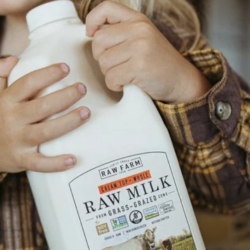
…

But, often, the best way to get clicks on your news story is to tell people that food is evil. The truth, that diet is highly personal and is not the golden bullet to cure all our health ills, is really rather dull.


This is an excerpt. Read the original post here

Related Articles

Infographic: Global regulatory and health research agencies on whether glyphosate causes cancer

Infographic: Global regulatory and health research agencies on whether glyphosate causes cancer

Does glyphosate—the world's most heavily-used herbicide—pose serious harm to humans? Is it carcinogenic? Those issues are of both legal and ...

Most Popular

ChatGPT-Image-Mar-10-2026-01_39_01-PM
Viewpoint—“Miracle molecule” debunked: Why acemannan supplements don’t work
Screenshot-2026-09-17-at-1.07.08-PM
'We are dangerously addicted to antidepressants': Should we heed RFK Jr.’s sobering warning?
ChatGPT-Image-Sep-2-2026-02_03_32-PM
How much of a problem is AI’s water use?
Screenshot-2026-09-03-at-10.51.20-AM
Viewpoint: Why do online health lies outlive the evidence that debunks them? Read "Everyone Else Is Lying to You"
Screenshot-2026-09-23-at-3.15.09-PM
Anti-GMO activists in Pakistan rev up their campaign of dire warnings
ChatGPT-Image-Sep-23-2026-01_52_03-PM
Viewpoint: 4 very real AI doomsday scenarios
Screenshot-2026-09-22-at-11.40.28-AM
After Idaho criminalized abortion providers in 2022, one-third of obstetricians fled. Health care advocates are making rural health the case for repealing the ban
Screenshot-2026-09-10-at-12.20.19-PM
'Jet fuel didn't melt the steel': 9/11 conspiracy theories debunked
ChatGPT-Image-Aug-26-2026-12_46_16-PM
Viewpoint: The fake controversy over whether combining childhood vaccines is dangerous— a debate science resolved 25 years ago
Screenshot-2026-09-23-at-11.55.01-AM
How can we know if social media bans actually help teens?
glp menu logo outlined

Get news on human & agricultural genetics and biotechnology delivered to your inbox.