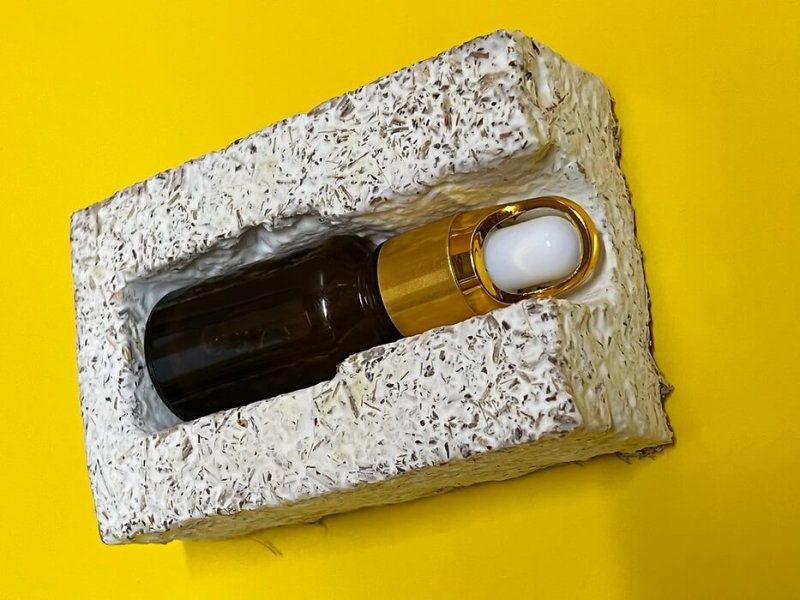
How mushroom waste can be turned into eco-friendly styrofoam packaging replacements

Mushroom and sawdust based packaging. Credit: EkoAgroBiotech

Styrofoam has become ubiquitous in the modern age of consumerism, and even synonymous with packaging. But containing toxic chemicals such as benzene and styrene, which aren’t biodegradable and can linger for up to 500 years, it’s not just bad for the environment, it’s also long been known as a hazardous substance and has many ties to cancer.

This is why Boey Tze Zhou, the founder of Eko Agro Biotech, saw an opportunity to use his mushroom farming waste as an alternative to styrofoam.

Mis- and disinformation are distorting science and public policy. Subscribe to our Daily and Weekly Digests for incisive coverage of ‘disruptive’ innovations in AI, agricultural biotechnology, food, chemicals, nuclear energy, vaccines, and other disruptive innovations.

Unlike styrofoam, mushroom packaging consists of 100% biodegradable and renewable material that can be disposed of in garden beds and flower pots.

It grows in a lab in only eight days, and absorbs into the soil in under two months.

…
Mycelium, the scientific term for mushroom roots, is infused into recycled sawdust during the procedure. It acts as a natural superglue that binds and holds together organic materials.
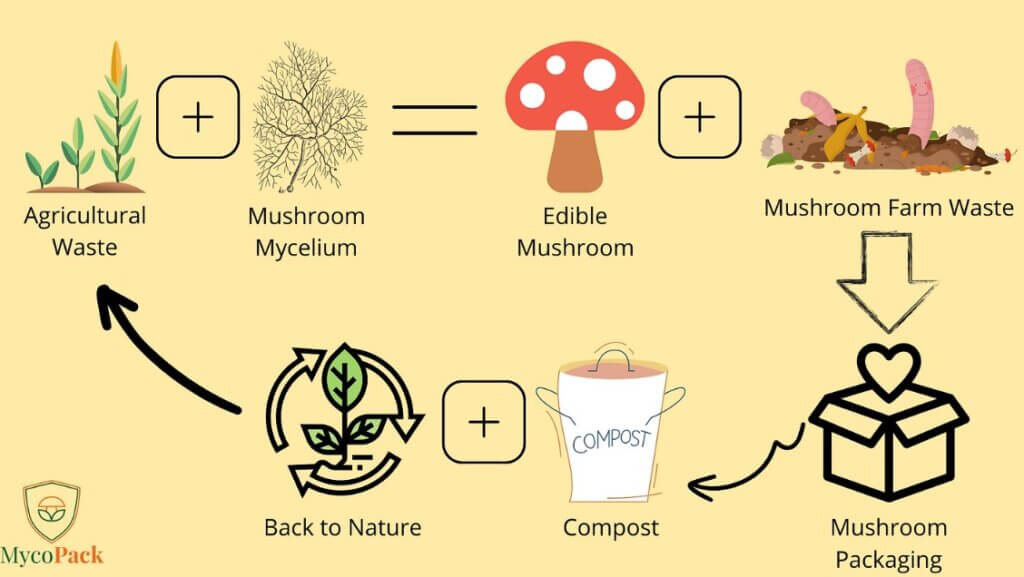
Credit: EcoAgroBiotech

Within five days of combining the byproducts (including the secret ingredient), the mycelium will have completely colonised the entire container, which can be shaped to accommodate various packaging needs. Three additional days are required for the substance to dry and solidify further.


This is an excerpt. Read the original post here

Related Articles

Infographic: Global regulatory and health research agencies on whether glyphosate causes cancer

Infographic: Global regulatory and health research agencies on whether glyphosate causes cancer

Does glyphosate—the world's most heavily-used herbicide—pose serious harm to humans? Is it carcinogenic? Those issues are of both legal and ...

Most Popular

ChatGPT-Image-Mar-10-2026-01_39_01-PM
Viewpoint—“Miracle molecule” debunked: Why acemannan supplements don’t work
Screenshot-2026-09-17-at-1.07.08-PM
'We are dangerously addicted to antidepressants': Should we heed RFK Jr.’s sobering warning?
Screenshot-2026-09-03-at-10.51.20-AM
Viewpoint: Why do online health lies outlive the evidence that debunks them? Read "Everyone Else Is Lying to You"
ChatGPT-Image-Sep-2-2026-02_03_32-PM
How much of a problem is AI’s water use?
ChatGPT-Image-Sep-23-2026-01_52_03-PM
Viewpoint: 4 very real AI doomsday scenarios
Screenshot-2026-09-22-at-11.40.28-AM
After Idaho criminalized abortion providers in 2022, one-third of obstetricians fled. Health care advocates are making rural health the case for repealing the ban
Screenshot-2026-09-23-at-3.15.09-PM
Anti-GMO activists in Pakistan rev up their campaign of dire warnings
Screenshot-2026-09-23-at-11.55.01-AM
How can we know if social media bans actually help teens?
ChatGPT-Image-Aug-26-2026-12_46_16-PM
Viewpoint: The fake controversy over whether combining childhood vaccines is dangerous— a debate science resolved 25 years ago
ChatGPT-Image-Sep-22-2026-10_32_46-AM
There has been a slew of recent reports of food recalls and foodborne outbreaks. Do we face an escalating problem?
Screenshot-2026-09-10-at-12.20.19-PM
'Jet fuel didn't melt the steel': 9/11 conspiracy theories debunked
glp menu logo outlined

Get news on human & agricultural genetics and biotechnology delivered to your inbox.