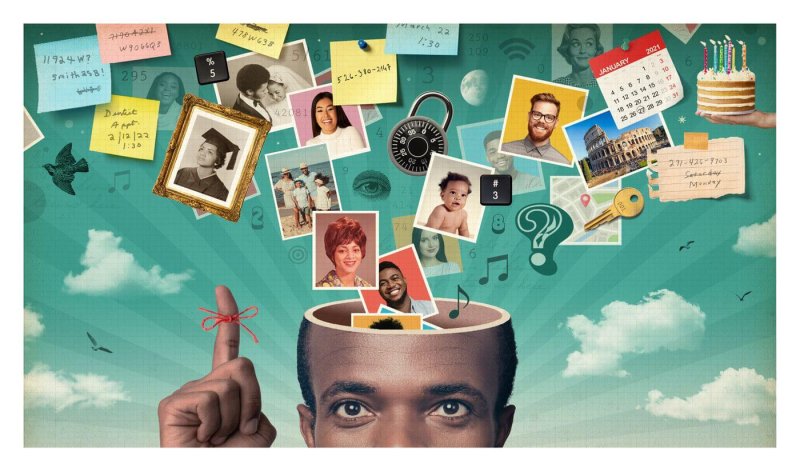
Losing memory? Brain stimulation can help — but only for a short time

Credit: Michael Waraksa for Vox

People’s ability to remember fades with age — but one day, researchers might be able to use a simple, drug-free method to buck this trend.

In a study published on 22 August in Nature Neuroscience, Robert Reinhart, a cognitive neuroscientist at Boston University in Massachusetts, and his colleagues demonstrate that zapping the brains of adults aged over 65 with weak electrical currents repeatedly over several days led to memory improvements that persisted for up to a month.

Follow the latest news and policy debates on sustainable agriculture, biomedicine, and other ‘disruptive’ innovations. Subscribe to our newsletter.

Using a non-invasive method of stimulating the brain known as transcranial alternating current stimulation (tACS), which delivers electrical currents through electrodes on the surface of the scalp, Reinhart’s team conducted a series of experiments on 150 people aged between 65 and 88. 

Low-frequency zaps to the inferior parietal lobe enhanced participants’ recall of items later in the lists, which involves working memory. Participants’ memory performance improved over the four days — and the gains persisted even a month later.

Several questions remain. How far the benefits of the brain stimulation can be generalized to other types of memory tasks and whether memory improvements can persist for longer than a month are two key issues that the team plans to address in future studies, says co-author Shrey Grover, a cognitive neuroscientist in Reinhart’s laboratory.


This is an excerpt. Read the original post here

{{ reviewsTotal }}{{ options.labels.singularReviewCountLabel }}
{{ reviewsTotal }}{{ options.labels.pluralReviewCountLabel }}
{{ options.labels.newReviewButton }}
{{ userData.canReview.message }}

Related Articles

Infographic: Global regulatory and health research agencies on whether glyphosate causes cancer

Infographic: Global regulatory and health research agencies on whether glyphosate causes cancer

Does glyphosate—the world's most heavily-used herbicide—pose serious harm to humans? Is it carcinogenic? Those issues are of both legal and ...

Most Popular

Screenshot-2026-05-01-at-11.56.24-AM
‘Science moves forward when people are willing to think differently’: Memories of DNA maverick Craig Venter
79d03212-2508-45d0-b427-8e9743ff6432
Viewpoint: The Casey Means hustle—Wellness woo opportunism dressed up as medical wisdom
Screenshot-2026-04-03-at-11.15.51-AM
Paraben panic: How a flawed study, media hype, and chemophobia convinced the public of the danger of one of the safest classes of preservatives
Screenshot-PM-24
Viewpoint: The herbicide glyphosate isn’t perfect. Banning it would be far worse.
ChatGPT-Image-Mar-27-2026-11_27_05-AM
The myths of “process”: What science says about the “dangers’ of synthetic products and ultra-processed foods
ChatGPT-Image-Mar-10-2026-01_39_01-PM
Viewpoint—“Miracle molecule” debunked: Why acemannan supplements don’t work
ChatGPT-Image-Mar-3-2026-01_17_14-PM
MAHA wellness influencers deride proven anxiety medications, tout lifestyle fixes
ChatGPT-Image-Apr-30-2026-12_21_05-PM-2
The tech billionaires behind the immortality movement
ChatGPT-Image-May-1-2026-03_16_32-PM
Viewpoint: How ‘health care guru’ Joe Rogan circumvented the FDA’s skepticism on psychedelics
ChatGPT Image Apr 30, 2026, 01_11_41 PM
Trump’s America First health aid cuts: Retrenchment has already hit global malaria, HIV, TB, and polio programs
ChatGPT-Image-Apr-30-2026-05_00_48-PM
Wellness grifter physician turned wellness influencer out as surgeon general nominee
Screenshot-2026-04-12-135256
Bixonimania: The fake disease scam that AI swallowed whole
glp menu logo outlined

Get news on human & agricultural genetics and biotechnology delivered to your inbox.