Human brain cells grown in rats offer ‘more ethical option’ to study neurological diseases

Credit: iStock/Eugene Valter/Scientist

Our understanding of the inner workings of the human brain has long been held back by the practical and ethical difficulty of observing human neurons develop, connect and interact. [October 12] in a new study published in Nature, neuroscientists at Stanford University led by Sergiu Paşca report that they have found a new way to study human neurons — by transplanting human brainlike tissue into rats that are just days old, when their brains have not yet fully formed. The researchers show that human neurons and other brain cells can grow and integrate themselves into the rat’s brain, becoming part of the functional neural circuitry that processes sensations and controls aspects of behaviors.

Follow the latest news and policy debates on sustainable agriculture, biomedicine, and other ‘disruptive’ innovations. Subscribe to our newsletter.

Using this technique, scientists should be able to create new living models for a wide range of neurodevelopmental disorders, including at least some forms of autism spectrum disorder. The models would be just as practical for neuroscientific lab studies as current animal models are but would be better stand-ins for human disorders because they would consist of real human cells in functional neural circuits. They could be ideal targets for modern neuroscience tools that are too invasive to use in real human brains.


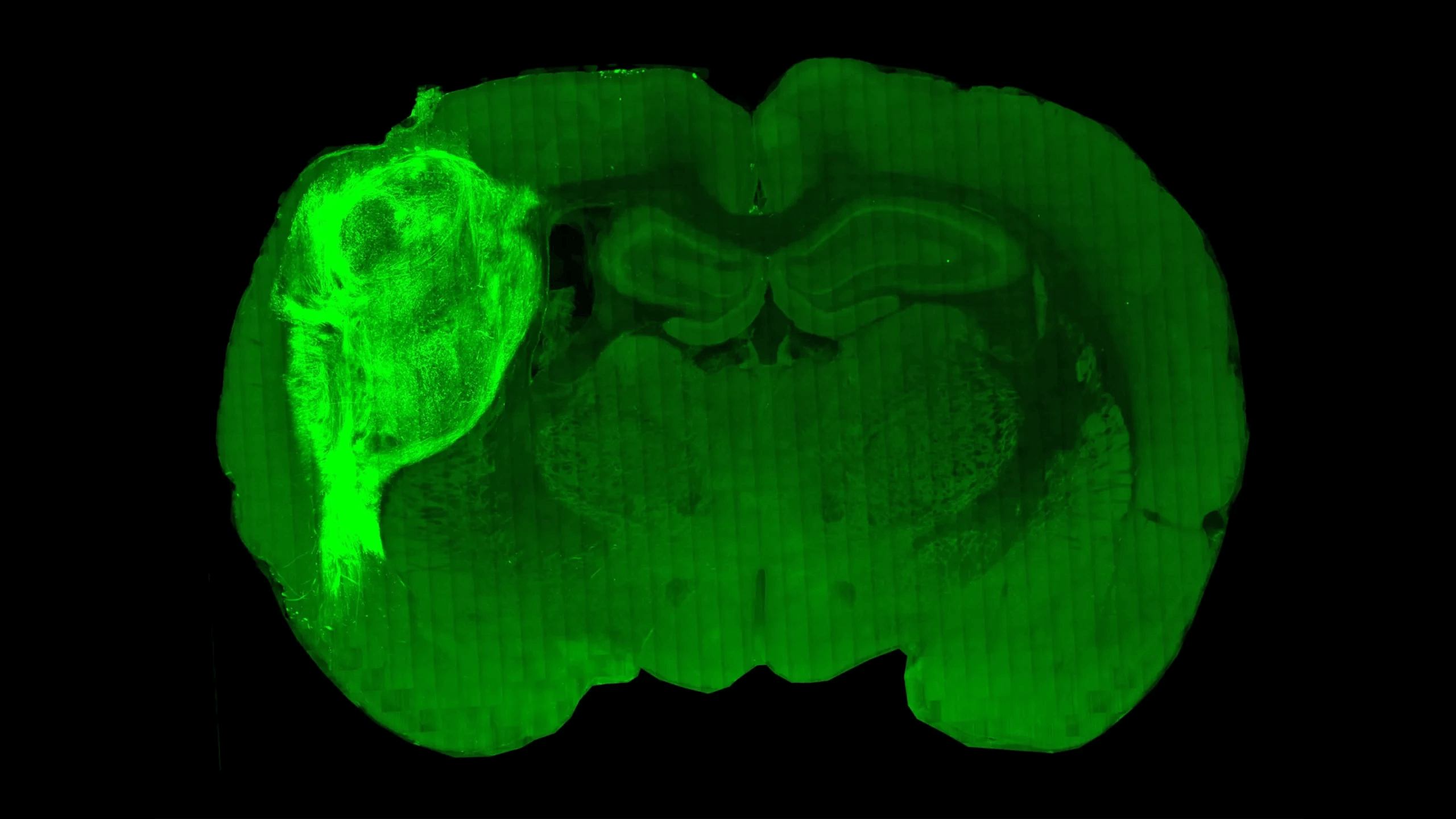
A cross section through the brain of a laboratory rat reveals the extensive growth of a human brain organoid (bright area on left) transplanted into it. New work shows that the human tissue not only grows but forms working connections with neurons from the rat’s brain. Credit: Pasca Lab/Stanford

This is an excerpt. Read the full article here

Related Articles

Infographic: Global regulatory and health research agencies on whether glyphosate causes cancer

Infographic: Global regulatory and health research agencies on whether glyphosate causes cancer

Does glyphosate—the world's most heavily-used herbicide—pose serious harm to humans? Is it carcinogenic? Those issues are of both legal and ...

Most Popular

ChatGPT-Image-Mar-10-2026-01_39_01-PM
Viewpoint—“Miracle molecule” debunked: Why acemannan supplements don’t work
Screenshot-2026-09-16-at-12.07.47-PM
The heated debate over trans athletes in the WNBA
Screenshot-2026-09-10-at-11.50.46-AM
Did COVID vaccines kill 2,500 service members? RFK Jr. hires an investigator who compares vaccine promoters to Nazi doctors
Screenshot-2026-09-11-at-2.26.23-PM
Newly approved GMO chestnut trees planted across from the White House are stirring debate
Screenshot-2026-09-10-at-12.20.19-PM
'Jet fuel didn't melt the steel': 9/11 conspiracy theories debunked
ChatGPT-Image-Sep-9-2026-02_48_24-PM
Viewpoint: Trump-RFK Jr. report on “Gender Ideology & Left-wing Ideology’ targets LGBTQ community—and science
Screenshot-2026-09-15-at-11.04.54-AM
Viewpoint: Childhood deaths in dispute: Why the CDC vs Pennsylvania conflict over measles vaccines matters
ChatGPT-Image-Sep-15-2026-12_15_00-PM
Viewpoint: Women, depression and empathy: Explaining the gender gap in views about child-murderer Lindsay Clancy
ChatGPT-Image-Sep-15-2026-11_36_23-AM
Doomsday cult? Why we should be suspicious of end-of-the-world claims
Screenshot 2026-09-10 at 11.28
A meaty problem: How to make cell-grown protein taste like steak, chicken, and seafood
Screenshot-2026-09-14-at-4.31.14-PM
Viewpoint: What’s the likely impact when the EPA loosens rules limiting methane pollution from oil and gas wells?
ChatGPT-Image-Aug-28-2026-03_33_46-PM
Viewpoint: Bad science—Five bogus Trump administration claims about vaccines and autism
ChatGPT-Image-Sep-15-2026-05_59_18-PM
RFK Jr. spent two years distancing himself from Children’s Health Defense. Now he’s keynoting its anti-vaccine DC conference.
glp menu logo outlined

Get news on human & agricultural genetics and biotechnology delivered to your inbox.