In surprise finding, transition to organic farming leads to decline in bats – at least temporarily

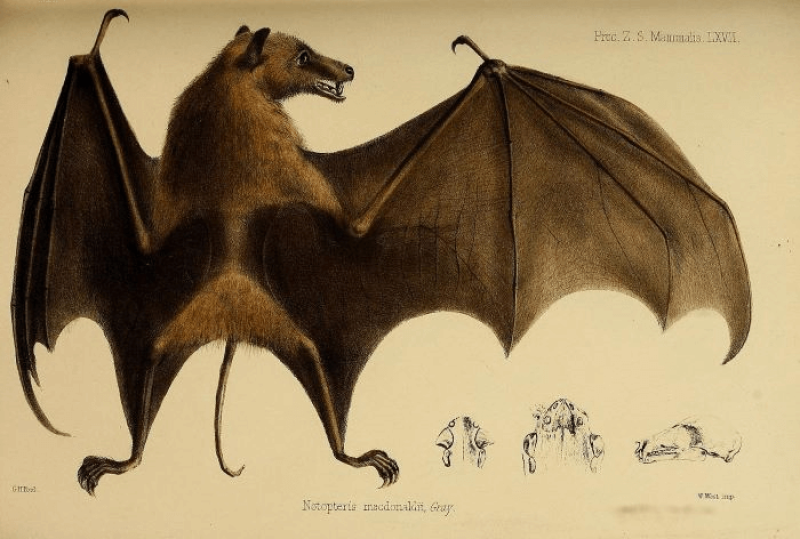
Credit: Biodiversity Heritage Library via CC-BY-2.0

Organic food without pesticides, hormones, fertilizers, herbicides, antibiotics, artificial chemicals, and genetically modified organisms is regarded by many as being better for human health and better for biodiversity than conventional farming.

Yet the activity of bats declines as farms make the transition to organic agriculture, according to new research on insect-eating bats at citrus orchards in Cyprus, according to a new study led by the Universities of Bristol, Göttingen, and Exeter.

The paper, published in the Journal of Applied Ecology, was entitled: “Transition to organic farming negatively affects bat activity.”

Follow the latest news and policy debates on sustainable agriculture, biomedicine, and other ‘disruptive’ innovations. Subscribe to our newsletter.

“We were surprised by our results; we expected the transition to organic farming to bring positive effects from the start,” said Penelope Fialas, from the University of Exeter.

“We can’t be certain why bats are negatively affected, but previous research suggests soil can suffer – with knock-on effects for other wildlife – when fertilizers, pesticides, and other aspects of conventional farming stop. “The soil and the wider ecosystem may take time to recover.”

Fialas added that “our findings suggest the transition to organic farming should be managed carefully, to limit any negative effects on biodiversity. For example, neighboring farms could avoid simultaneous transitions, allowing wildlife to find alternative habitats nearby while each farm switches its methods.”


This is an excerpt. Read the original post here

Related Articles

Infographic: Global regulatory and health research agencies on whether glyphosate causes cancer

Infographic: Global regulatory and health research agencies on whether glyphosate causes cancer

Does glyphosate—the world's most heavily-used herbicide—pose serious harm to humans? Is it carcinogenic? Those issues are of both legal and ...

Most Popular

ChatGPT-Image-Mar-10-2026-01_39_01-PM
Viewpoint—“Miracle molecule” debunked: Why acemannan supplements don’t work
Screenshot-2026-09-10-at-11.50.46-AM
Did COVID vaccines kill 2,500 service members? RFK Jr. hires an investigator who compares vaccine promoters to Nazi doctors
Screenshot-2026-09-11-at-2.26.23-PM
Newly approved GMO chestnut trees planted across from the White House are stirring debate
ChatGPT-Image-Sep-13-2026-10_24_17-AM
Bayer urges court to approve $7.25 billion Monsanto Roundup settlement that could limit its future liabilities
Screenshot-2026-09-10-at-12.20.19-PM
'Jet fuel didn't melt the steel': 9/11 conspiracy theories debunked
ChatGPT-Image-Sep-15-2026-05_59_18-PM
RFK Jr. spent two years distancing himself from Children’s Health Defense. Now he’s keynoting its anti-vaccine DC conference.
Screenshot 2026-09-10 at 11.28
A meaty problem: How to make cell-grown protein taste like steak, chicken, and seafood
Screenshot-2026-09-15-at-11.04.54-AM
Viewpoint: Childhood deaths in dispute: Why the CDC vs Pennsylvania conflict over measles vaccines matters
ChatGPT-Image-Aug-28-2026-03_33_46-PM
Viewpoint: Bad science—Five bogus Trump administration claims about vaccines and autism
ChatGPT-Image-Sep-15-2026-06_05_13-PM
CRISPR fine-tuning unlocks vitamin C-rich potatoes without yield loss
Screenshot-2026-09-16-at-12.07.47-PM
The heated debate over trans athletes in the WNBA
ChatGPT-Image-Aug-14-2026-11_16_47-AM
Fibermaxxing: Latest Instagram diet craze raises hope that a fiber-rich diet can improve health
glp menu logo outlined

Get news on human & agricultural genetics and biotechnology delivered to your inbox.