Video: ‘Our brains love pictures’ — Lebanese teenage savant recites all 206 bones of the body in random order

'Our brain loves pictures" Lebanese teenage savant recites all 206 bones of the body in random order
Credit: Unsplash/ Lisa Fotios

“You don’t have to be born with superpowers to have a good memory,” researcher Olav Schewe says. He provides some useful tips.

But first, let’s talk to Banan Sultan Nassereddine from Lebanon.

Nassereddine memorised the names of the 206 bones in the body. Then she recited them at lightning speed in front of people from the Guinness World Records.

“I did it in 5 minutes and 37 seconds,” she says.

Nassereddine says she is an ordinary teenager without superpowers.

“Anyone with a strong desire and a goal can do what I did,” she says.

She does four things that help the brain along the way. She reads, engages in physical activity, plans, and gets enough sleep.

Mis- and disinformation are distorting science and public policy. Subscribe to our Daily and Weekly Digests for incisive coverage of ‘disruptive’ innovations in AI, agricultural biotechnology, food, chemicals, nuclear energy, vaccines, and other disruptive innovations.

Schewe has conducted extensive research on how to improve our memory and has several tips.
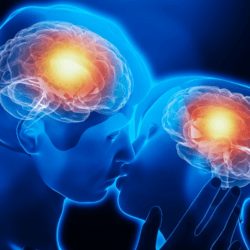
“Our brain loves pictures. It may therefore be helpful to visualise or find pictures related to what you want to remember,” he says.

Another tip is to test yourself.

“Let’s say you want to learn the capitals of Europe. It’s better to do more than just look at a list,” he says.

Creating flashcards is a good idea.

This is an excerpt. Read the full article here

Related Articles

Infographic: Global regulatory and health research agencies on whether glyphosate causes cancer

Infographic: Global regulatory and health research agencies on whether glyphosate causes cancer

Does glyphosate—the world's most heavily-used herbicide—pose serious harm to humans? Is it carcinogenic? Those issues are of both legal and ...

Most Popular

Screenshot-2026-09-16-at-2.26.42-PM
Viewpoint: How to ecologically damage America’s forests: Ban glyphosate
Screenshot-2026-09-20-at-9.03.54-AM
From Malaysia to the world: A pioneering science communicator reimagines global science communication for a digital age
ChatGPT-Image-Sep-17-2026-12_28_43-PM
Vitamin D, omega-3 fish oil and glucosamine supplements could cause brain damage 
ChatGPT-Image-Mar-10-2026-01_39_01-PM
Viewpoint—“Miracle molecule” debunked: Why acemannan supplements don’t work
Screenshot-2026-09-20-at-4.31.28-PM
White House drafting executive order to control what OMB Director Vought claims are “woke” NIH science grants
ChatGPT-Image-Sep-20-2026-04_22_32-PM
What’s Trump’s ‘AI Force’? Administration rushes to announce ill-defined watchdog agency and czar amid criticism of its resistance to curb AI acceleration
Screenshot-2026-08-12-at-11.31.46-AM
AI is helping develop new vaccines
Screenshot-2026-09-14-at-4.31.14-PM
Viewpoint: What’s the likely impact when the EPA loosens rules limiting methane pollution from oil and gas wells?
Screenshot-2026-08-19-at-6.19.42-PM
Facts & Fallacies podcast: 'Regenerative farming'? RFK Jr.’s federal push romanticizes the past and risks food security
ChatGPT-Image-Sep-18-2026-10_49_24-AM
‘Symptom borrowing’: Young people are copying health problems they see on TikTok
ChatGPT-Image-Aug-28-2026-03_33_46-PM
Viewpoint: Bad science—Five bogus Trump administration claims about vaccines and autism
ChatGPT-Image-Sep-9-2026-02_48_24-PM
Viewpoint: Trump-RFK Jr. report on “Gender Ideology & Left-wing Ideology’ targets LGBTQ community—and science
glp menu logo outlined

Get news on human & agricultural genetics and biotechnology delivered to your inbox.