USDA: Why cell-based meat is critical to address climate change

alternativemeat illustrationbylindsey x
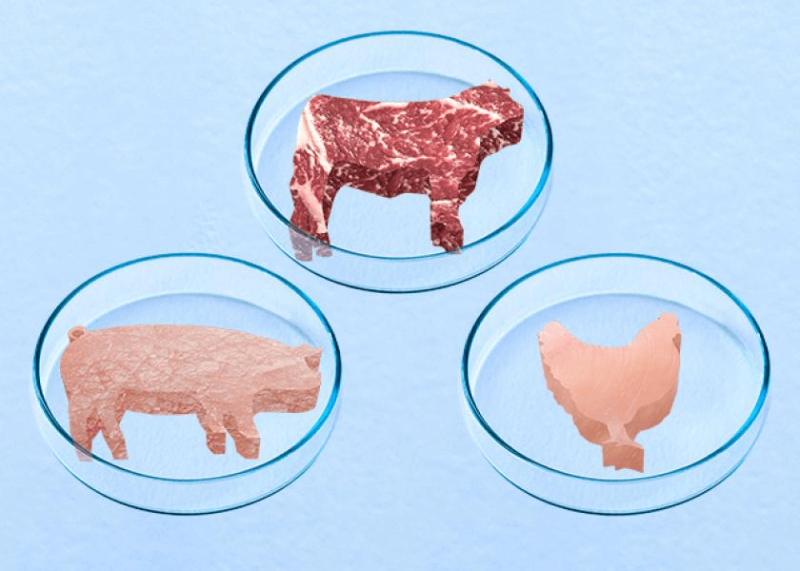
Credit: Lindsey Pound/Pork Business

In a historic move, [United States Department of Agriculture’s National Institute of Food and Agriculture, or] USDA-NIFAโ€™s Agriculture and Food Research Initiative’s Sustainable Agricultural Systems (SAS) program invested in cultivated meat research in 2021, granting Tufts University a five-year $10m grant to launch the National Institute for Cellular Agricultureโ€‹, the first US government-funded cultivated protein research center.

The institute coordinates cellular agriculture R&D among 32 researchers and eight universities to โ€œserve as an accelerator for developing a cell culture meat platform through the integration of physical, biological and social sciences,โ€ [USDA undersecretary for research Sanah] Baig said.

Current research at the institute explores economical serum-free growth media, creating cell lines for underexplored species and conducting nutritional and flavor assessments of cell-cultivated fat.

Follow the latest news and policy debates on sustainable agriculture, biomedicine, and other ‘disruptive’ innovations. Subscribe to our newsletter.

โ€œItโ€™s important to know what agriculture looks like today, so we can design appropriate solutions,โ€ Baig said, citing the decrease of farms in the US from seven million in 1935 to two million in 2022, and the loss of 141 million acres of farmland โ€œwhich we will never get back.โ€

With President Bidenโ€™s 2022 executive order promoting efficient protein production systemsโ€‹ and USDA’s data-driven goals for climate and food innovation, Baig emphasized that โ€œwe will need cellular agriculture” to achieve these objectives.

This is an excerpt. Read the original post here

{{ reviewsTotal }}{{ options.labels.singularReviewCountLabel }}
{{ reviewsTotal }}{{ options.labels.pluralReviewCountLabel }}
{{ options.labels.newReviewButton }}
{{ userData.canReview.message }}

Related Articles

Infographic: Global regulatory and health research agencies on whether glyphosate causes cancer

Infographic: Global regulatory and health research agencies on whether glyphosate causes cancer

Does glyphosateโ€”the world's most heavily-used herbicideโ€”pose serious harm to humans? Is it carcinogenic? Those issues are of both legal and ...

Most Popular

ChatGPT Image May 26, 2026, 08_42_17 AM (1)
Viewpoint: Greenpeace and poison: How environmental advocacy groups rely on compliant (and often ignorant) journalists to spread disinformation and spark litigation
Screenshot 2025-07-30 at 10.48
Can gene editing eliminate Down syndrome? Scientists have done it in lab-grown cells
Screenshot-2026-05-28-at-1.36.28-PM
Viewpoint: Can mRNA research survive the Trump administration?
Screenshot-2026-06-02-at-11.59.11-AM
Magnifica Humanitas: Popeโ€™s encyclical broadside against AI naivete and overreach
Screenshot 2025-11-18 at 3.45
Viewpointโ€”GMOs and sustainability: Why buying organic foods is the least environmentally-sensitive food choiceโ€”without offering any health benefits
ChatGPT-Image-May-26-2026-07_51_21-AM-2
Viewpoint: There are more than 1,000 chemicals in a cup of coffeeโ€”including many substances that can cause cancer. Why isnโ€™t it banned?
ChatGPT-Image-Jun-2-2026-11_39_58-AM
Viewpoint: Who is RFK, Jr.โ€™s newly-appointed CDC senior counselor, Sara Brenner โ€” Vaccine skeptic and self-proclaimed โ€œMAHA momโ€
Picture1
Sounds we canโ€™t hear โ€” the hidden planetary signals behind science, fear, and misinformation
ChatGPT Image May 28, 2026, 08_16_38 PM
Viewpoint: Why the EPA mismeasures cancer risk of chemicals and what should be done to fix it
glp menu logo outlined

Get news on human & agricultural genetics and biotechnology delivered to your inbox.