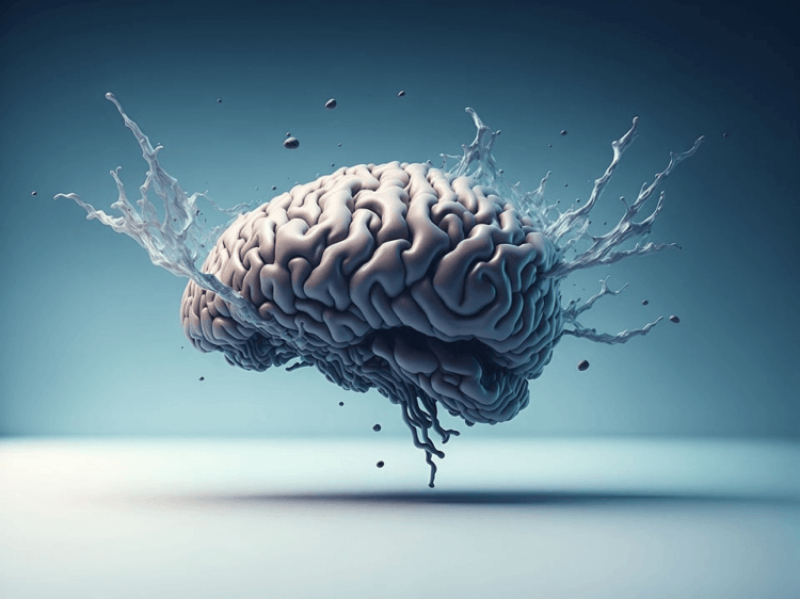
Why consciousness? Understanding the evolution of human intelligence helps inform the future of AI

Why consciousness? Is it an evolved survival mechanism, and what that might mean for the evolution of AI?
Credit: Pixabay/ TheDigitalArtist

In the era of large language models and talks of artificial general intelligence, scientists are understandably reinvigorated to understand the inner workings of human consciousness— and there are a lot of theories to go around.

Follow the latest news and policy debates on sustainable agriculture, biomedicine, and other ‘disruptive’ innovations. Subscribe to our newsletter.

But in a new, non-peer reviewed article published in Interalia Magazine, as well as a deep-dive explanation of the article on the website The Conversation, Cardiff University’s Peter Halligan and University College of London’s David Oakley instead argue that consciousness actually arose for its social benefits rather than its individualistic ones.

“Consciousness may have evolved to facilitate key social adaptive functions,” the authors write in The Conversation. “Rather than helping individuals survive, it evolved to help us broadcast our experienced ideas and feelings into the wider world. And this might benefit the survival and wellbeing of the wider species.”

Understanding the nuts and bolts of humanity’s most defining characteristic is immensely important, especially as AI companies forge ahead forming machines that can, at the very least, mimic the idea of volitional movement.

But without the slow-but-steady guiding hand of evolution, or any sense of need to develop consciousness to improve social cohesion, exactly what kind of consciousness will humankind create?


This is an excerpt. Read the full article here

{{ reviewsTotal }}{{ options.labels.singularReviewCountLabel }}
{{ reviewsTotal }}{{ options.labels.pluralReviewCountLabel }}
{{ options.labels.noReviewsLabel }}
{{ options.labels.newReviewButton }}
{{ userData.canReview.message }}

Related Articles

Infographic: Global regulatory and health research agencies on whether glyphosate causes cancer

Infographic: Global regulatory and health research agencies on whether glyphosate causes cancer

Does glyphosate—the world's most heavily-used herbicide—pose serious harm to humans? Is it carcinogenic? Those issues are of both legal and ...

Most Popular

ChatGPT-Image-Jul-22-2026-09_13_07-AM
Viewpoint—The Strategic Litigation boom: Understanding the tightening coalition among NGOs, foundations, journalists, and tort lawyers
How to Include More Strawberries in Your Diet
Strawberries are berries—and 35 other surprising food and drink myths
close up arabica coffee farmer s hands picking beans plant his farm colombia
Viewpoint: Why do so many ‘mainstream’ and ‘respected’ media outlets exaggerate climate change threats?
diversity
We are entering a new era of personalized medicine—if you’re white
Screenshot-2026-07-07-at-12.55.44-PM
Viewpoint: Yes, we can adapt to a changing climate without devastating the environment and the economy
ChatGPT-Image-May-22-2026-10_26_09-AM
Trump-RFK, Jr. National Science Board firings: Accountability vs. partisan meddling
ChatGPT-Image-Mar-10-2026-01_39_01-PM
Viewpoint—“Miracle molecule” debunked: Why acemannan supplements don’t work
organic scaled
Facts & Fallacies podcast: Organic food cuts pesticide exposure? A response to Dr. Rhonda Patrick
Screenshot 2026-07-22 at 10.25
Science brain drain escalates as Trump purge extends to USDA
ChatGPT-Image-Jul-6-2026-02_25_26-PM
40 million Americans take glucosamine. If you have memory loss, it could accelerate cognitive decline.
ChatGPT-Image-Jun-25-2026-12_23_17-PM
No, Bill Gates did not secretly engineer ticks to promote veganism
Screenshot-2026-07-01-at-2.49.48-PM
Dr. TikTok and male fertility: Viral claims tout GLP-1 drugs as fertility boosters. What does the science say?
using genetics to reverse aging
Is the longevity obsession a new form of ageism?

Sorry. No data so far.

glp menu logo outlined

Get news on human & agricultural genetics and biotechnology delivered to your inbox.