Following numerous executive actions since January that have fundamentally changed U.S. foreign assistance, KFF, a partner organization of the Genetic Literacy Project, has released a collection of fact sheets documenting the impact on U.S. global health programs. These actions include the initiation of a foreign aid review, the dissolution of U.S. Agency for International Development (USAID) (including the reduction of most staff members and contractors) and the cancellation of most global health assistance awards. KFF will expand the fact sheet collection and update existing fact sheets as new details emerge.
Background on the U.S. and Gavi
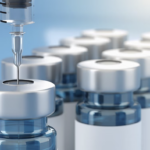
- Gavi, the Vaccine Alliance (Gavi), is an independent public-private, multilateral financing entity created in 2000. It raises and pools resources from multiple donors and in turn, disburses approximately $1.7 billion per year to support procurement and distribution of vaccines in low- and middle-income countries (LMICs).
- Gavi supports vaccines against 20 infectious diseases, and hosts the global emergency vaccine stockpiles against Ebola, yellow fever, meningitis, and cholera. By playing a market shaping role through pooled procurement, demand forecasting, support for regional manufacturing capacity, and other strategies, Gavi helps to drive down prices for vaccines in LMICs.
- Gavi reports that it has helped to immunize more than 1.1 billion children in 78 LMICs, preventing more than 18.8 million deaths, and generating economic benefits estimated at more than $250 billion, between 2000-2023.
- The U.S. government was one of the original donors to Gavi, and currently accounts for 13% of its funding, making it Gavi’s third largest contributor. Gavi also has a donor liquidity partnership with the U.S. International Development Finance Corporation (DFC) allowing Gavi to quickly access up to $1 billion from a “Rapid Financing Facility” to support routine immunization and pandemic response, backed by forthcoming donor pledges. Additionally, the U.S. was the largest donor to COVAX, the international effort housed at Gavi that supported the development, procurement, and delivery of COVID-19 vaccines to LMICs (COVAX ended in 2023).
- Only LMICs whose most recent Gross National Income (GNI) per capita is below a certain threshold are eligible for Gavi assistance (54 countries in 2024). Countries are required to co-finance a portion of their vaccines on a sliding scale. To date, 19 countries have graduated from Gavi assistance.
- Gavi has been the primary mechanism by which the U.S. government supports the procurement of vaccines for LMICs (in addition to U.S. support for polio vaccination through the Global Polio Eradication Initiative). USAID’s bilateral maternal and child health program has complemented Gavi by supporting in-country capacity building and immunization campaigns.
- Every five years, Gavi replenishes funding through “pledging conferences”. The previous replenishment, for 2021-2025, generated $10.5 billion. For the 2026-2030 period, Gavi is seeking to raise $9 billion in new funding (towards a budget of $11.9 billion) which it estimates would save an additional 8-9 million lives by immunizing an additional 500 million children by 2030


Current Status of U.S. Support for Gavi:
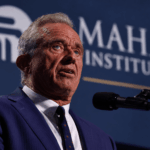
- Funding: In FY 2024, U.S. funding for Gavi was $300 million. The FY 2025 Continuing Resolution that passed in March included level funding of $300 million, which marks (and would fulfill) the first year of Gavi’s new pledge period. The administration’s FY 2026 budget request does not include funding for Gavi and, while final funding levels are determined by Congress, Secretary of Health and Human Services Robert F. Kennedy Jr. has said that the U.S. will not provide additional funding to Gavi (see “Replenishment” below).
- U.S. Representation on the Gavi Board: The U.S. also plays a role in Gavi’s governance and oversight, sharing one of the donor government board seats on Gavi’s 28-member Board, and currently serving as the Board member for the seat.
- Foreign aid review/freeze: The foreign aid review’s stop-work order initially froze all U.S. bilateral programming but was not applied to Gavi or other multilateral institutions. The administration subsequently announced that it canceled 86% of all USAID awards. KFF analysis finds that of 770 global health awards identified, 80% are listed as terminated, including the main Gavi contract as well as the COVAX contract. Gavi reports that it has not received a termination notice for its main contract, although it did receive one for COVAX (all U.S. funding was already disbursed to COVAX in 2021).
- International organizations review: A second executive order, calling for a 180-day review of U.S. participation in all international intergovernmental organizations, is currently underway. Per the order, the purpose of the review is to determine which are “contrary to the interests of the United States and whether such organizations, conventions, or treaties can be reformed”.
- Reorganization: The administration notified Congress on March 28, 2025 of its intent to permanently dissolve USAID and that any remaining USAID operations would be absorbed by the State Department, including remaining global health activities which would be integrated into its Bureau of Global Health Security and Diplomacy (GHSD). Delivery of lifesaving vaccines is listed among the USAID activities to be continued. On May 29, 2025, the State Department further notified Congress of its proposed reorganization plan.
- Potential impact on health outcomes: The loss of U.S. support for Gavi would affect procurement of vaccines for LMICs, with particular impact on children. Gavi estimates that loss of funding could result in 75 million children not receiving routine vaccinations over the next five years, leading to more than 1.2 million children dying as a result. Reductions in vaccine stockpiles could also impact outbreak control.
What to Watch
- Results of foreign aid and international organization reviews: The administration could soon release results of its 90-day foreign aid review (which has already been extended by 30 days), and the outcome of the review of international organizations is expected later this year. It is unknown whether there will be any recommendations related to U.S. support for or engagement with Gavi, and how or if Congress will respond to any such recommendations.
- Reorganization: While the administration has notified Congress that it intends to retain and integrate USAID’s delivery of lifesaving vaccines activities into the State Department’s GHSD, no additional information is available on what this would mean for the relationship with Gavi.
- Funding/Budget Request: The administration’s FY 2026 budget request includes significant reductions in funding for global health, and does not include funding for Gavi. The administration also submitted its first rescission package to Congress, including proposed rescissions of more than $1 billion in prior year funds for global health (little information on specific funding lines to be eliminated has been provided). Final appropriation amounts and rescission decisions are determined by Congress.
- Replenishment: Gavi’s June 2025 pledging conference raised $9 billion in funding towards its $11.9 billion target. Last year, the Biden administration pledged at least $1.58 billion over five years to Gavi’s replenishment. However, Secretary Kennedy announced that the U.S. will not provide additional funding to Gavi unless it changes its evaluation of vaccine science and safety, among other issues. In response, Gavi has stated that it relies on WHO’s independent, science-based, global vaccine evaluation and recommendation process. In addition, individual country requests for vaccine support from Gavi are made in line with their own national immunization policies. While final U.S. funding amounts are determined by Congress, it remains to be seen how this will unfold over the next year.
A version of this article was originally posted at Kaiser Family Foundation and has been reposted here with permission. Any reposting should credit the original author and provide links to both the GLP and the original article. Find Kaiser Family Foundation on X @KFF