Viewpoint: Glyphosate may be hazardous, but it is not dangerous as used by farmers. Critics of the Supreme Court’s Roundup ruling garble hazard with risk

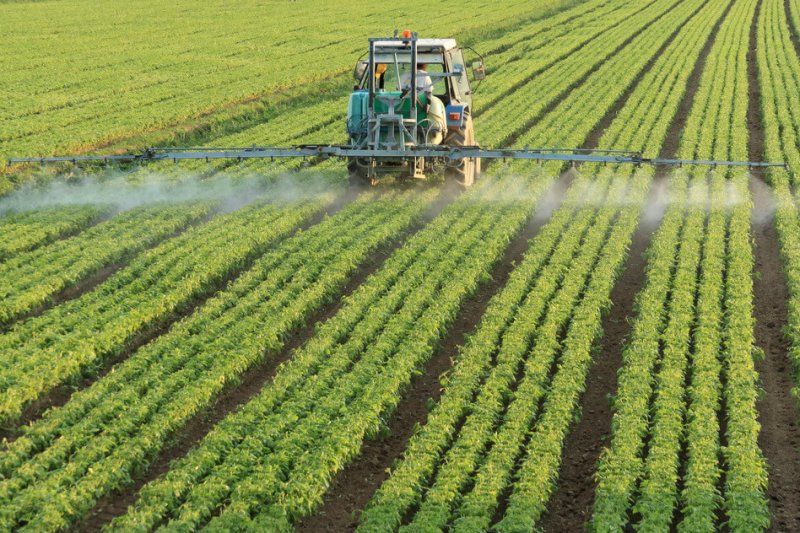
photodune farming tractor s

… In epidemiology, causation is usually a population-level inference. Researchers ask whether an exposure reliably changes disease risk across groups of people. That requires replication, statistical association, dose-response evidence, biological plausibility, and efforts to rule out confounding. Even then, conclusions remain probabilistic. A risk factor can increase disease likelihood without proving why one person became ill.

The legal system has a different task. In civil litigation, the plaintiff generally must show that the specific injury would probably not have occurred without the defendant’s conduct. That standard does not exist to produce scientific consensus. It exists to resolve disputes.

Mis- and disinformation are distorting science and public policy. Subscribe to our Daily and Weekly Digests for incisive coverage of ‘disruptive’ innovations in AI, agricultural biotechnology, food, chemicals, nuclear energy, vaccines, and other disruptive innovations.

Sometimes law and science converge. Sometimes courts assign responsibility in individual disputes while the broader scientific evidence remains mixed, unsettled, or difficult to translate into individual causation.

Public confusion arises when those situations are collapsed into one category.

Large jury awards can make scientific causation appear settled when it is not. Settlements can make legal exposure appear equivalent to admitted causation when it is not. 
…  

… A hazard classification is not the same thing as proof that a product caused one plaintiff’s injury. A settlement is not the same thing as admitted causation.


This is an excerpt. Read the original post here

Related Articles

Infographic: Global regulatory and health research agencies on whether glyphosate causes cancer

Infographic: Global regulatory and health research agencies on whether glyphosate causes cancer

Does glyphosate—the world's most heavily-used herbicide—pose serious harm to humans? Is it carcinogenic? Those issues are of both legal and ...

Most Popular

ChatGPT-Image-Sep-17-2026-12_28_43-PM
Vitamin D, omega-3 fish oil and glucosamine supplements could cause brain damage 
ChatGPT-Image-Mar-10-2026-01_39_01-PM
Viewpoint—“Miracle molecule” debunked: Why acemannan supplements don’t work
ChatGPT-Image-Sep-17-2026-10_17_15-AM
Viewpoint: Why are the less intelligent more likely to be conservative—and smarter people more socially liberal?
Screenshot-2026-09-10-at-12.20.19-PM
'Jet fuel didn't melt the steel': 9/11 conspiracy theories debunked
Screenshot-2026-09-16-at-12.07.47-PM
The heated debate over trans athletes in the WNBA
Screenshot-2026-08-12-at-11.31.46-AM
AI is helping develop new vaccines
ChatGPT-Image-Sep-9-2026-02_48_24-PM
Viewpoint: Trump-RFK Jr. report on “Gender Ideology & Left-wing Ideology’ targets LGBTQ community—and science
ChatGPT-Image-Sep-15-2026-12_15_00-PM
Viewpoint: Women, depression and empathy: Explaining the gender gap in views about child-murderer Lindsay Clancy
Screenshot-2026-09-17-at-10.24.54-AM
Viewpoint: Dubious environmental fears: Why the AI buildout is critical to America’s ecological future
Screenshot-2026-09-11-at-2.26.23-PM
Newly approved GMO chestnut trees planted across from the White House are stirring debate
Screenshot 2026-09-11 at 12.39
Child-monitoring apps: When the cure is worse than the harm—and how the technology could be tweaked
ChatGPT-Image-Sep-15-2026-11_36_23-AM
Doomsday cult? Why we should be suspicious of end-of-the-world claims
glp menu logo outlined

Get news on human & agricultural genetics and biotechnology delivered to your inbox.