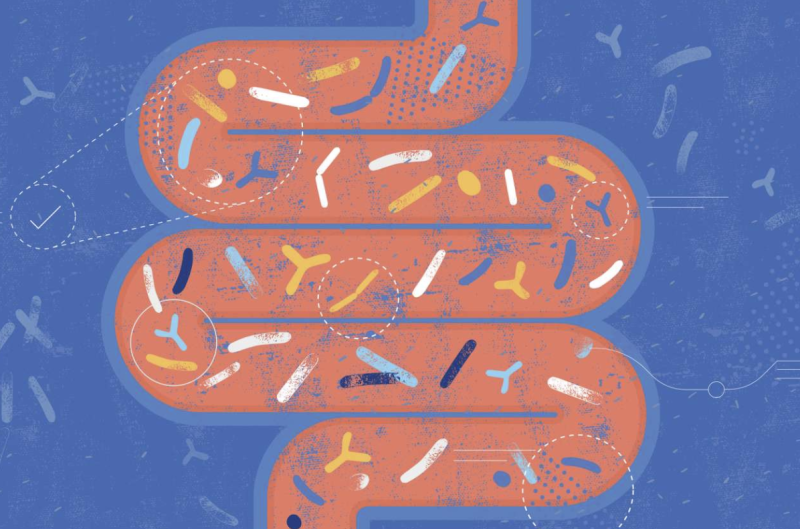

Obesity, liver disease, diabetes, and cancer are all chronic diseases that inflict misery across millions of patients. Imagine if bacteria could be to blame for all of them? Researchers have tied these disparate conditions to microbes living in the stomach and intestines: the gut microbiome. Some scientists expand the list further, suggesting that Parkinson’s disease, Alzheimer’s disease, and even AIDS have a gut-bug basis.

The idea that a few at-home diet changes could reduce or even cure these chronic conditions has pushed microbiome research into the headlines, said Maureen O’Malley, a philosopher of science at the University of Sydney who specializes in microbiology. But the field’s “poster child of success,” O’Malley said, isn’t a disease at all. Instead, it’s the neurodevelopmental disability, autism spectrum disorder. Autism-microbiome research has racked up thousands of citations and tens of millions of dollars of funding over the last decade.
An ambitious new research program from the non-profit Wellcome Leap has enlisted leaders in the field to investigate the links between autism and the gut microbiome. However, the program has come under fire from experts, who say their approach is too hasty and highlight the involvement of researchers who have expressed views skeptical of vaccines.
Gut Bugs and the Brain
The need to understand the causes and consequences of autism has never been greater. Changes in autism monitoring and diagnostics have seen rates soar since the turn of the century.3 Researchers at the Centers for Disease Control and Prevention estimated in a recent study that roughly one in 31 children is autistic. Genetic studies have shown that autism has a strong heritable component, but it is complex, with numerous contributing factors, rather than one single cause.
As autism rates have increased, so has attention and investment in the disability’s links to the gut microbiome. These insights have been powered by advances in genomics that have enabled researchers to sequence the vast stores of DNA that the microbiota harbor, which outnumber humans’ own genetic material by 100 to one.
Researchers have found that autistic children have distinct microbial species in their microbiomes and that mouse models of autism exhibit changes in their gastrointestinal barriers. There is also evidence from small preclinical and clinical trials that changing the microbiome could help alleviate some autism symptoms.
However, framing autism as a “condition” that needs to be cured is, in itself, hotly debated. Patient groups, such as the National Autistic Society, have warned against this approach. But controversy hasn’t stopped research that advocates for autism treatments from receiving attention and funding. Some of the field’s momentum was brake-checked late last year, with the publication of a critical perspective article that argued conceptual and methodological flaws had undermined much of the preclinical and clinical research into the microbiota-autism link.
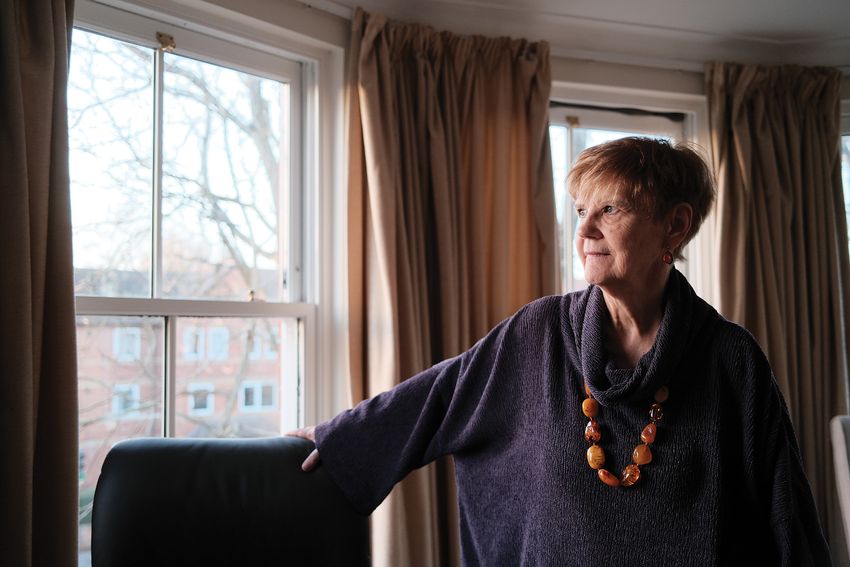
Kevin Mitchell, a neurogeneticist at Trinity College Dublin, coauthored the perspective, alongside Dorothy Bishop, a retired neuropsychologist at the University of Oxford, and Darren Dahly, a medical statistician at University College Cork. Mitchell said that there’s no intrinsic problem with studying gut bacteria. “You can do loads of cool, interesting work on the microbiome,” he said.
The issue, he explained, is with epidemiological research that examines microbiome measures across different patient or animal groups, such as autistic and non-autistic people. “The problem with that design, if it’s not done properly, is that you’re just guaranteed to get false positives,” said Mitchell.
Mitchell’s article reported that while studies in the field consistently showed that autistic people had differences in their microbiota, such as higher or lower numbers of specific bacterial species, these differences were rarely consistent across studies. O’Malley concurred, “The supposed causal connections…have been falling apart.”
When the perspective piece was published, there was strong pushback from researchers on the other side of the debate. Shelly Buffington, a neuroscientist studying the maternal gut microbiome at Baylor College of Medicine, whose research was critiqued in Mitchell’s paper, told The Scientist at the time, “There’s a basic misunderstanding of the fundamental questions in the field that are being asked and really a mischaracterization of the interpretation of the results that is pervasive throughout the piece.” She added, “The question that’s dominating the field is not a causality question. It’s really, what’s the relationship here,” referring to the potential gut microbiome and autism connection.
The perspective article concluded that the gut microbiome-autism field needed to either build in more robust study designs for future work or change direction altogether.
Into this uncertainty came a new $50 million research project. Wellcome Leap, a nonprofit research body, announced its Foundations of a Resilient Microbiome (FORM) program in November 2025. This project aims to “identify whether an accumulating set of early-life pressures to the developing gut microbiome could be one contributing factor to the rise in neurodevelopmental challenges.” These include autism.
How FORM Plans to Investigate the Connection Between the Microbiome and Autism
FORM has an ambitious design that aims to condense a significant research program into a short sprint. Holly Baines, FORM’s program director, explained that Wellcome Leap projects are based on a funding model pioneered by the US Defense Advanced Research Projects Agency (DARPA). “We build and execute bold, unconventional research programs,” said Baines.
FORM’s structure will see Baines coordinate three main research “thrusts,” which 12 academic groups worldwide will work on simultaneously over three years. In the first thrust, the program will establish the extent to which gut microbiome function is causally linked to neurodevelopmental outcomes by analyzing biomarkers in a massive cohort consisting of data from more than 17,000 children in existing databases from Canada, Australia, the United States, multiple European countries, and Africa. This stage will also use human-derived model systems to identify potential mechanisms of action.
The supposed causal connections…have been falling apart.
—Maureen O’Malley, University of Sydney
The second thrust will involve researchers developing screening tools to predict the risk of autism-linked neurodevelopmental challenges using microbiome signatures. The final thrust is perhaps the most ambitious, aiming to develop a strategy to alter the microbiome that would potentially reduce the likelihood of children experiencing microbiome-attributable autism-related difficulties by 75 percent.
Baines explained that the program has an unusual elastic funding mechanism that distributes money based on milestones achieved in each research program. Sarkis Mazmanian, a microbiologist at the California Institute of Technology and one of the academics funded by FORM, said his team was “excited” about the prospect of collaborating with other researchers in the field.
Mazmanian said that previous funding mechanisms had made it hard to design the large, longitudinal studies that Mitchell and Bishop argued were needed for the gut microbiome-autism field to progress. “The significant investment from Wellcome Leap in FORM is sure to yield important new insights into the potential connections between the microbiome and [autism spectrum disorder],” he said.
Bernadette Lombardi, a researcher at the European Biomedical Research Institute of Salerno, is also funded by FORM. Lombardi was previously involved in the Genome, Environment, Microbiome and Metabolome in Autism (GEMMA) dataset, a multiomics study including data from 354 kids, which is one of the datasets included in the first thrust of the FORM program. Importantly, these kids were enrolled in GEMMA before they were six months old because they had an older sibling who was autistic, putting them at increased risk of being diagnosed themselves. By enrolling kids at an earlier age, GEMMA aimed to identify alterations in the microbiome before an autism diagnosis. Lombardi’s role in FORM is to integrate GEMMA’s data with other autism datasets.



Autism and the Gut Microbiome: Causation or Correlation?
Bishop said that FORM’s rapid, unconventional approach was not a good fit for microbiome science. “This area is the worst possible area to pick for that kind of approach,” said Bishop. She instead recommended a research program focused on replicating previous findings that establishes how the microbiome changes naturally day to day. If that work established a reliable association between a feature of the microbiota and autism, the next step, said Bishop, would be to preregister a new study to test that link in a new sample. If that preregistered study confirmed the link, Bishop said this would be a “solid basis” for subsequent intervention studies to modify the microbiome. “This is not doable in three years,” she said.
Bishop was most concerned by the program’s commitment to investigating whether there are causal links between the microbiome and autism by using amalgamated data from GEMMA and other studies. This type of study “can’t test causality,” she said.
That’s because there are multiple competing explanations for why autistic people may have changes in their gut bacteria. Chloe Yap, a clinical researcher at the University of Oxford, published a 2021 study that used genomic approaches to study the link between the microbiome and autism. This analysis suggested the most likely causal path between autism and the microbiome may run in the opposite direction, supporting a model in which a restricted diet, a common feature of autism, drove changes in the microbiome, rather than the other way around.

Large genomic studies of autism have established that roughly 80 percent of what determines whether someone is autistic is genetic, said Yap. “That necessarily doesn’t leave a whole lot for environmental factors, let alone the microbiome, which would form a small fraction of that,” she added.
In the GEMMA cohort, microbiome changes are recorded from the first few months of life, before the age when autistic kids show dietary changes. But Bishop said a third possibility, that genetic variants that change the microbiome and influence autism, would still not be ruled out by FORM’s approach. “Association studies can still be worth doing because if you do find an association with something in the microbiome, then it could be seen as justifying investing in a study with a strong causal design. But so far, nobody has found anything consistent in the microbiome that isn’t explained by diet,” said Bishop.
FORM Program’s Links to Controversial Researchers Raise Concerns
Bishop also raised concerns about some of the researchers associated with the FORM program. In particular, James Adams, an engineering researcher at Arizona State University who is funded by FORM, has published at least a dozen studies with researchers who have advocated for controversial autism treatments. These researchers, who are not receiving funding through FORM, include Richard Frye, a child neurologist at the Rossignol Medical Center who led a trial into the folate supplement leucovorin in autistic people; late anti-vaccine advocate Mark Geier; and his son David. Adams also coauthored papers with Jeff Bradstreet, the late preacher and physician who espoused chelation therapy for autism. This process involves the removal of heavy metals—in this case, mercury—from the blood. While the treatment is potentially lifesaving in cases of acute poisoning, the US Food and Drug Administration has warned against chelation therapy for autism, saying it “can result in serious side effects such as dehydration, kidney failure, and death.”
Adams, whose daughter is autistic, told the Arizona Daily Star in 2012 that he believed vaccines caused her autism. He told the paper, “She was autistic early on, but we deeply suspect it was due to the vaccinations. We tracked down her vaccines, and they all contained massive amounts of mercury.” One paper that Adams copublished with Bradstreet tested chelation therapy in over 200 autistic children.
Adams was originally listed as a recipient of funding on FORM’s website. Between March and May 2026, Adams’s name was removed from FORM’s website. Adams said in an email that he was still involved with the program, but as a “co-PI.” Baines confirmed this, saying that Adams’s contributions were now under Lombardi’s project. “It became clear that the center of gravity for that work and the longitudinal cohort that they were bringing was elsewhere,” explained Baines. She added that his contributions to the project were “actually relatively small,” but Lombardi said that Adams would be “fundamental for our project.” Lombardi added that she wasn’t concerned by Adams’s involvement, adding that Wellcome Leap’s “strict protocol” could allow scientists to “bring our knowledge without affecting anything that is personal.”
Adams originally agreed to speak with The Scientist about his contribution to the project, but he later retracted this offer and referred all questions to FORM. Subsequent questions to Adams via email about his work with Bradstreet and other researchers who have espoused anti-vaccine views went unanswered.
O’Malley said she was “astonished” that Adams had received funding from FORM. A Wellcome Leap communications officer replied to queries about Adams’s earlier work by emphasizing that vaccines were not a topic of study in the program. “Participation in the program is based on the research being conducted within FORM and does not imply endorsement of every past publication, statement, or viewpoint of an individual investigator,” said the communications officer in an email.
“Highly Questionable” Goals
Mitchell said his concerns with the program began with FORM’s call for proposals, which referenced articles that he and Bishop had critiqued in their paper. These included papers by Mazmanian and Buffington, who FORM is also funding. (Buffington did not reply to emailed questions for this story.) These studies “were picked apart immediately on PubPeer,” said Mitchell, referring to the open-review site that has been regularly used to highlight flaws in published research. “There’s nothing left, and yet the authors of these studies, who were involved in the [FORM] program, continue to make hay off of the claims that were in those papers,” he added.
FORM responded to questions around the program’s aims and recruitment in an emailed statement, which said, “The scientific debate around past results has called for more rigorous research. The program is designed to address that call.”
Mitchell said one of his key motivations in critiquing autism-microbiome research was to address potential misinformation. “This is not just some esoteric scientific discussion,” he added. “This hits the general public out there.” FORM wrote that the “program is committed to responsible communication and building trust with the Autistic and autism communities.”
But the National Autistic Society sharply criticized the program in an email, saying, “Just as there is no link between autism and vaccines, there is no reliable evidence to suggest that the gut microbiome causes autism. A recently published critical review of the research in this area concluded that any studies suggesting a link are poor quality and significantly flawed.
“The goals of the FORM program are highly questionable and based on flawed methodology. Research about autism should include autistic people in a meaningful way and focus on how the challenges and barriers faced by autistic people in their daily lives can be overcome.”
RJ Mackenzie is a freelance science writer based in Glasgow, covering biological and biomedical science. Find RJ on X @rjmsci
A version of this article was originally posted at The Scientist and has been reposted here with permission. Any reposting should credit the original author and provide links to both the GLP and the original article. Find The Scientist on X @TheScientistLLC