


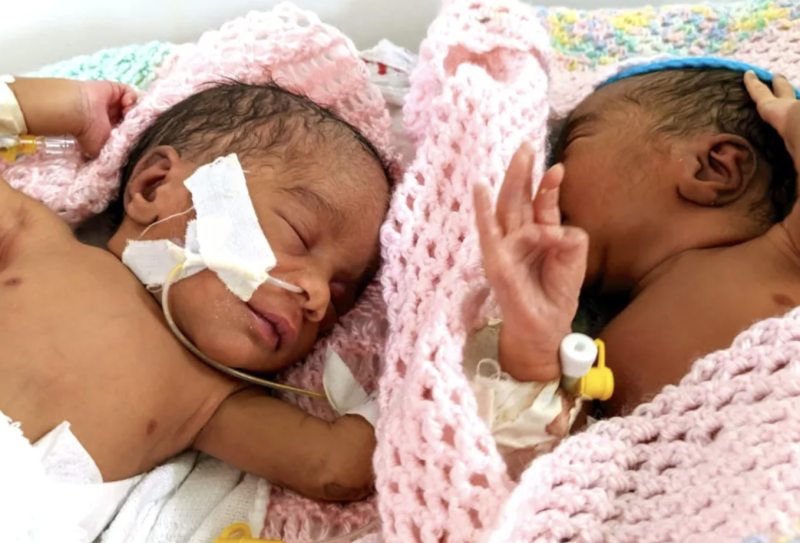

The University of Southern Denmark confirmed that it has given the green light to a controversial study in Guinea-Bissau, funded with $1.6 million from the US Centers for Disease Control and Prevention (CDC), that plans to offer life-saving hepatitis B vaccines to only half of enrolled babies.
News of the study, first reported in December by CIDRAP News, prompted an international outcry from health groups and political leaders, who condemned its design as unethical. Those concerns led Guinea-Bissau officials and administrators at the Danish university to place the study on hold for several months.
Nearly one in five people in Guinea-Bissau are infected with hepatitis B, which kills 15% to 25% of people with chronic infections by causing cancer or liver failure. Vaccinating babies at birth is safe and can prevent lifelong infections.
[On October 2, 2026], citing unnamed sources, Rolling Stone broke the news that CDC leaders were pushing for the study to resume.
The Department of Health and Human Services, which oversees the CDC, did not respond to questions before press time.
The Danish researchers leading the study in Guinea-Bissau, Peter Aaby, PhD, and Christine Stabell Benn, MD, PhD, could not be reached for comment. In response to earlier criticism, their research group, the Bandim Health Project, defended their choice to withhold the birth dose of hepatitis B vaccine from half of the 14,000 newborns to be enrolled in the clinical trial.
In a statement on Bandim’s website, researchers wrote, “No child enrolled in the study will receive fewer vaccines than under current national policy in Guinea-Bissau,” a developing country with far fewer resources than the United States and Europe. Guinea-Bissau does not currently vaccinate newborns against hepatitis B, as recommended by the World Health Organization, but plans to begin in 2028.
University official cites revised study protocol
An official at the University of Southern Denmark confirmed to CIDRAP News that he granted approval yesterday to proceed with the study, in spite of widespread ethical concerns.
Professor Jakob Grauslund, PhD, MD, dean of the university’s faculty of health sciences, said he approved the study based on “an independent ethical assessment” carried out by the school’s research ethics committee.




“The revised protocol also received ethical approval from the relevant ethics committee in Guinea-Bissau this summer,” Grausland said. “Final governmental authorization in Guinea-Bissau has, however, not yet been granted, and the study cannot begin until the necessary national authorization has been obtained.”
An official from the Africa Centres for Disease Control and Prevention (Africa CDC) had little to say when asked about the study at a Thursday morning press conference.
“There was ongoing discussions between the US government, who is supporting this research, and also the government” of Guinea-Bissau, said Wessam Mankoula, MD, a medical epidemiologist and acting director of Africa CDC’s Center of Public Health Emergency. “We can give you later updates about the most recent development as to the implementation of the study.”
Stand Up for Science, a nonprofit advocacy group, vowed to stop the Danish study. “This is a gross violation of human rights and the use of bad science against some of the most vulnerable people in the world,” said Colette Delawalla, PhD, the group’s founder and CEO, in a press release.
The group said it is “exploring all possible actions at its disposal to prevent this study from happening.”
Liz Szabo is a veteran health reporter with 30 years in journalism, including more than two decades covering health and science. Find Liz on X @LizSzabo
A version of this article was originally posted at the Center for Infectious Disease Research and Policy (CIDRAP) at the University of Minnesota and is reposted here. Any reposting should credit both the GLP and original article. Find CIDRAP on X @CIDRAP



























