$7.35 billion PFAS settlement: 3M to pay people who blame health problems on ‘forever chemicals’ phased out of firefighting foam for more than 20 years

Credit: Air National Guard

3M will pay up to $7.35 billion to settle lawsuits from as many as 120,000 people who say groundwater tainted by its “forever chemicals” made them sick, as Rebecca Boone reports for the Associated Press. The St. Paul, Minnesota-based manufacturer announced the deal on November 6, 2026, and will pay out over nine years — without admitting liability.

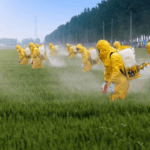
The compounds at issue, per- and polyfluoroalkyl substances (PFAS), were used in firefighting foam that 3M phased out more than 20 years ago, as well as in nonstick, water- and grease-resistant products such as cookware and clothing. The foam contaminated groundwater near military bases, airports and other sites where it was used to put out fires.

PFAS earned their nickname because they don’t break down naturally in the environment. They’ve been linked to liver and immune system damage and some cancers.

3M chairman William Brown called the settlement a “significant milestone” that substantially reduces uncertainty from the litigation. Fred Thompson, an attorney with the Motley Rice law firm that helped negotiate the deal for the plaintiffs, called it welcome news for “the thousands of victims who have sought answers and accountability for nearly a decade.”

Mis- and disinformation are distorting science and public policy. Subscribe to our Daily and Weekly Digests for incisive coverage of ‘disruptive’ innovations in AI, agricultural biotechnology, food, chemicals, nuclear energy, vaccines, and other disruptive innovations.

Payments start with $50 million this year, followed by more than $1 billion annually from 2028 to 2033. 3M could pay more if enough plaintiffs participate — or, if too few sign on, cancel the deal and keep fighting in court.

It’s hardly 3M’s first PFAS payout. The company previously agreed to pay more than $10 billion to U.S. public drinking water systems and $450 million to New Jersey over natural resource contamination. DuPont de Nemours and its spinoffs Chemours and Corteva have agreed to settlements totaling more than $1 billion.


The EPA has set strict limits on PFAS in public drinking water, but those rules don’t cover private wells. Meanwhile, a study that would help regulators identify which industries discharge “forever chemicals” in their wastewater has been stalled for two years, awaiting White House review.


Read the original article here

Related Articles

Infographic: Global regulatory and health research agencies on whether glyphosate causes cancer

Infographic: Global regulatory and health research agencies on whether glyphosate causes cancer

Does glyphosate—the world's most heavily-used herbicide—pose serious harm to humans? Is it carcinogenic? Those issues are of both legal and ...

Most Popular

Wave Crest Over Red Cross
Viewpoint: Here are the election-inspired Trump administration healthcare policy reversals expected in the coming months
ChatGPT-Image-Mar-10-2026-01_39_01-PM
Viewpoint—“Miracle molecule” debunked: Why acemannan supplements don’t work
Democratic Donkey Plowing at Sunset
Viewpoint: Democratic tsunami: As the red tide recedes, here are the most likely shifts in food and agricultural policy
p22_spraying_2
How climate change is driving increased pesticide usage
Aerial Sprayer Over Gradient Fields
Farming, food, and chemicals: Post-midterms, the MAHA alliance between Democrats and MAGA Republicans is bruised but not cowed. What comes next?
Screenshot-2026-11-05-at-1.20.54-PM
$7.35 billion PFAS settlement: 3M to pay people who blame health problems on ‘forever chemicals’ phased out of firefighting foam for more than 20 years
Crumbling MAHA Stage Portrait
Cataloging the RFK Jr.-MAHA crushing midterm collapse
Blue Checklist in Centered Hand
Viewpoint: From Medicaid cuts to MAHA-backed anti-vaccine and chemical hysteria, voters reject Republicans’ science-skeptical agenda
Screenshot-2026-11-05-at-2.47.29-PM
Collagen supplements are not a wrinkle-reducing silver bullet, but they sure cost a lot
Picture1
Viewpoint: How badly is the U.S. food-safety net fraying? FDA’s bungled handling of the tainted lettuce crisis deepens concerns over cuts to disease tracking and response
Screenshot-2026-10-21-at-11.30.51-AM
Viewpoint: Yes, our food system stinks, but the attack of ultra-processed foods is often misplaced
Microscopic IVF Egg Injection
With technical barriers to human embryo editing falling, ethical concerns escalate
glp menu logo outlined

Get news on human & agricultural genetics and biotechnology delivered to your inbox.