The near-extinct American chestnut looks set to make a comeback. Genetically modified trees, which are resistant to a deadly fungus that has decimated the species, have produced the first resistant chestnuts. From these seeds, countless resistant trees could be grown in the wild.
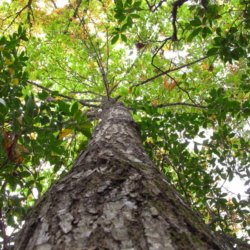
An estimated 4 billion American chestnut trees (Castanea dentata) once covered the US, accounting for a quarter of all US hardwood trees. But in around 1900, a lethal fungus called Cryphonectria parasitica was accidentally imported in chestnut trees from Asia, and by the 1950s it had almost completely wiped out the American chestnut.
Over the past 20 years, the American Chestnut Research and Restoration Project has been trying to turn the situation around. Led by William Powelland Charles Maynard of the State University of New York in Syracuse, the team has used genetic engineering to create a strain of fungus-resistant chestnuts called Darling4. Powell and Maynard’s group have now shown that the Darling4 trees and their first-generation offspring are more resistant than unaltered American chestnuts, but less so than the naturally resistant Chinese chestnuts.


The ultimate goal is to release the modified chestnuts into the wild. The team planted the first Darling4 chestnut in 2006, and there are now over 1000 modified trees at various sites in New York state, says Maynard. “We hope to obtain regulatory approval for trees to be grown outside permitted plots within three to five years, at which point our transgenic trees could potentially be planted anywhere in the US,” says Maynard. “Once approved, they’ll be distributed to the public in a not-for-profit programme to restore the American chestnut tree.”
Read the full, original article: American chestnut set for genetically modified revival