GM mosquitoes could breed to extinction, leaving malaria parasite no host

z
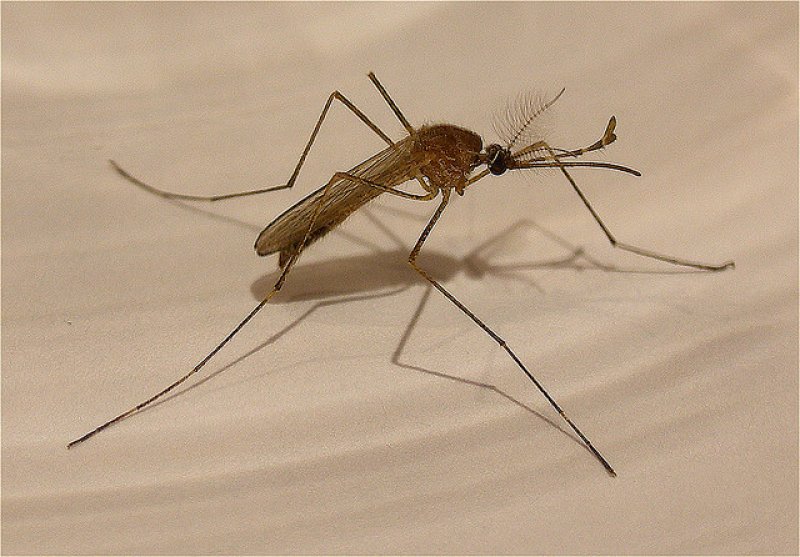
(Credit: Enrique Dans, Flickr)

Kill the mosquito and you kill the disease. That is the usual approach to controlling malaria. And if done properly, it works. The problem is that the insecticides employed to do the killing destroy lots of other things as well.

An old dream of those who seek to eliminate malaria is thus a way of selectively killing only what transmits the parasite: mosquitoes of the genus Anopheles, most notably Anopheles gambiae. And that, more or less, is what is proposed by Nikolai Windbichler and Andrea Crisanti of Imperial College, London, in a paper in Nature Communications.

They think they have worked out how to stop A. gambiae females being created in the first place. That would break the chain of transmission in two ways: immediately, because it is only females that drink blood and so pass the parasite on; and in the longer term because without females a population cannot reproduce.

By transplanting the endonuclease gene into the genomes of male mosquitoes, and arranging for it to be active only during the process of spermatogenesis (so that other bodily functions are unaffected), the researchers create males which produce predominantly “male” sperm cells—about 95 percent of them carry Y chromosomes. Many of these will also carry the endonuclease, so the same thing will happen in the next generation. The upshot is that a population into which the modified males are introduced should get more and more male-dominated, and smaller and smaller.

Read the full, original article: X marks the spot

Related Articles

Infographic: Global regulatory and health research agencies on whether glyphosate causes cancer

Infographic: Global regulatory and health research agencies on whether glyphosate causes cancer

Does glyphosate—the world's most heavily-used herbicide—pose serious harm to humans? Is it carcinogenic? Those issues are of both legal and ...

Most Popular

ChatGPT-Image-Mar-10-2026-01_39_01-PM
Viewpoint—“Miracle molecule” debunked: Why acemannan supplements don’t work
Screenshot-2026-09-10-at-11.50.46-AM
Did COVID vaccines kill 2,500 service members? RFK Jr. hires an investigator who compares vaccine promoters to Nazi doctors
ChatGPT-Image-Sep-13-2026-10_24_17-AM
Bayer urges court to approve $7.25 billion Monsanto Roundup settlement that could limit its future liabilities
ChatGPT-Image-Sep-15-2026-06_05_13-PM
CRISPR fine-tuning unlocks vitamin C-rich potatoes without yield loss
Screenshot-2026-09-11-at-2.26.23-PM
Newly approved GMO chestnut trees planted across from the White House are stirring debate
ChatGPT-Image-Sep-15-2026-05_59_18-PM
RFK Jr. spent two years distancing himself from Children’s Health Defense. Now he’s keynoting its anti-vaccine DC conference.
Screenshot-2026-09-10-at-12.20.19-PM
'Jet fuel didn't melt the steel': 9/11 conspiracy theories debunked
ChatGPT-Image-Aug-28-2026-03_33_46-PM
Viewpoint: Bad science—Five bogus Trump administration claims about vaccines and autism
Screenshot-2026-09-15-at-11.04.54-AM
Viewpoint: Childhood deaths in dispute: Why the CDC vs Pennsylvania conflict over measles vaccines matters
Screenshot 2026-09-10 at 11.28
A meaty problem: How to make cell-grown protein taste like steak, chicken, and seafood
ChatGPT-Image-Aug-14-2026-11_16_47-AM
Fibermaxxing: Latest Instagram diet craze raises hope that a fiber-rich diet can improve health
organic-labeling-slide-dcba-aa-c-a-dde-a-fcd-e-c-d-
Viewpoint: Organic food costs more—but is it healthier, safer, and more nutritious? The latest science findings may surprise you.
glp menu logo outlined

Get news on human & agricultural genetics and biotechnology delivered to your inbox.