Who controls your actions: you or your brain?

Imagine that Brian promises to drive you to the airport but never shows up, and you miss your flight. When you confront Brian, he tells you that he remembered his promise but decided to watch a movie instead. Would you be angry? You betcha!

But then suppose Brian pleads, “Don’t be angry at me. My brain made me do it. I wanted to watch the movie, and my desires are lodged in my brain. Moreover, I don’t care that much about you, but that is only because my neurons do not fire very fast when I think of you. My brain makes me act as I do, so I’m not responsible.” This plea will not quell your anger. Why not?

Brian is correct that his brain made him do it. It was not his legs or eyes that made him watch the movie. If his neurons had been wired differently, then he would have driven you as he promised. It also wasn’t the movie or another person that made him do it. It was his desires, which are in his brain (assuming that minds are not separate substances), so his brain is what caused him to do it.

Nonetheless, what really matters is which part of his brain made him do it. What made him let you down was activation levels in those parts of his brain that constitute Brian’s desires. That fact is just a pseudo-scientific way of saying that he did it because he wanted to. It doesn’t change when he re-describes his desires in terms of brain states.
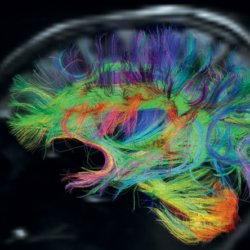
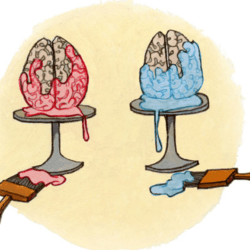
What about mental illnesses? Addictions? Compulsions? Brainwashing? Hypnosis? Tumors? Coercion? Alien hand syndrome? Multiple personality disorder? These cases are all tricky, so philosophers disagree about which people in these conditions are responsible — and why. Nonetheless, these difficult cases do not show that there is no difference between seizures and normal desires, just as twilight does not show that there is no difference between night and day. It is hard to draw a line, but that does not mean that there is no line.

Read full original article: My brain made me do it, but does that matter?

Related Articles

Infographic: Global regulatory and health research agencies on whether glyphosate causes cancer

Infographic: Global regulatory and health research agencies on whether glyphosate causes cancer

Does glyphosate—the world's most heavily-used herbicide—pose serious harm to humans? Is it carcinogenic? Those issues are of both legal and ...

Most Popular

ChatGPT-Image-Mar-10-2026-01_39_01-PM
Viewpoint—“Miracle molecule” debunked: Why acemannan supplements don’t work
Prescription Capsules Scattered on Twenty-Dollar Bills
Facts & Fallacies podcast: America's health care system is broken. A doctor explains how to fix it, Part 2
MAHA-MOMS-Supporters-at-the-Rally
Viewpoint: How 'MAHA men' hijacked the female-built food and wellness movement
Dissolving-Tablets-in-Waves
Viewpoint: How the anti-abortion movement twists medical facts and promotes science misinformation
Executive-Greeting-in-a-Futuristic-Boardroom
Viewpoint: RFK Jr. touts AI to guide health care…but searches using the technology he champions expose him as scientifically illiterate
Screenshot-2026-10-12-at-10.44.38-AM
Widely condemned as unethical, hepatitis B vaccine study funded by RFK Jr’s CDC gets a final greenlight
Personalized-Cancer-mRNA-Vaccine-Vial
Personalized mRNA vaccines are poised to revolutionize cancer treatments. Here are the barriers.
Deepfake Democracy Media Mosaic
31 states have passed a patchwork of laws to limit election deepfake commercials. They’re not working very well.
Cross and Syringe Standoff
Viewpoint: Hijacking Jesus: How anti-vaccine fanatics are exploiting religious exemptions and killing children
Caution-Taped-Fresh-Produce-Aisle
Should we be afraid of our food?
Golden Wheat Under a Starry Sky
Viewpoint: ‘Bureaucratic and economic obstacles’ to agricultural biotechnology: Europe creeps into the 21st century, but blocks remain
Screenshot-2026-09-22-at-10.54.12-AM
‘They misunderstand science’: Research attempting to tie autism to changes in the gut microbiome comes under fire
Screenshot-2026-09-22-at-12.26.15-PM
‘Forever chemical’ concerns: Separating hysteria from reasonable concern in the debate over PFAS danger
glp menu logo outlined

Get news on human & agricultural genetics and biotechnology delivered to your inbox.